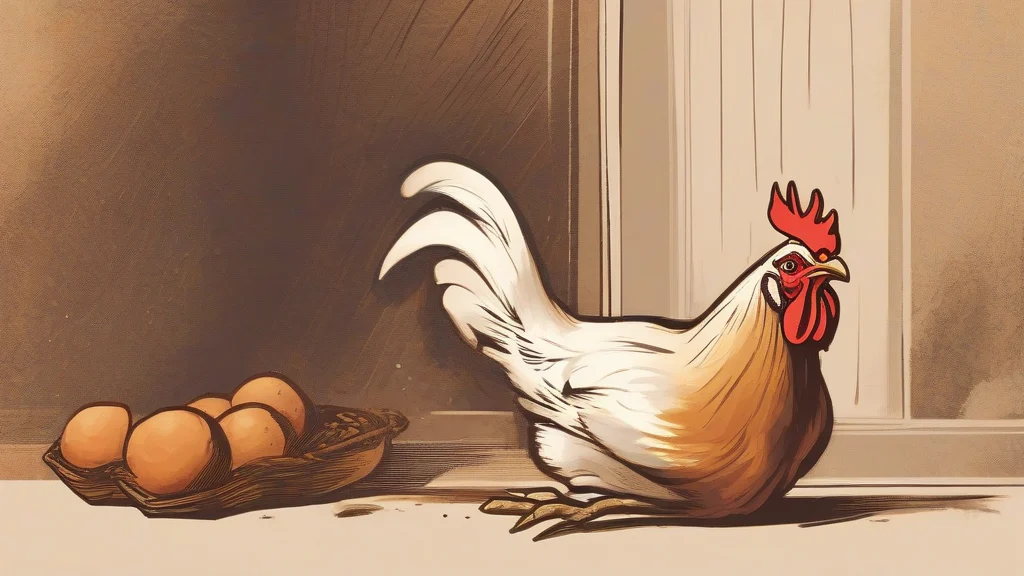
What does caponize mean?
To caponize is to castrate a young male chicken — a cockerel — so that it develops into a capon, a bird prized since antiquity for its unusually large size, tender flesh, and rich flavor. The procedure interrupts the bird's hormonal development, producing a calmer animal that fattens readily. The word belongs chiefly to the vocabulary of farming, butchery, and culinary history rather than everyday speech, and appears most often in discussions of traditional poultry husbandry or historic recipes. Its noun partner, the capon, has long been associated with celebratory eating, especially in medieval and Renaissance Europe, where capons graced festive tables. Though modern animal-welfare standards have made the practice rare in much of the world, caponize survives as a precise, well-established term wherever the tradition of raising these specialty birds persists.
verbTo castrate a male chicken (cockerel) in order to make it into a capon, typically producing a larger, more tender bird for the table.
- To castrate a male chicken so that it grows into a capon — a larger, fattened, more tender table bird.
"The farmer caponized the young cockerels in early spring so they would grow into plump capons by Christmas."
"Poultry keepers once routinely caponized surplus cockerels to improve the quality of the meat."
"In medieval England, caponizing was a specialized skill passed down among farmers preparing birds for festive feasts."
A caponized rooster can grow nearly twice the size of an ordinary chicken — which is why this ancient practice was prized by Roman gourmets two thousand years ago.
Reviewed by Deb Chak, Editor. AI-assisted content curated by RJS Tech Solutions LLP.
Etymology of caponize
The verb caponize derives from "capon", meaning a castrated cockerel, which entered Middle English via Old French "chapon" from Latin "capo" (genitive "caponis"), a term already used by Roman writers on agriculture and cookery. The Latin root is possibly related to words for cutting, reflecting the surgical nature of the operation. The verb form arose in English as a straightforward derivative of the noun, and its Romance-language cousins such as French "chapon" and Italian "cappone" share the same Latin ancestor.
Related word forms
How caponize is actually used
A technical or specialist term used mainly in agriculture, veterinary contexts, and historical writing about food. It is almost always applied to chickens rather than other animals, and carries no strong figurative use.
Easily confused with caponize
"Capsize" means to overturn a boat or ship, while "caponize" means to castrate a rooster; the two words merely sound similar.