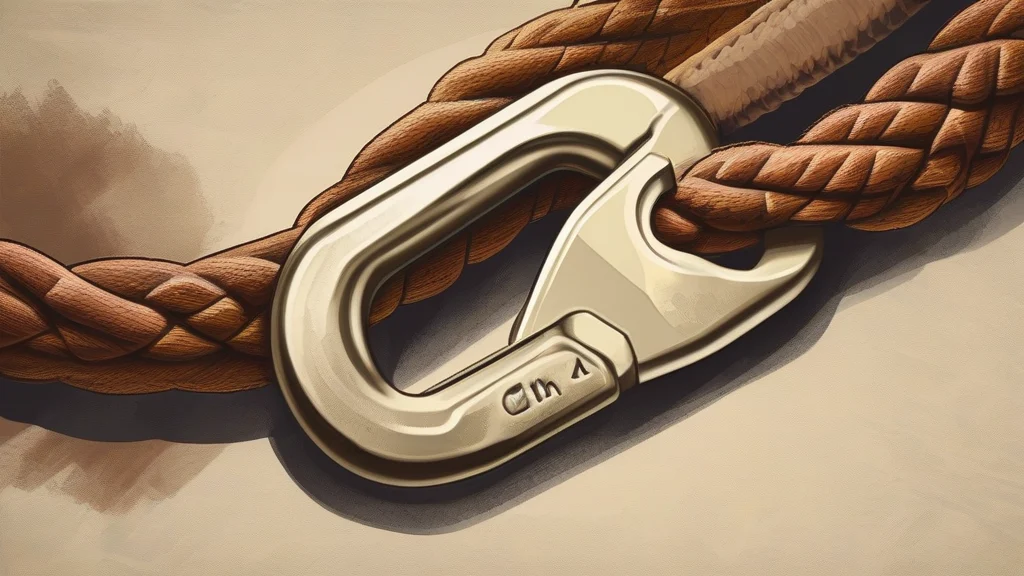
What does carabiner mean?
A carabiner is a lightweight metal loop with a sprung or screw-operated gate that opens to admit a rope or strap and snaps shut under load. It is the fundamental connecting tool of modern rock climbing and mountaineering, linking harnesses to ropes, anchors, and protection devices, but it also appears widely in sailing, rescue work, industry, and everyday life as a handy clip for keys or gear. Carabiners are typically made of aluminium or steel and come in many shapes — oval, D-shaped, pear-shaped — with plain gates for speed or locking gates for critical connections. The word derives from 'carabin', the term for a carbine carried by cavalry soldiers who used similar hooks. Compact, strong, and instantly recognizable, the carabiner is one of those rare pieces of specialized equipment whose name has entered everyday speech.
nounA metal loop with a spring-loaded gate, used especially in climbing to connect ropes, slings, and other equipment quickly and securely.
- A spring-gated metal link used in climbing, mountaineering, sailing, and rigging to connect equipment.
- (By extension) any similar snap-link clip used in everyday applications such as keychains or bags.
"She clipped the rope into her carabiner before starting the ascent."
"He racked two spare carabiners on his harness before leading the pitch."
"Her keys hung from a small aluminum carabiner clipped to her belt."
Standard plural; climbers often abbreviate informally to 'biners'.
"The rack held a dozen carabiners of various shapes and sizes."
The word for the climbing world's most essential clip comes from 'carabin' — the carbine rifles once carried by European cavalry.
Reviewed by Deb Chak, Editor. AI-assisted content curated by RJS Tech Solutions LLP.
Etymology of carabiner
Carabiner comes from German 'Karabinerhaken', meaning a carbine hook — the snap link once used by soldiers to attach their carbines (light rifles) to a bandolier. The root traces further to 'carabin', the word for a carbine itself, which entered European languages via French and ultimately from Arabic 'karāba' through Old French. The climbing sense developed in early twentieth-century alpinism and spread worldwide as the sport grew.
How carabiner is actually used
Informal to technical register; ubiquitous in climbing and outdoor-sports vocabulary. The spelling 'karabiner' is common in British English and in continental usage. The plural is sometimes heard colloquially as 'biners' among climbers.
Easily confused with carabiner
A carbine is a lightweight rifle, while a carabiner is the metal clip used in climbing; both trace back to the same Germanic root via 'carabin'.