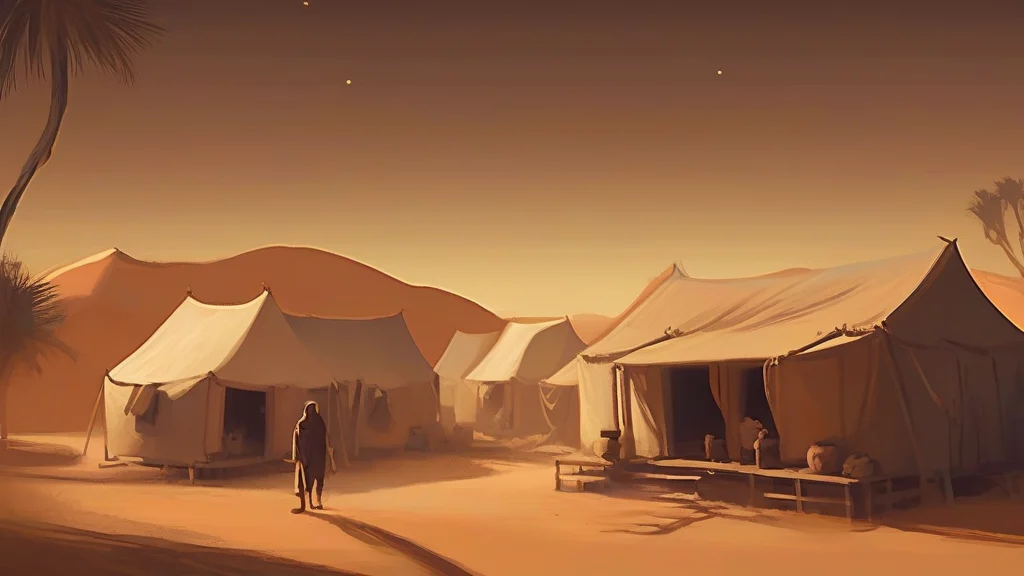
What does caravansary mean?
A caravansary is a large inn or resting place built to shelter merchant caravans and other travellers on the long trade routes of the Middle East and Central Asia, most famously along the Silk Road. Typically constructed as a massive rectangular building of stone or brick surrounding an open courtyard, it offered secure lodging, water, and stabling for camels and horses, with fortified gates that were locked at night to protect goods and animals from raiders. The English word derives ultimately from Persian, entering European languages through Turkish and French, and it exists in two accepted spellings: caravansary and the more etymologically faithful caravanserai. Though the great caravan routes faded centuries ago, many caravansaries survive as imposing ruins or restored monuments, and the word endures in travel writing and historical scholarship as an evocative term for a waystation built around hospitality, commerce, and the rhythms of overland trade.
nounAn inn or rest station, typically built around a central courtyard, where caravans of travellers in the Middle East and Asia could lodge overnight.
- A large inn or resting place for caravans and other travellers in the Middle East and Central Asia, usually built as a rectangular structure around an open courtyard.
- More broadly, any inn or hotel serving travellers.
"The merchants watered their camels at the caravansary before resuming the long journey across the desert."
"Caravans dotted the Silk Road, each offering a walled courtyard where traders could stable their animals and sleep safely behind locked gates."
"By evening they reached a crumbling caravansary whose arched portals had sheltered travellers for five hundred years."
When using the alternative spelling caravanserai, the plural is caravanserais.
"Dozens of ruined caravansaries still line the old routes across Iran and Central Asia."
The word 'caravansary' is a rare case of an English word borrowed twice from the same source — once via French and once directly from Persian — which is why it has two accepted spellings.
Reviewed by Deb Chak, Editor. AI-assisted content curated by RJS Tech Solutions LLP.
Etymology of caravansary
Caravansary comes from Persian kārvānsarāy, meaning literally "caravan palace," a compound of kārvān (caravan) and sarāy (palace or large dwelling). The word passed into Ottoman Turkish as kervansaray and entered European languages by way of French, reaching English in the early seventeenth century. Its doublet caravanserai preserves the Persian form more closely. Related borrowings include the word serai, from the same Persian root sarāy, which also gave rise to the seraglio of Orientalist writing.
Related word forms
How caravansary is actually used
A literary and somewhat archaic word; today it appears mainly in historical writing about the Silk Road, travel literature, and descriptions of Middle Eastern architecture. The variant spelling "caravanserai" is more common in British English and reflects the Persian form more closely; both spellings are acceptable. The plural is caravansaries (or caravanserais).
Easily confused with caravansary
A caravan is a group of people or vehicles travelling together (or a towed trailer), while a caravansary is the fixed inn or lodging place at which such groups stopped.