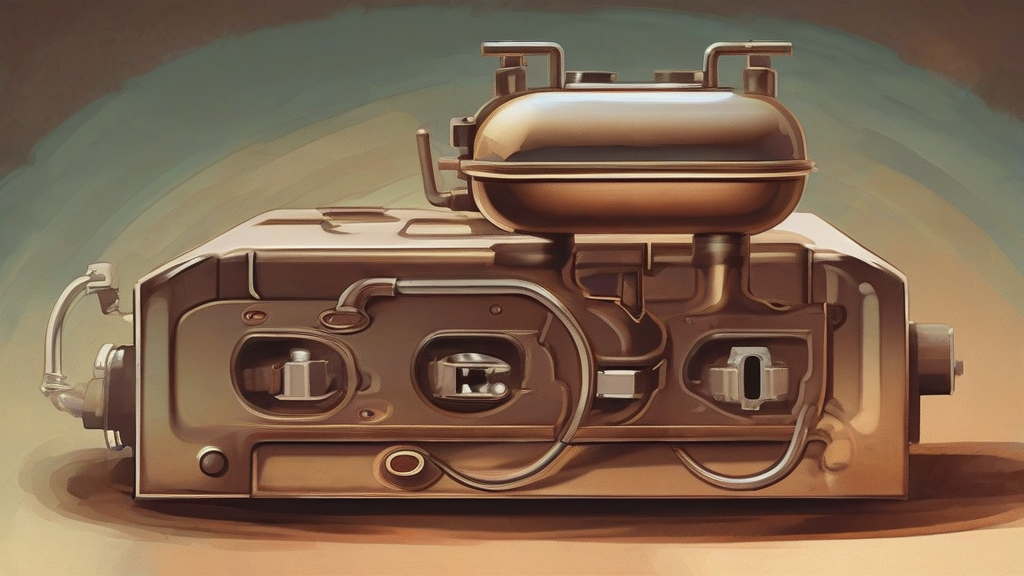
What does carburetor mean?
A carburetor is a mechanical device used in internal combustion engines to mix air with a fine spray of fuel in the right proportions, creating a combustible vapor that can be burned in the cylinders to produce power. Sitting between the fuel supply and the engine's intake, it uses airflow through narrow passages to draw in gasoline and atomize it—a task now largely handled by electronic fuel injection systems, which replaced carburetors in most production cars during the late twentieth century. The word belongs chiefly to technical and automotive contexts: mechanics speak of rebuilding, cleaning, tuning, or adjusting a carburetor, and enthusiasts prize multi-barrel designs like the four-barrel carburetor found on classic American V8s. In casual speech it is often clipped to 'carb.' Though increasingly historical, the carburetor remains essential knowledge for anyone working with older vehicles, small engines, motorcycles, or aircraft, and it endures as a symbol of hands-on, pre-electronic engineering.
nounA mechanical device in an internal combustion engine that blends air with a fine spray of fuel to form a combustible mixture for the cylinders.
- A mechanical device in an internal combustion engine that mixes air and fuel vapor into a combustible charge delivered to the engine's cylinders.
"The mechanic rebuilt the carburetor after the old engine began sputtering on cold mornings."
"The vintage Mustang's carburetor needed adjusting so the idle would stop surging at traffic lights."
"He could strip and rebuild a carburetor by feel, without even consulting the manual."
Regular plural; British spelling gives 'carburettors'.
"The shop stocked replacement carburetors for most classic motorcycle models."
The carburetor reigned over engines for nearly a century before fuel injection dethroned it in the 1990s—yet classic-car fans still swear by the satisfying hiss of a well-tuned one.
Reviewed by Deb Chak, Editor. AI-assisted content curated by RJS Tech Solutions LLP.
Etymology of carburetor
The word derives from French 'carburateur', formed from 'carburer', meaning to combine or saturate with carbon or hydrocarbons. The underlying root traces to Latin 'carbo', meaning coal or charcoal—the same root that gives us carbon, carbohydrate, and carbonate. The term entered English in the nineteenth century alongside the development of the internal combustion engine itself, when engineers needed a name for the apparatus that enriched air with fuel vapor.
Related word forms
How carburetor is actually used
Primarily technical and automotive register; familiar to mechanics and enthusiasts rather than everyday conversation. Spelled 'carburettor' in British English; informally shortened to 'carb' among mechanics.
Easily confused with carburetor
Carburettor is simply the standard British spelling of the same device, while carburetor is the American spelling.