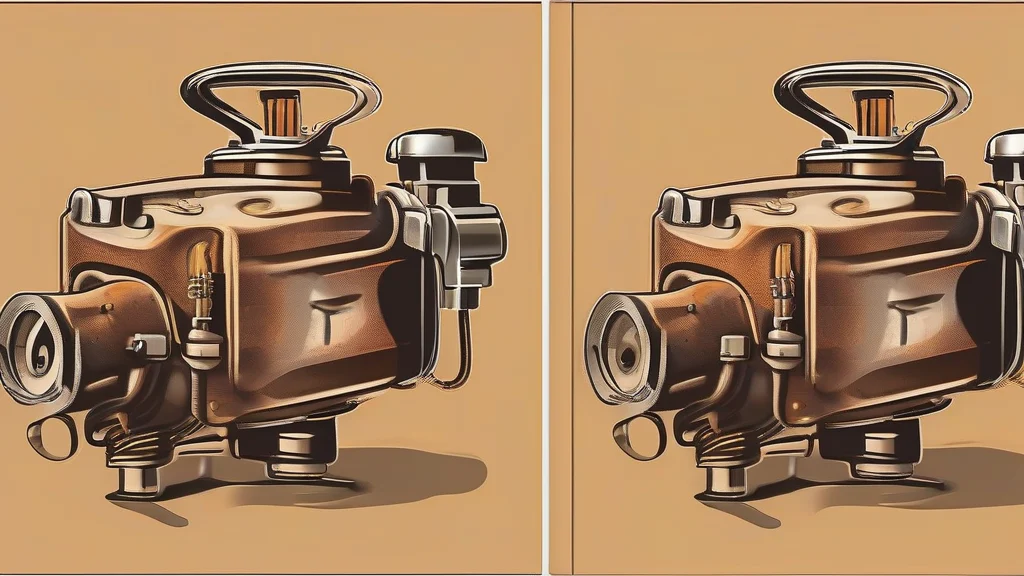
What does carburettor mean?
A carburettor is a mechanical device that prepares the fuel–air mixture needed by an internal combustion engine, drawing in air and blending it with a finely atomised spray of petrol in the proportions required for efficient combustion. Standard equipment on virtually all petrol engines throughout the twentieth century, it was eventually displaced by electronic fuel injection, which meters fuel more precisely and meets stricter emissions standards. The word is chiefly British in this spelling — American usage favours 'carburetor' — and belongs to the vocabulary of motoring and small-engine maintenance. Today it evokes classic cars, vintage motorcycles, lawnmowers, and the hands-on culture of tuning and repair: adjusting a carburettor by ear and feel remains a prized skill among enthusiasts. Its decline has given the word a distinctly retrospective, even affectionate connotation, making it as much a symbol of mechanical simplicity as a functional term.
nounA device in an internal combustion engine that mixes air with a fine spray of fuel vapor to form a combustible mixture, especially in petrol engines. Largely superseded by fuel injection in modern vehicles.
- A device that blends air and fuel vapor in the correct proportion for combustion in an internal combustion engine.
"The mechanic stripped down the carburettor and cleaned out the jets before the old car would idle smoothly again."
"The vintage motorcycle's carburettor flooded after he left the choke on too long."
"Classic-car enthusiasts often prefer carburettors for their simplicity and ease of repair."
Standard regular plural; used especially when referring to multi-barrel or multiple-carburettor setups in engines.
"The racing engine was fitted with three twin-choke carburettors."
Every petrol engine ran on one for over a century — until fuel injection made the carburettor a beloved relic that gearheads still swear by.
Reviewed by Deb Chak, Editor. AI-assisted content curated by RJS Tech Solutions LLP.
Etymology of carburettor
The word derives from French 'carburateur', coined from the verb 'carburer', meaning to combine or charge with carbon or hydrocarbons, ultimately rooted in Latin 'carbo' (charcoal, coal). It entered English in the nineteenth century alongside early developments in internal combustion technology, when engineers borrowed French terminology for fuel-mixing apparatus. Cognates sharing the Latin root include 'carbon', 'carbide', and 'carbohydrate'. The doubled '-tt-' spelling became conventional in British English, while American usage simplified it.
Related word forms
How carburettor is actually used
The spelling 'carburettor' is chiefly British; American English normally uses 'carburetor'. The word is technical but widely understood, and carries nostalgic connotations tied to classic cars and older machinery, since modern vehicles use fuel injection instead.
Easily confused with carburettor
This is simply the standard American spelling of the same device, not a different component.