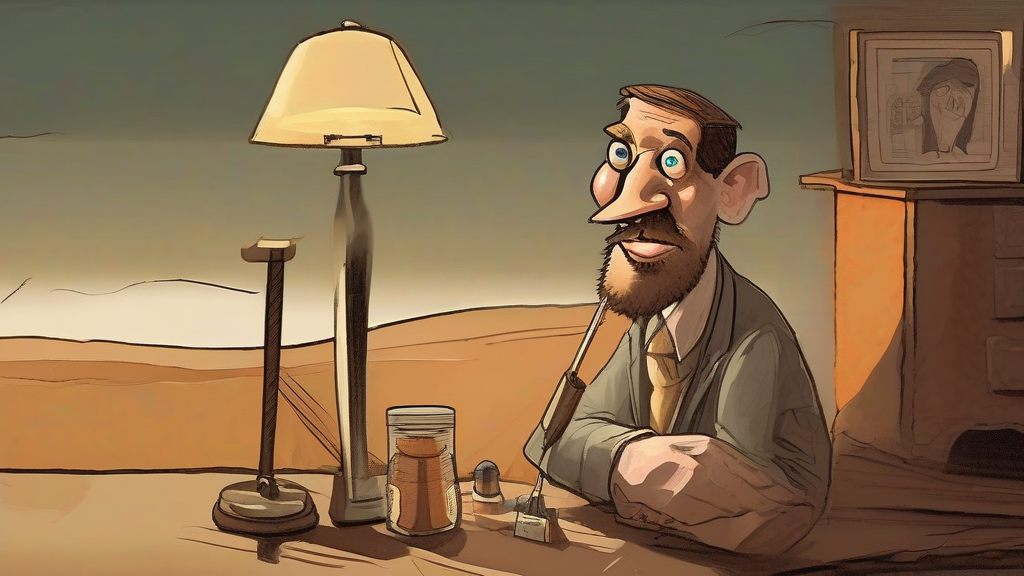
What does caricaturist mean?
A caricaturist is an artist who specialises in caricatures: portraits or depictions that deliberately exaggerate the most distinctive physical traits or personality quirks of their subjects. The aim is usually humour, but the form has long carried a satirical edge — political caricaturists in particular have used distortion to puncture the vanity of public figures. The word derives from Italian 'caricatura', from 'caricare', meaning 'to load' or 'to exaggerate', so the caricaturist is literally one who overloads an image with emphasis. While the term most often denotes a professional illustrator working in newspapers, at fairs, or at tourist venues, it can be extended metaphorically to any writer or commentator who reduces people to crude, exaggerated types. The word applies to people rather than works; the drawings themselves are simply called caricatures.
nounA person, especially an artist, who creates caricatures — drawings or descriptions that exaggerate the distinctive features or peculiarities of a subject for comic or satirical effect.
- An artist who draws exaggerated portraits for comic or satirical effect.
- By extension, anyone who depicts people or things in a crudely exaggerated way.
"The caricaturist captured the senator's prominent eyebrows and booming laugh in a few deft strokes."
"A street caricaturist in Paris drew tourists with enormous noses and tiny hats, to their delighted horror."
"As a writer he was less a novelist than a caricaturist, reducing every character to a single glaring flaw."
Regular plural; standard countable usage.
"The exhibition brought together caricaturists from across Europe."
The word comes from the Italian 'caricare' — to load or exaggerate — so a caricaturist is literally someone who 'overloads' a face with its own most memorable features.
Reviewed by Deb Chak, Editor. AI-assisted content curated by RJS Tech Solutions LLP.
Etymology of caricaturist
The English noun 'caricaturist' is formed from 'caricature' plus the agentive suffix '-ist', with 'caricature' itself borrowed from the French 'caricature', from the Italian 'caricatura'. The Italian term derives from 'caricare', meaning 'to load, charge, or exaggerate', which ultimately traces back to Late Latin 'carricare', 'to load onto a cart', the same root that gives us 'charge' and 'cargo'. The agent form became current in English in the late eighteenth and nineteenth centuries as caricature flourished as an art form.
How caricaturist is actually used
The word is neutral to slightly literary in register; it is used both approvingly of skilled artists and critically of writers or commentators who oversimplify people. It refers almost exclusively to people, not to the artworks themselves.
Easily confused with caricaturist
A 'character' is a person's nature or a fictional figure, while a caricature (and by extension a caricaturist's work) is a deliberately exaggerated representation of someone.