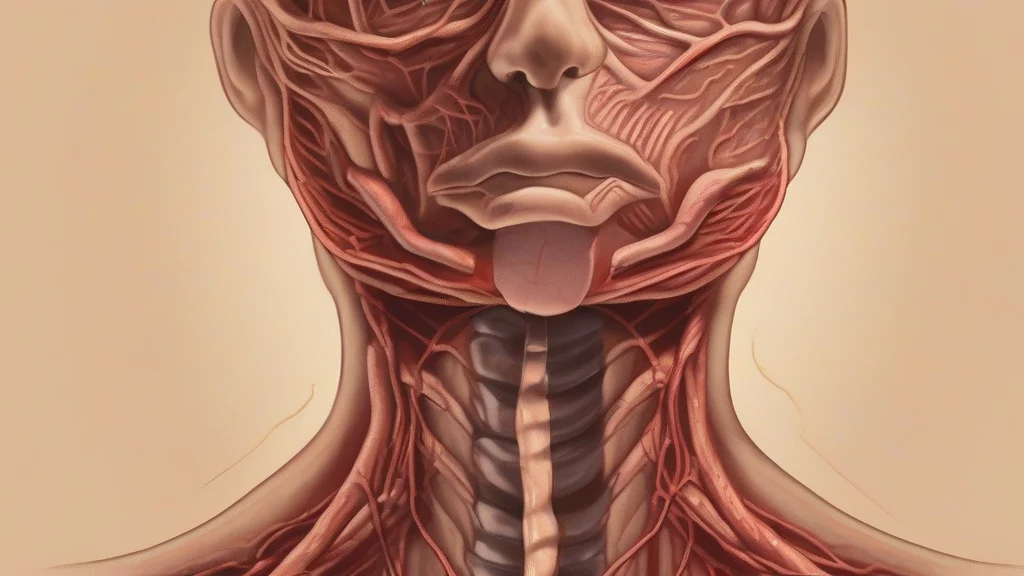
What does carotid mean?
The carotids are the two major arteries running up each side of the neck, carrying oxygenated blood from the heart to the brain. The word is used almost exclusively in medical contexts: clinicians speak of the carotid artery, the carotid pulse felt at the side of the throat, and conditions like carotid stenosis, where narrowing of the vessel raises the risk of stroke. In everyday speech the word appears most often when describing how a pulse is taken — pressing fingers gently below the jawline — or in accounts of injury to the neck, which can be rapidly fatal because of the vessel's size and position. The term derives from the Greek 'karoun', meaning to plunge into sleep or stupor, a reference to the fact that compression of these arteries can cause unconsciousness. Precise but narrow in application, 'carotid' is essential vocabulary in anatomy, emergency medicine, and cardiovascular health.
nounEither of the two large arteries, one on each side of the neck, that carry blood from the heart to the head and brain. Also used adjectivally in phrases like 'carotid artery'.
- Either of the two major arteries of the neck that supply blood to the head and brain (usually in the phrase 'carotid artery').
"The doctor pressed two fingers against the patient's carotid to check for a pulse."
"The surgeon carefully clamped the carotid before beginning the delicate procedure."
"He could feel his own heartbeat pounding through the carotid in his throat."
Used when referring to both the left and right carotid arteries together.
"The scan revealed significant plaque buildup in both carotids."
Both 'carotid' and 'carotene' trace back to a Greek word meaning deep sleep — ancient physicians noticed that pressing on these neck arteries could cause unconsciousness.
Reviewed by Deb Chak, Editor. AI-assisted content curated by RJS Tech Solutions LLP.
Etymology of carotid
The word 'carotid' entered English in the mid-16th century via New Latin 'carotis', borrowed from Greek 'karōtides', the plural of 'karōtis', meaning the arteries of the neck. The Greek term derives from 'karoun', meaning to plunge into sleep or stupor, because compression of these arteries was known to cause unconsciousness. It shares this Greek root with 'carotene', the pigment named after carrots ('karōton'), reflecting an ancient association between the vegetable and drowsiness.
How carotid is actually used
Almost always used in medical or clinical contexts, either alone ('the carotids') or as part of fixed medical terms such as 'carotid artery' or 'carotid endarterectomy'. Register is formal and technical; it rarely appears in everyday conversation except in medical or emergency situations.
Easily confused with carotid
Carotene is the orange pigment found in carrots and other plants, whereas the carotid is an artery in the neck; both derive from the same Greek root 'karos' (sleep), as eating carrots was thought to induce drowsiness.