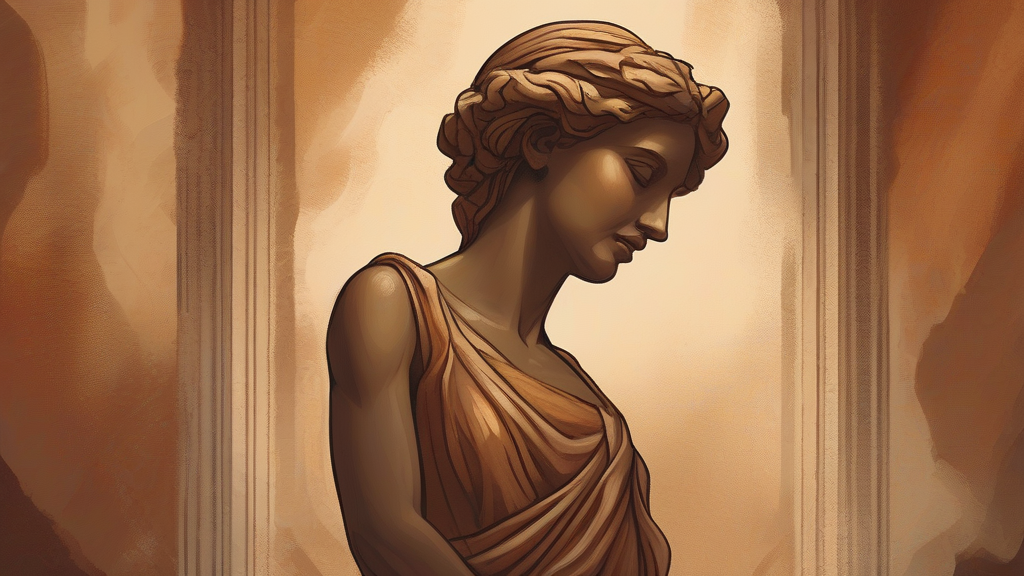
What does caryatid mean?
A caryatid is a sculpted female figure that serves as a supporting column in architecture, bearing a load such as an entablature or balcony on her head. The most celebrated examples stand on the Erechtheion, a temple on the Athenian Acropolis built in the late fifth century BC, where six draped marble maidens uphold the roof of a southern porch. The device became popular again during the Renaissance and neoclassical periods, appearing on buildings across Europe and America as a symbol of classical learning and refinement. The word derives from the Greek karyatides, meaning 'maidens of Karyai', a town in Laconia associated with dances in honour of Artemis. Today the term belongs mainly to architectural and art-historical contexts, though it is sometimes used figuratively to describe people who silently shoulder great burdens. Its male counterpart is called an atlante or telamon.
nounA carved female figure used as a supporting column or pillar in architecture, typically bearing an entablature or other structural load on her head.
- A sculpted female figure serving as an architectural support or column, bearing a load on her head.
"The porch of the Erechtheion on the Acropolis is famous for its six graceful marble caryatids."
"The neoclassical mansion's entrance was flanked by two stone caryatids supporting a small balcony above."
"In her novel, the weary office workers were described as caryatids, holding up the weight of the company without complaint."
The anglicized plural 'caryatids' is now more common than the Latinate 'caryatides'.
"A row of weathered caryatids supported the portico of the old bank building."
The six caryatids on Athens' Erechtheion have been holding up a porch for nearly 2,500 years — and one of them is a replica, since the original was carted off to London by Lord Elgin.
Reviewed by Deb Chak, Editor. AI-assisted content curated by RJS Tech Solutions LLP.
Etymology of caryatid
The word comes from the French caryatide, borrowed from the Latin caryatides, which itself derives from the Greek karyatides, literally 'maidens of Karyai', a town in Laconia whose women were famed for dances performed in honour of the goddess Artemis. The term entered English in the early seventeenth century, when interest in classical architecture revived. Vitruvius attributed the use of female figures as columns to punishment imagery after the Persian Wars, though modern scholars regard this account as legendary rather than historical.
Related word forms
How caryatid is actually used
A formal, learned word belonging chiefly to architectural and art-historical writing. It occasionally appears figuratively to describe people bearing heavy burdens, usually with a tone of irony or pathos. The plural is either 'caryatids' or the Latinate 'caryatides'; the anglicized plural is more common today.
Easily confused with caryatid
Atlantes are male figures used as supporting columns, whereas caryatids are specifically female.
A telamon is a sculpted male figure serving as a column support; a caryatid is the female equivalent.