What does casaba mean?
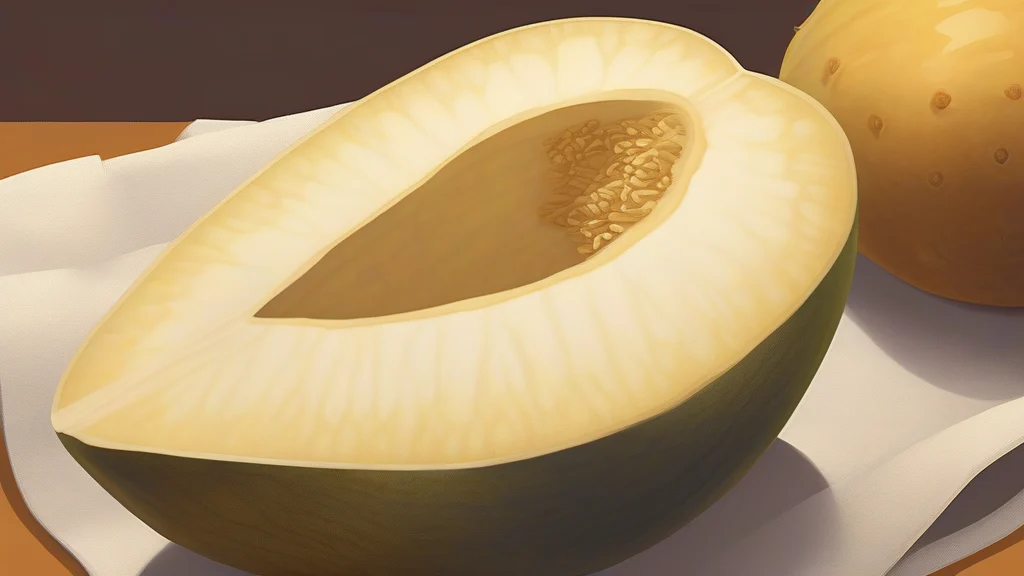
A casaba is a type of winter melon belonging to the species Cucumis melo, distinguished by its large size, pale yellow rind that is often wrinkled and slightly pointed at the stem end, and sweet, juicy, creamy-white flesh. Unlike fragrant melons such as cantaloupe, a ripe casaba has little aroma, so shoppers typically judge readiness by its deep golden color rather than by smell. The word entered English in the nineteenth century from Turkish, taking its name from Kasaba, a town in western Turkey associated with the fruit's introduction to Western markets. Today the casaba is grown mainly in warm regions of the United States, particularly California and the Southwest, and is harvested in late summer and autumn as one of the classic storage melons of winter. In cooking it is eaten fresh, cubed in fruit salads, wrapped with cured meats, or blended into cold soups and drinks. For gardeners and cooks alike, 'casaba' is the precise term for this late-season melon, setting it apart from summer melons and from the unrelated starchy root called cassava.
nounA large winter melon with smooth yellow rind and sweet, creamy-white flesh, grown chiefly in the Americas.
- A variety of winter melon (Cucumis melo var. inodorus) with a wrinkled, pointed yellow rind and sweet white flesh.
"The farmers' market stall was piled high with casabas and honeydews."
"She chilled the casaba overnight before serving it in wedges with prosciutto."
"Unlike cantaloupe, a ripe casaba gives off little scent, so you have to judge it by its golden color."
Regular plural; used when referring to multiple fruits of this variety.
"The grocer ordered two dozen casabas for the autumn display."
The casaba melon is named after the town of Kasaba in Turkey — but today it's grown almost entirely on the far side of the world, in the Americas.
Reviewed by Deb Chak, Editor. AI-assisted content curated by RJS Tech Solutions LLP.
Etymology of casaba
The word casaba comes from Turkish, after Kasaba (also historically spelled Kassaba), a town in western Anatolia from which the melon was first shipped to European and American markets in the nineteenth century. The Turkish place name itself derives from Arabic qasaba, meaning an outlying district or small town. English adopted the term as a common noun for the melon itself, much as other fruits are named for their ports of origin.
How casaba is actually used
A somewhat uncommon word, encountered mainly in gardening, grocery, and culinary contexts. It is always written lowercase except at the start of a sentence, and is sometimes styled 'casaba melon' to make clear it refers to fruit rather than the similarly spelled cassava.
Easily confused with casaba
Cassava is a starchy tropical root crop used for tapioca, while casaba is a sweet melon; the two are unrelated plants.