What does cassiterite mean?
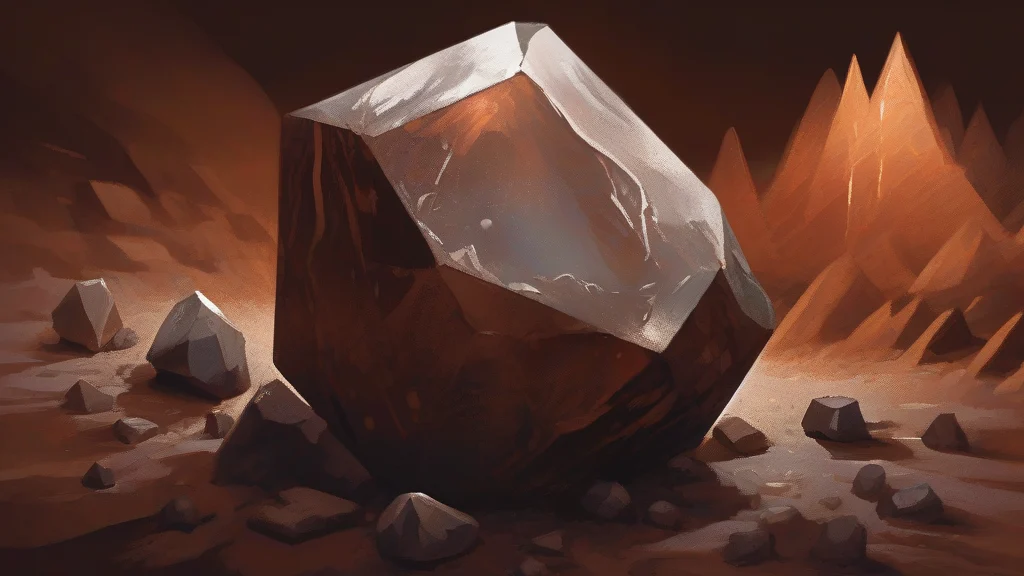
Cassiterite is a dense, hard mineral composed of tin dioxide (SnO₂) and serves as the world's principal ore of tin. It typically occurs as reddish-brown to black crystals with an adamantine or submetallic lustre, though it can also be found in massive or granular forms. Because it is highly resistant to weathering and much heavier than ordinary sand, cassiterite often accumulates in placer deposits in riverbeds, where it has been gathered by prospectors since antiquity. Historically mined in Cornwall, Bohemia, Malaysia, and Bolivia, it remains the cornerstone of the tin industry, supplying metal for solder, bronze alloys, and tin plating. The word derives from the Greek kassiteros, meaning 'tin', a term the Greeks used for both the metal and the distant lands that produced it. Though primarily a scientific term, cassiterite evokes the long human story of mining, trade, and metallurgy.
nounA reddish-brown to black crystalline mineral consisting of tin dioxide (SnO₂); it is the principal ore of tin.
- A hard, dense crystalline oxide mineral (SnO₂) that is the chief commercial source of tin.
"The miners extracted rich veins of cassiterite from the granite hills of Cornwall."
"Prospectors panned the river gravels in search of cassiterite, whose high density made it easy to separate from lighter sands."
"Under the microscope, the cassiterite crystals revealed their characteristic twinned structure and adamantine lustre."
The plural is uncommon and generally refers to multiple specimens, varieties, or occurrences of the mineral rather than to the substance in general, which behaves as a mass noun.
"The museum's collection includes cassiterites from Cornwall, Malaysia, and Bolivia."
Nearly every tin can and soldered joint in history traces back to this one heavy, glittering mineral — the ancient Greeks even named it after the mysterious 'Tin Islands'.
Reviewed by Deb Chak, Editor. AI-assisted content curated by RJS Tech Solutions LLP.
Etymology of cassiterite
Cassiterite comes from the Greek kassiteros ('tin'), which itself appears in Homer and was associated by Greek writers with the Kassiterides, legendary 'Tin Islands' of the far northwest. The English word formed from the Greek root combined with the mineral suffix -ite, entering scientific usage in the mid-nineteenth century as mineralogy adopted systematic naming. It shares its ultimate root concept with the word 'tin' itself, while related Latin-derived terms such as stannic and stannous come instead from the Latin stannum.
How cassiterite is actually used
A technical term used chiefly in mineralogy, geology, mining, and economic geology; rare in everyday conversation. It carries no emotional connotation — register is formal or scientific.
Easily confused with cassiterite
Stannite is a different tin-bearing mineral (a copper-iron-tin sulfide), whereas cassiterite is tin oxide and the primary ore of tin.