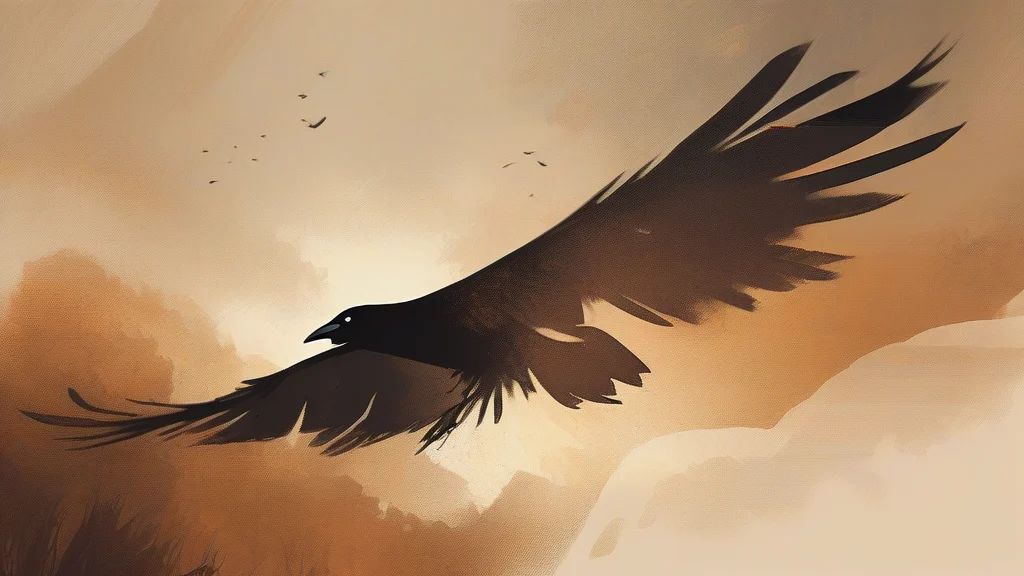
What does caw mean?
"Caw" is the standard English word for the loud, hoarse, grating cry made by crows and their relatives such as rooks and ravens. It functions both as a noun — "we heard a distant caw" — and as a verb — "the crow cawed from the fence post." The word belongs to a family of onomatopoeic terms, coined directly from imitation of natural sounds rather than borrowed from another language, which gives it an immediate, vivid quality. In literature and everyday description, a caw often carries connotations of bleakness, emptiness, or unease: a single caw over a winter field can suggest desolation, while a chorus of caws may evoke noise, gathering birds, or even foreboding. Writers use it precisely because it is unmistakably tied to corvids; no other bird "caws." For anyone describing the natural soundscape of countryside or city alike, it remains the exact, evocative term for one of the most recognizable voices in the avian world.
The loud, harsh cry characteristic of a crow or similar bird.
"A sharp caw broke the morning silence."
Usually used with "a" or in the plural; almost always refers specifically to corvids.
To make the harsh, raucous cry of a crow.
"The rooks were cawing noisily in the treetops."
Regular inflections: caws, cawed, cawing.
Standard plural, used when referring to multiple instances of the cry.
"The orchard rang with the caws of startled crows."
A crow's caw is so distinctive that English named it with one of the oldest kinds of word there is — pure imitative sound.
Reviewed by Deb Chak, Editor. AI-assisted content curated by RJS Tech Solutions LLP.
Etymology of caw
"Caw" is onomatopoeic in origin — it was formed by direct imitation of the bird's own harsh cry rather than inherited from Latin, Greek, or any other source language. Words of this echoic kind are common across languages, and similar imitative forms for crow calls exist elsewhere, but "caw" itself arose natively in English. It has been part of the language since at least the early modern period and has remained stable in form and sense ever since.
How caw is actually used
Both noun and verb are informal to neutral in register and appear mostly in descriptive or literary writing about birds. The sound is strongly associated with crows and related corvids; using it for other birds is generally inaccurate.
Easily confused with caw
"Coo" is the soft, murmuring sound of a dove or pigeon, whereas "caw" is the loud, harsh cry of a crow.