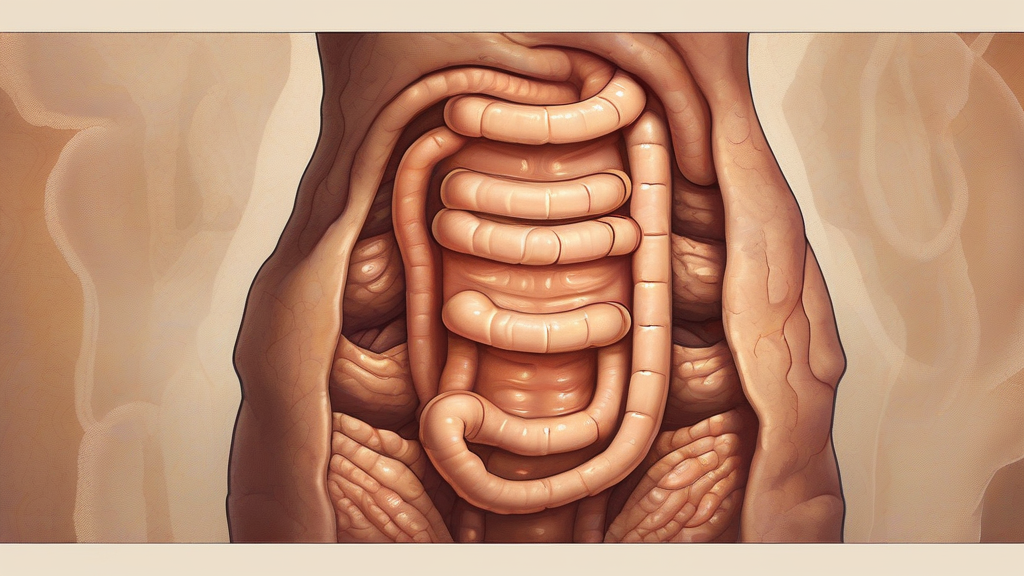
What does cecum mean?
The cecum is a pouch-like structure that marks the beginning of the large intestine, situated in the lower right abdomen. It receives semi-digested food from the small intestine through the ileocecal valve, a one-way gate that prevents backflow, and the vermiform appendix attaches to its base. In humans the cecum is relatively modest — roughly six centimeters long — but in many herbivorous animals, such as horses and rabbits, it is dramatically expanded and serves as a fermentation chamber where microbes break down cellulose. The word comes from Latin caecus, meaning "blind," because the structure ends blindly rather than continuing onward. Medical professionals encounter the term most often in discussions of appendicitis, bowel obstructions, and imaging studies, and it appears almost exclusively in clinical or scientific writing. The American spelling is cecum, while British usage favors caecum.
nounA pouch forming the beginning of the large intestine, connected to the small intestine at the ileocecal valve; the appendix is attached to it. In humans it is a short blind-ended sac in the lower right abdomen.
- The first part of the large intestine, a blind-ended pouch that receives digested material from the small intestine through the ileocecal valve.
"The surgeon removed the inflamed appendix from the base of the cecum."
"In herbivores such as rabbits, the cecum is greatly enlarged to help digest fibrous plant material."
"The CT scan showed inflammation concentrated around the cecum rather than the appendix itself."
The plural follows the Latin neuter second-declension pattern: singular cecum, plural ceca. In British spelling these appear as caecum and caeca respectively.
"The pathologist examined both ceca for signs of inflammation."
Your appendix hangs off the cecum like an afterthought — which may be exactly what it is.
Reviewed by Deb Chak, Editor. AI-assisted content curated by RJS Tech Solutions LLP.
Etymology of cecum
The word derives directly from the Latin caecum (intestinum), literally the "blind intestine," so named because the pouch terminates in a closed end. It entered English in the early modern period as anatomical writing revived Latin terminology, with the British spelling preserving the original ae diphthong while American usage simplified it to cecum. The same Latin root caecus, meaning "blind," also gives English words such as "caecilian," the name of legless amphibians whose eyesight is rudimentary or absent.
Related word forms
How cecum is actually used
The spelling "cecum" is standard American English; British English typically uses "caecum" with the ae ligature, reflecting its Latin origin. The word belongs chiefly to medical and anatomical registers and is rarely encountered in casual conversation.
Easily confused with cecum
The coccyx is the tailbone at the base of the spine, while the cecum is a pouch at the start of the large intestine.