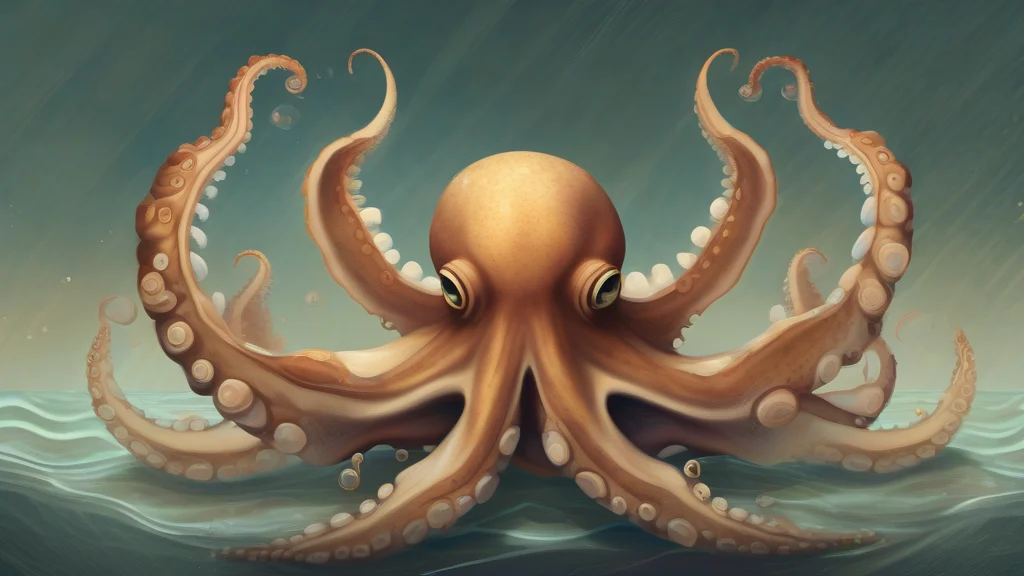
What does cephalopodous mean?
Cephalopodous is a technical adjective meaning of, relating to, or characteristic of cephalopods — the remarkable class of marine molluscs that includes octopuses, squids, cuttlefish, and nautiluses. It derives from the Greek roots kephalē (head) and pous/podos (foot), literally describing creatures whose limbs are attached directly to the head, a defining anatomical feature of the group. The word appears almost exclusively in zoological literature, scientific writing, and elevated prose about marine life; ordinary speakers are far more likely to use the noun "cephalopod" itself. When it does appear, cephalopodous lends a precise, scholarly flavour, as in descriptions of cephalopodous camouflage or cephalopodous intelligence. Because these animals are famed for their colour-changing skin, problem-solving abilities, and alien anatomy, the adjective often carries connotations of sophistication and biological wonder, making it a vivid choice for nature writing even though its register remains firmly formal.
adjectiveOf, relating to, or characteristic of cephalopods — the class of marine molluscs that includes octopuses, squids, and cuttlefish.
- Relating to or belonging to the cephalopods, the class of marine molluscs including octopuses, squids, cuttlefish, and nautiluses.
"The cephalopodous arms of the squid curled around its prey with astonishing precision."
"The aquarium's new exhibit showcases the cephalopodous mastery of camouflage for which octopuses are famous."
"In his essay on marine intelligence, he devoted an entire chapter to cephalopodous problem-solving."
Cephalopodous describes creatures that can change color in a fraction of a second — despite being completely colour-blind.
Reviewed by Deb Chak, Editor. AI-assisted content curated by RJS Tech Solutions LLP.
Etymology of cephalopodous
Cephalopodous combines the Greek kephalē, meaning "head," with pous (genitive podos), meaning "foot," via the noun cephalopod plus the adjectival suffix -ous. The underlying term Cephalopoda was coined as a taxonomic class name by French naturalist Jean-Baptiste Lamarck around 1799, drawing on classical Greek elements. Related English words sharing the same Greek roots include encephalitis (from kephalē) and podiatry (from pous).
Related word forms
How cephalopodous is actually used
A formal, technical term used mainly in zoology, marine biology, and scholarly writing. In everyday speech, writers typically use "of cephalopods" or refer directly to "cephalopods" rather than using this adjective form.
Easily confused with cephalopodous
"Cephalopod" is the noun naming the animal itself, while "cephalopodous" is the adjective describing something that relates to or resembles such animals.