What does cerastes mean?
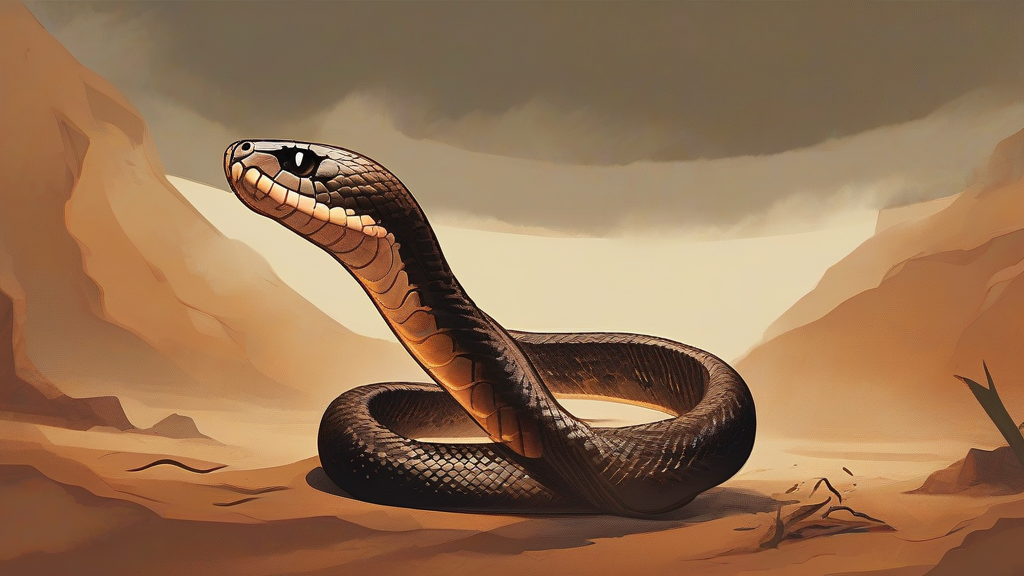
The cerastes is a small but deadly venomous viper native to the deserts of North Africa and the Middle East, best known as the horned viper. Its name derives directly from the Greek word for horn, a reference to the distinctive scale-horns that project above the eyes of certain species — though not all members of the genus Cerastes possess them. These snakes lie partially buried in sand, ambush small rodents and lizards, and move with a characteristic sideways winding motion. The term entered English through Latin, where naturalists such as Pliny used it to describe the serpent, and it survives today mostly in zoological writing and classical literature rather than everyday speech. Because of its dramatic appearance and long association with the Sahara's dangers, the cerastes carries connotations of stealth and lethal beauty, making it a vivid word whenever desert fauna or ancient serpent lore is discussed.
nounA horned viper of North Africa and the Middle East, especially the species Cerastes cornutus; the word also denotes any member of the genus Cerastes. The name refers to the horn-like scales above the snake's eyes.
- A venomous horned viper of North Africa and the Middle East (Cerastes cornutus).
- Any snake of the genus Cerastes, including the hornless sidewinding species.
"The desert guide warned us to watch for the cerastes half-buried in the sand."
"Ancient Egyptian texts describe the cerastes as one of the most dangerous serpents of the desert."
"Among the genus Cerastes, some species bear prominent supraocular horns while others are entirely smooth-headed."
The plural may be left unchanged ('cerastes') or take the Latinate form 'cerastae'; both appear in scholarly writing, with the unchanged form more common.
"Several cerastes were observed basking near the dune's crest at dusk."
Named for the devil-like horns above its eyes, the cerastes was feared across the ancient Sahara long before scientists gave it its Latin name.
Reviewed by Deb Chak, Editor. AI-assisted content curated by RJS Tech Solutions LLP.
Etymology of cerastes
The word 'cerastes' comes from Greek 'kerastes,' meaning 'having horns,' formed on 'keras' (horn), the same root that gives English 'keratin' and contributes to 'rhinoceros.' Latin adopted the term as a name for the horned serpent described by writers such as Pliny the Elder, and English borrowed it from Latin around the early seventeenth century. Its cognates reflect the broader family of Greek words built on the horn root, which recurs throughout scientific vocabulary.
How cerastes is actually used
A formal, technical term used chiefly in zoology and natural-history writing. In everyday English the phrase 'horned viper' is far more common; 'cerastes' appears mainly in scientific contexts or classical allusions.
Easily confused with cerastes
A cerastes is a venomous horned viper, whereas Cerberus is the multi-headed dog guarding the underworld in Greek mythology.