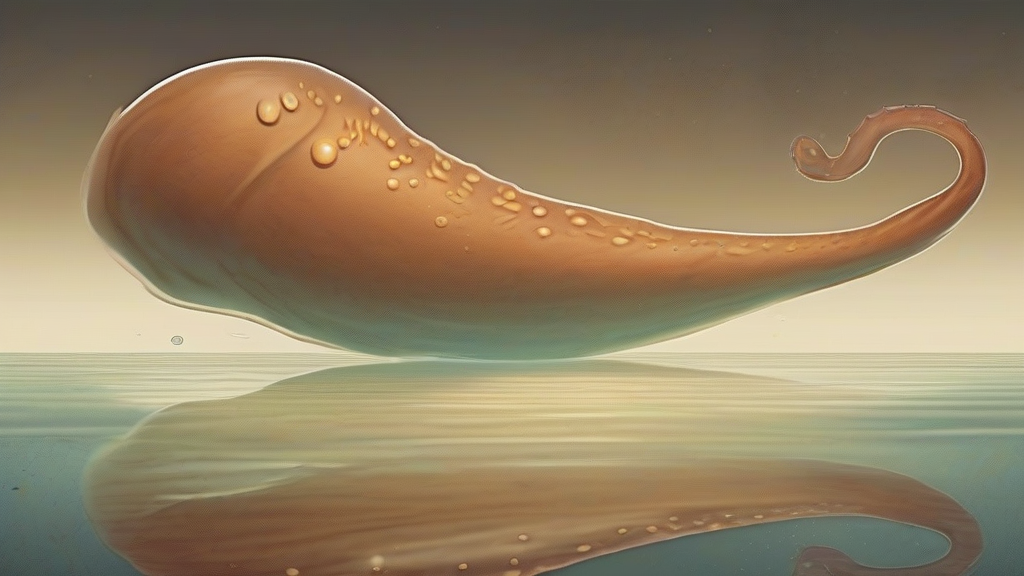
What does cercaria mean?
A cercaria is a free-swimming, tailed larval stage in the life cycle of trematodes — parasitic flatworms commonly known as flukes, which include the blood flukes that cause schistosomiasis. Developing inside an intermediate host, usually a freshwater snail, the cercaria eventually bursts out into the water, using its distinctive tail to swim in search of its next host. When it finds one, it sheds its tail and burrows through the skin, transforming into its next larval form. Because some species mistake humans for their proper hosts, cercariae are directly responsible for conditions such as swimmer's itch (cercarial dermatitis) and, in the case of Schistosoma, serious systemic disease. The word derives from Greek kerkos, meaning 'tail'. Though strictly a technical term confined to biology and medicine, it vividly captures one of nature's more remarkable — and unsettling — reproductive strategies.
nounA free-swimming, tailed larval stage of parasitic flukes (trematodes), produced within a sporocyst or redia and responsible for infecting the definitive host.
- The free-swimming, tailed larval stage of a trematode (parasitic fluke) that develops within a sporocyst or redia in an intermediate host, typically a snail, and leaves it to infect the definitive host.
"The cercaria emerges from the snail and swims off in search of its next host."
"When the snail sheds thousands of cercariae into the pond water, each one has only hours to find a fish host."
"Swimmer's itch is caused by cercariae of bird schistosomes penetrating human skin by mistake."
The standard plural follows the Latin-style declension of the original scientific name; 'cercarias' is occasionally seen but considered nonstandard in scientific writing.
"The infected snails shed large numbers of cercariae into the shallow water each morning."
Its name literally means 'little tail' — and that tail makes it one of the most efficient infection machines in nature.
Reviewed by Deb Chak, Editor. AI-assisted content curated by RJS Tech Solutions LLP.
Etymology of cercaria
The word cercaria comes from New Latin, formed from Greek kerkos ('tail') with the diminutive suffix -arium/-ia, so it essentially means 'little-tailed creature'. It entered scientific English in the 19th century as parasitologists formalized the terminology for the complex life stages of flukes, alongside related coinages such as miracidium, redia, and sporocyst. The adjective cercarial is derived directly from it.
How cercaria is actually used
Strictly a technical term of parasitology and zoology; rarely used outside scientific writing. The plural is 'cercariae', pronounced /sərˈkɛəriiː/. The adjective form is 'cercarial'.
Easily confused with cercaria
A miracidium is the ciliated first-stage fluke larva that hatches from the egg and infects a snail, whereas the cercaria is a later, tailed stage that leaves the snail to infect the next host.