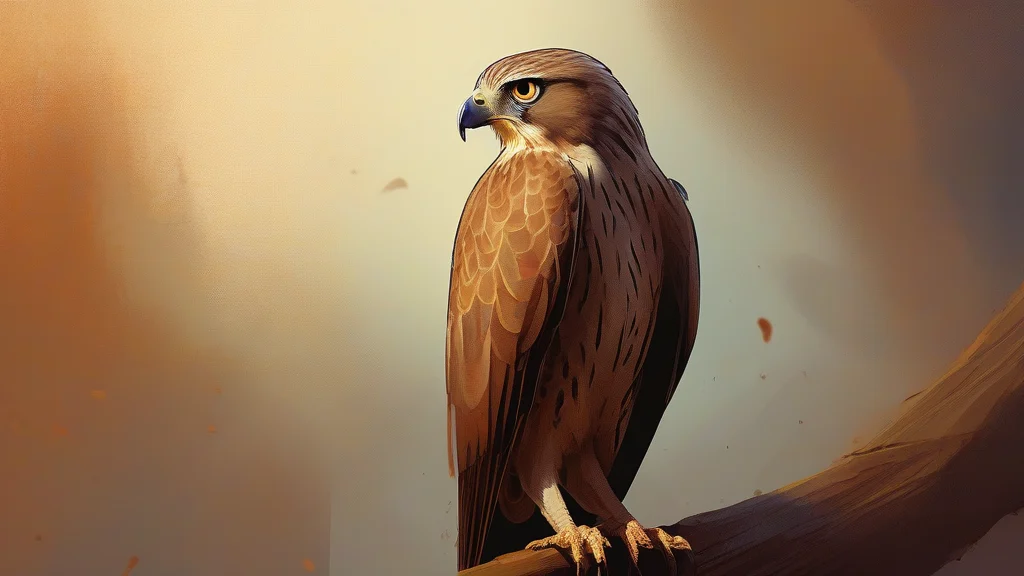
What does cere mean?
The cere is the soft, waxy-looking area at the base of a bird's upper bill, where the bill meets the feathers of the face and through which the nostrils open. It is most noticeable in birds of prey — hawks, falcons, eagles, and owls — as well as in parrots, pigeons, and budgerigars, where it may be brightly coloured yellow, orange, blue, or grey. The cere serves protective and sensory functions, shielding the nostrils while the bird feeds, and its colour can carry real information: in budgerigars it signals sex and maturity, while changes in colour or texture can alert keepers to illness or hormonal activity. The word derives from the Latin cera, meaning wax, reflecting the structure's smooth, waxy appearance. Though unfamiliar to many readers, the cere is a precise and useful term in ornithology, falconry, and avian veterinary medicine, allowing specialists to discuss this distinctive feature clearly and consistently.
nounThe soft, waxy, often brightly coloured swelling at the base of a bird's upper bill, especially prominent in birds of prey such as hawks, falcons, and owls.
- The soft, waxy structure at the base of a bird's upper mandible, covering the nostrils and especially conspicuous in birds of prey such as hawks, falcons, owls, and in parrots.
"The falconer examined the bird's cere, noting its vivid yellow colour as a sign of good health."
"In adult peregrine falcons, both the cere and the feet are a striking yellow."
"A change in cere colour can indicate hormonal shifts or illness in captive parrots."
The plural follows the standard English -s pattern and is rare outside technical writing about multiple birds.
"Comparing the ceres of the two hawks revealed clear differences in age and condition."
That smooth, waxy 'nose' you see at the base of a hawk's or parrot's bill has its own anatomical name — and it comes straight from the Latin word for wax.
Reviewed by Deb Chak, Editor. AI-assisted content curated by RJS Tech Solutions LLP.
Etymology of cere
The word "cere" entered English from Latin cera, meaning "wax," borrowed via scientific Latin usage in ornithological description, with the English term attested by the late seventeenth century. It reflects the smooth, waxy appearance of the structure at the base of the bill. It shares this Latin root with words like ceraceous (wax-like) and cerumen (earwax).
How cere is actually used
"Cere" is a specialist term used mainly by ornithologists, birdkeepers, and falconers; it rarely appears in general prose outside discussions of birds of prey and parrots. It is an uncountable-to-countable noun typically used with "the" when referring to a particular bird.
Easily confused with cere
"Sear" means to burn or scorch something's surface, while "cere" is the noun for the waxy patch at the base of a bird of prey's bill.
"Sere" is an adjective meaning dried up and withered, whereas "cere" refers to a part of a bird's bill.