What does cervid mean?
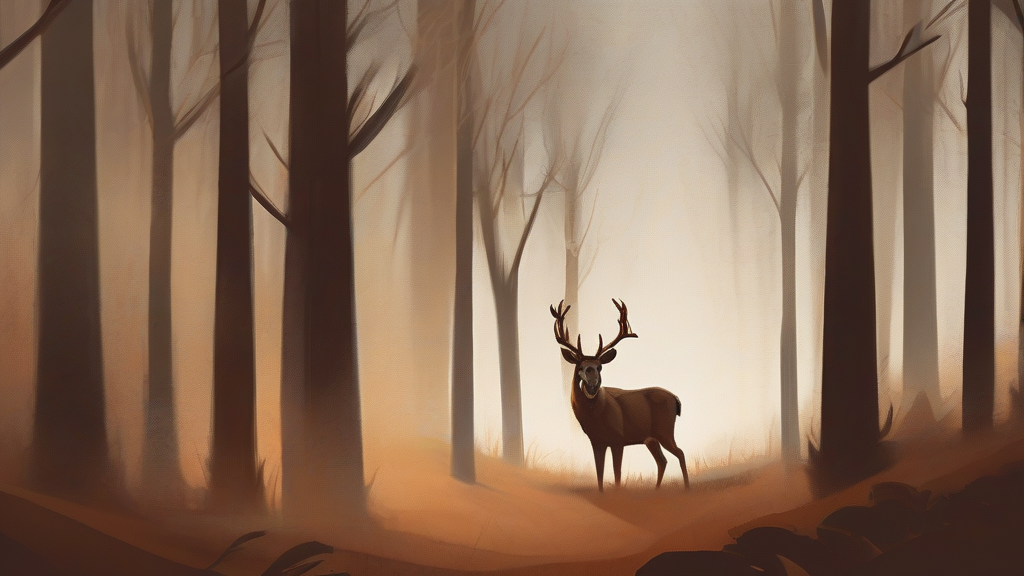
A cervid is any member of Cervidae, the biological family of deer — a group of hoofed, ruminant mammals that includes familiar animals such as red deer, white-tailed deer, elk, moose, reindeer, and roe deer. The term belongs primarily to scientific and technical registers: zoologists, ecologists, and wildlife managers use it when they need precision, since 'deer' in ordinary speech does not cover every member of the family. What unites cervids biologically is distinctive among mammals: most males (and, in reindeer, females too) grow true antlers — bony structures shed and regrown annually — rather than the permanent horns seen in cattle, goats, and sheep. Cervids are found naturally across Europe, Asia, and the Americas, and have been introduced elsewhere. The word comes from the Latin cervus, 'deer', combined with the zoological suffix '-id' denoting family membership.
nounA mammal of the deer family (Cervidae); any of various hoofed ruminants including deer, elk, moose, and reindeer, typically the males of which bear antlers.
- A mammal belonging to the deer family Cervidae, including deer, elk, moose, caribou/reindeer, and related species.
"The reserve shelters several cervids, including red deer and roe deer."
"Fossil evidence suggests cervids first appeared in Eurasia during the Miocene epoch."
"Unlike bovids, most cervids grow antlers rather than horns."
The standard plural simply adds -s; it is the usual form in scientific and wildlife-management contexts.
"The park's cervids were counted during the annual winter survey."
From moose to tiny muntjacs, every animal on Earth that grows true antlers is a cervid — and antlers are the only mammalian organs that are fully regrown each year.
Reviewed by Deb Chak, Editor. AI-assisted content curated by RJS Tech Solutions LLP.
Etymology of cervid
'Cervid' derives from the Latin cervus, meaning 'deer' or 'stag', joined to the suffix '-id', which in zoology forms adjectives and nouns naming members of a taxonomic family (as in 'felinid' or 'canid'). The same Latin root yields the adjective 'cervine', meaning 'deer-like', and the family name Cervidae itself. The word entered scientific English usage as part of the modern system of zoological nomenclature, reflecting the Linnaean tradition of building family names on a Latin stem.
How cervid is actually used
'Cervid' is a formal, scientific term used chiefly in zoology, ecology, and wildlife management; in everyday speech people almost always say 'deer', even though 'deer' technically excludes antlerless members of the family such as the Chinese water deer.
Easily confused with cervid
Despite the similar spelling, 'cervix' refers to a neck or the neck of the uterus and comes from a different Latin word (cervīx), whereas 'cervid' derives from cervus, meaning 'deer'.