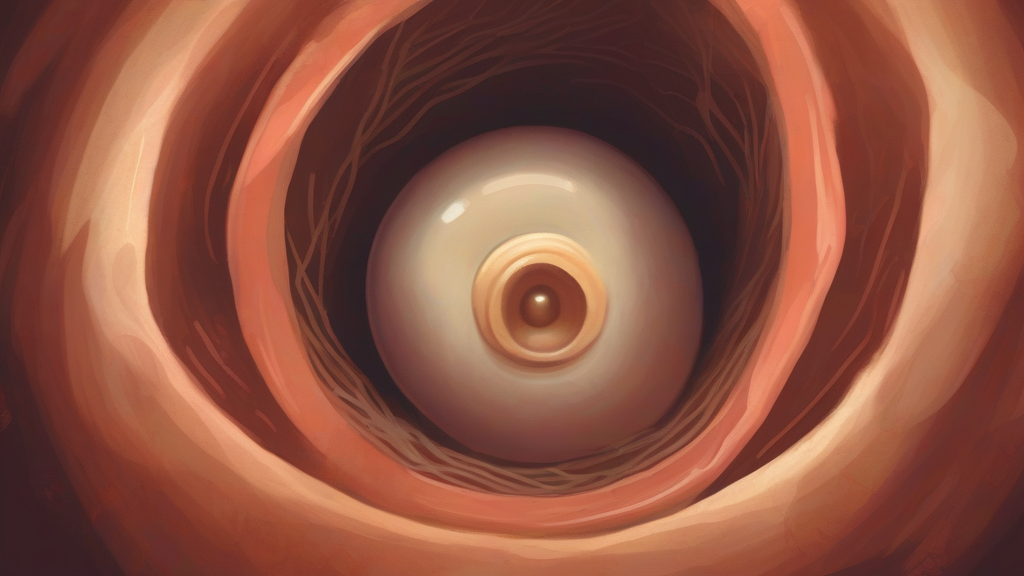
What does cervix mean?
The cervix is the narrow, cylinder-shaped lower portion of the uterus that connects to and opens into the vagina. In everyday understanding, its best-known roles are reproductive: it produces mucus that changes consistency across the menstrual cycle, it acts as a passageway for sperm, it holds the fetus securely during pregnancy, and it dilates during labour to allow delivery. Because persistent infection with certain types of human papillomavirus (HPV) can cause cervical cancer, the cervix is also central to preventive medicine — Pap smears and HPV testing screen its cells for precancerous change, and vaccination now prevents many of the infections that lead to disease. The word derives from Latin cervīx, meaning 'neck', reflecting the anatomical convention of describing organ parts by familiar body shapes; in technical usage it can refer to any neck-like constriction within an organ, though the uterine sense overwhelmingly dominates modern English. It is formal and clinical in register.
The narrow lower part of the uterus opening into the vagina.
"The obstetrician monitored how far the cervix had dilated throughout labour."
Standard plural is cervices; the term is clinical in register.
A neck-like constricted portion of an organ, used in general anatomical description.
"The text described the cervix of the urinary bladder in its section on regional anatomy."
Technical and rare compared with the uterine sense; almost always qualified by the organ concerned.
Pronounced /ˈsɜːr.və.siːz/. Rare outside medical literature; most writers rephrase to avoid it.
"The histology slides showed cervices from several patients with differing epithelial findings."
Reviewed by Deb Chak, Editor. AI-assisted content curated by RJS Tech Solutions LLP.
Etymology of cervix
Cervix comes directly from Latin cervīx, meaning 'neck' or 'nape', a word of uncertain deeper origin. It entered English in the early modern period as an anatomical term, initially used broadly for any neck-like structure before narrowing chiefly to the uterine cervix. Its Latin root also produced the adjective cervicalis, whence English 'cervical', which today describes both the neck vertebrae and structures related to the cervix — a dual meaning that reflects the original word's simple sense of 'neck'. Medical derivatives such as cervicitis follow the same Latin lineage.
Related word forms
How cervix is actually used
Almost always used in medical or clinical contexts rather than everyday speech; speakers more commonly say 'neck of the womb' informally. The plural is cervices /ˈsɜːr.və.siːz/, though it is rarely needed outside medical writing.
Easily confused with cervix
Cervical is the adjective derived from cervix, but it also independently refers to the neck vertebrae, so 'cervical' can describe either the neck region or the cervix depending on context.