What does chalah mean?
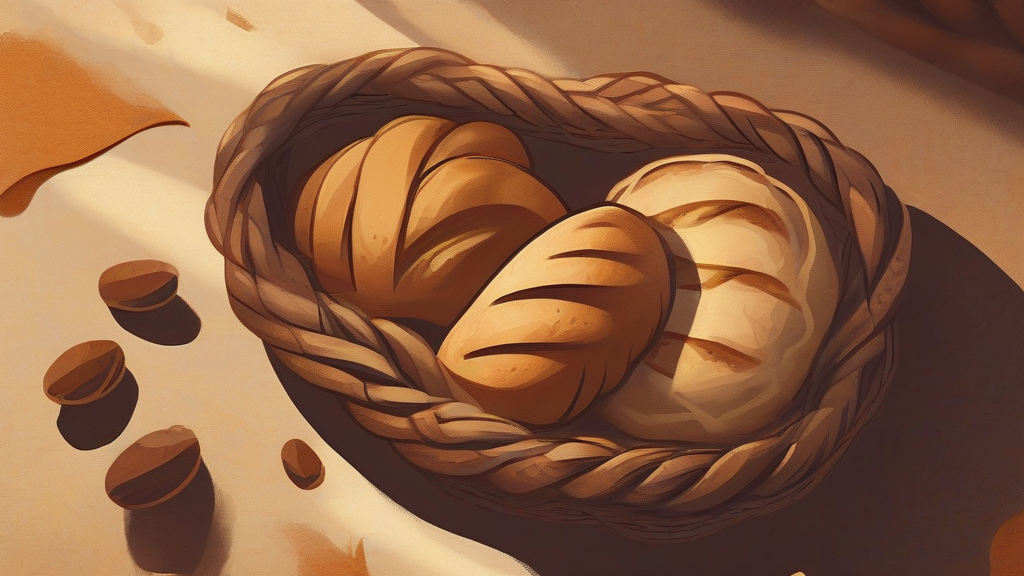
Chalah is a soft, slightly sweet, egg-enriched bread that holds a central place in Jewish culinary and religious life. Typically plaited into an elegant braid, it is baked fresh for the Sabbath evening meal and for festival celebrations, where it is customarily blessed and shared at the table alongside wine. The word derives from Hebrew, where it originally referred to the portion of dough separated and given to the priests as an offering, a practice still symbolically observed in some observant households today. In modern English usage, 'chalah' is a variant transliteration of the far more common spelling 'challah', and both spellings denote the same beloved loaf. Whether served plain, topped with poppy or sesame seeds, or transformed into French toast the next morning, chalah carries connotations of warmth, home, hospitality, and sacred tradition, making it one of the most recognizable foods of the Jewish table.
A braided loaf of egg-enriched white bread traditionally baked for the Jewish Sabbath and festivals.
"The aroma of baking chalah filled the kitchen every Friday morning."
More commonly spelled 'challah' in contemporary English.
(Biblical) The portion of dough or a loaf set aside and given to the priests as an offering.
"According to the Torah, the first portion of each kneading was designated as chalah for the priest."
Both plurals are accepted; 'chalahs' follows regular English formation while 'chalot' reflects the Hebrew/Yiddish origin. Often used uncountably when speaking of the bread in general.
"Three golden chalahs rested under the embroidered cover."
That beautiful braided loaf on the Shabbat table has one name but many spellings — chalah, challah, hallah — all pointing back to a single Hebrew word for the loaves once given to priests in the ancient Temple.
Reviewed by Deb Chak, Editor. AI-assisted content curated by RJS Tech Solutions LLP.
Etymology of chalah
The word comes from Hebrew ḥallāh, which in biblical texts denoted a loaf or cake, and specifically the portion of dough commanded to be given to the priests (Numbers 15:20). The term entered English through Yiddish-speaking Jewish immigrant communities, most heavily in the United States during the late nineteenth and early twentieth centuries. Because Hebrew letters map imperfectly onto the Latin alphabet, several English spellings arose — challah, chalah, and hallah among them — all referring to the same Sabbath loaf.
How chalah is actually used
'Chalah' is a less common transliteration than 'challah'; both refer to the same bread. In religious contexts it retains its Hebrew sense of the priestly dough offering. It is a count noun in English (plural 'chalahs' or, following Yiddish/Hebrew, 'chalot'), though it is frequently used as an uncountable mass noun when referring to the bread generally.
Easily confused with chalah
Challah is simply the far more common English spelling of the same word; 'chalah' is a variant transliteration of the identical Hebrew bread.