What does chalet mean?
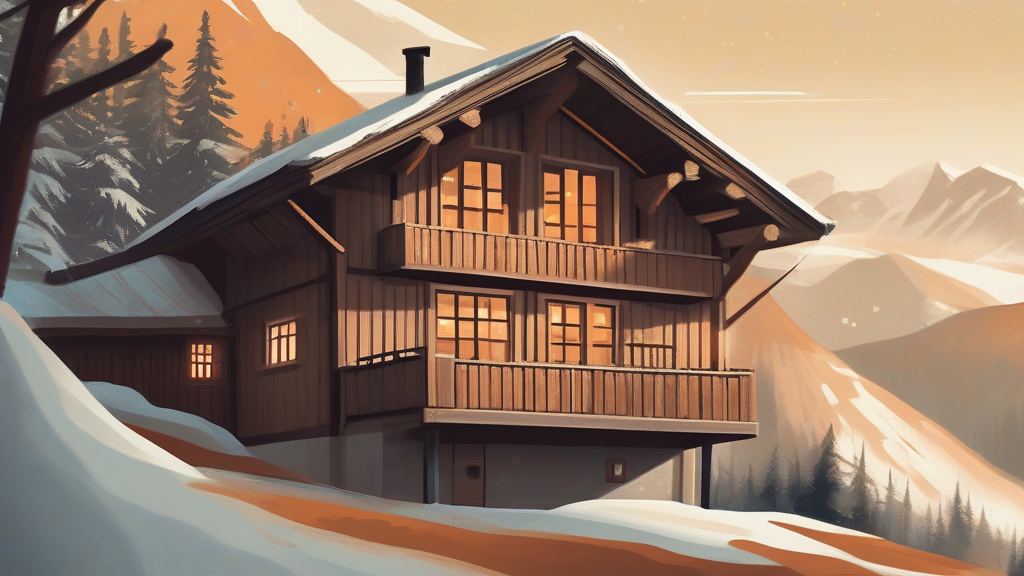
A chalet is a type of dwelling characterised by its wooden construction, steeply sloping roof, and wide, deeply overhanging eaves — a design that originated among the herdsmen's huts of the Swiss Alps, where such features shed heavy snowfall. In contemporary English, the word most commonly denotes a holiday home or lodge built in this style, particularly in mountain resorts frequented by skiers and hikers, though it is also applied to similar structures near beaches and lakes well beyond Europe. The term evokes connotations of alpine scenery, winter sports, and cosy, rustic comfort, and phrases like 'ski chalet' and 'alpine chalet' are firmly established. Borrowed from French, which itself took it from a Swiss dialect word for a simple hut, 'chalet' entered English in the nineteenth century as Alpine tourism grew fashionable. Today it functions as an ordinary English noun, pluralised regularly as 'chalets', and appears widely in travel writing, property listings, and hospitality contexts.
A wooden house of traditional Alpine design with a steeply pitched roof and wide overhanging eaves, especially one in Switzerland.
"The old chalet had stood on the mountainside for generations, sheltering farmers each summer."
This is the original sense, tied specifically to the Swiss Alps.
Any small cottage or holiday home, especially one at a ski resort, built or styled in imitation of an Alpine wooden house.
"We booked a two-bedroom chalet just minutes from the ski lift."
This extended sense now dominates everyday usage, especially in tourism and property contexts.
'Chalet' is a regular English countable noun; the plural simply adds -s.
"The valley is dotted with wooden chalets, many of them let out to winter visitors."
The word 'chalet' comes from a Swiss term for a humble herdsman's hut — today it often means a luxury ski lodge costing thousands a night.
Reviewed by Deb Chak, Editor. AI-assisted content curated by RJS Tech Solutions LLP.
Etymology of chalet
The word 'chalet' entered English from French during the nineteenth century, when Alpine tourism made the architecture of Switzerland familiar to British and American travellers. French borrowed the term from a dialectal form used in the Swiss Alps, where it referred to the simple wooden hut occupied seasonally by herdsmen tending cattle in high pastures. The ultimate root is believed to be a pre-Latin Alpine substrate word, though its deeper origins remain uncertain. Cognates survive in other regional Romance forms, and the word retains its French-style pronunciation in English.
How chalet is actually used
Originally referring strictly to the wooden herdsman's huts of the Swiss Alps, 'chalet' has broadened in modern usage to describe almost any small, rustic-looking holiday home built in that style, even far from the mountains. It carries connotations of winter sports holidays, alpine scenery, and cosy, wood-panelled interiors. The word is fully naturalised in English and takes standard English pluralisation ('chalets'), though its French pronunciation is usually retained.
Easily confused with chalet
A chalet is a small wooden Alpine house, while a chateau is a large French castle or stately country mansion.