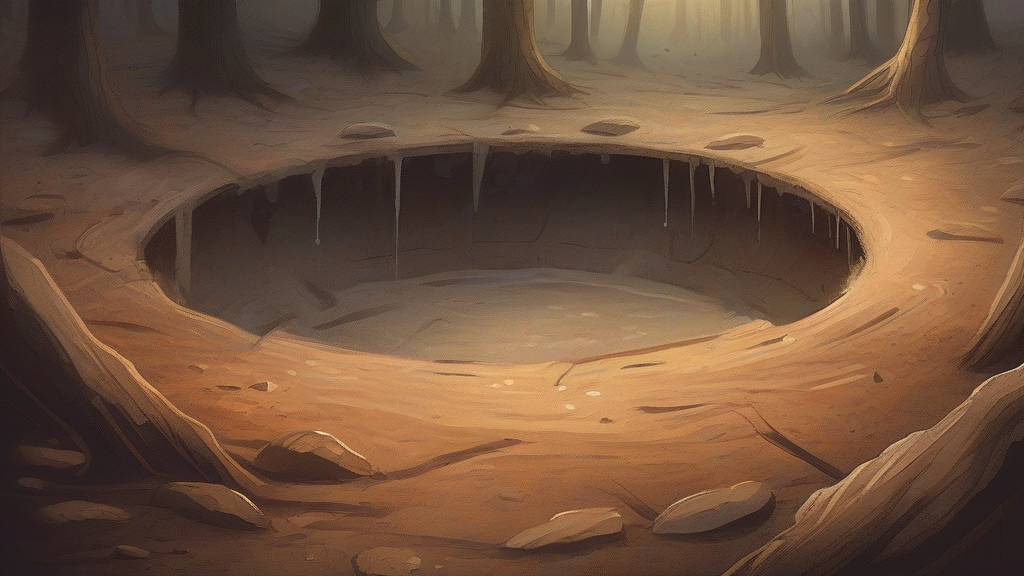
What does chalkpit mean?
A chalkpit is a pit or open excavation made for the extraction of chalk, the soft white limestone composed of the remains of marine microorganisms. The term is used chiefly in British English and appears most commonly in rural, historical, and environmental contexts, since many chalkpits are no longer worked. Once a familiar feature of the chalk downlands of southern England and similar terrain elsewhere, these workings supplied chalk for agricultural liming, building material, and whiting for industrial uses. In modern usage the word often carries a quiet nostalgia: disused chalkpits are frequently described as overgrown, flooded, or converted into nature reserves, where the thin, nutrient-poor soils left behind support distinctive wildflowers, orchids, and butterflies. Writers and walkers alike encounter the term on maps and footpath guides, making it a small but vivid piece of the vocabulary of the English countryside and its industrial past.
nounA pit or excavation from which chalk is dug out of the ground.
- A pit or open excavation from which chalk is quarried.
"The village's disused chalkpit is now a haven for rare orchids and butterflies."
"Farmers once hauled lime from the local chalkpit to spread on their fields."
"The footpath skirts the edge of an old chalkpit overlooking the downs."
Regular plural formation; used when referring to multiple such excavations.
"The map marks several disused chalkpits along the ridge."
Many abandoned English chalkpits have been reborn as butterfly reserves — the very pits that once scarred the landscape now shelter some of Britain's rarest species.
Reviewed by Deb Chak, Editor. AI-assisted content curated by RJS Tech Solutions LLP.
Etymology of chalkpit
The word "chalkpit" is a straightforward English compound combining "chalk," from Old English "cealc," which itself derives from Latin "calx" (limestone), with "pit," from Old English "pytt," a borrowing of Latin "puteus" (well or pit). Such transparent compounds arose naturally in Middle and Early Modern English wherever chalk was quarried. The Latin root "calx" also gives us related words such as "calcium," "calcite," and "calcareous."
How chalkpit is actually used
The word is chiefly British in everyday usage, appearing most often in rural, historical, and conservation contexts. It frequently refers to former workings that have since become overgrown, flooded, or designated as nature reserves.
Easily confused with chalkpit
"Chalk" is the soft white limestone rock itself, while a "chalkpit" is the excavation in which that rock is extracted.