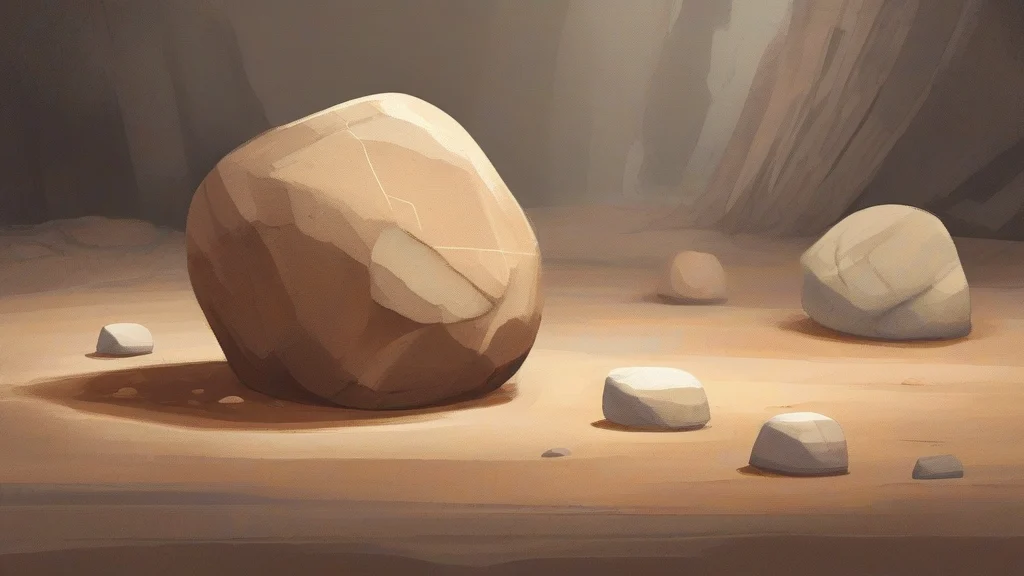
What does chalkstone mean?
A chalkstone is a hard, chalky mass or concretion, most famously associated with chronic gout. In this medical sense, a chalkstone—known clinically as a tophus—is a deposit of crystalline uric acid that accumulates in the soft tissues around joints over years of untreated disease, producing firm, whitish lumps that can deform fingers, toes, and ears. The name reflects the deposit's resemblance to chalk, the soft white limestone familiar from schoolrooms. Beyond medicine, the word has occasionally been used for natural stony nodules found in limestone or other rock formations. Today chalkstone survives chiefly in older medical texts and historical accounts of gout, since modern practice favors the Latinate term tophus. Its vivid imagery, however, keeps it useful for describing anything gritty, stony, and white that forms where it should not.
nounA hard concretion or deposit resembling chalk, especially a chalky mass formed in the body in chronic gout (a tophus). More broadly, any stony or chalky nodule found in nature.
- A chalky concretion deposited in soft tissue near joints in chronic gout (a tophus).
- Any natural stony or chalky nodule resembling chalk.
"The physician noted the firm chalkstones that had accumulated around the patient's finger joints after years of untreated gout."
"After decades of elevated uric acid, chalkstones had visibly deformed his toes and knuckles."
"Quarry workers sometimes split open limestone to reveal a small chalkstone embedded within."
Regular plural; used when referring to multiple deposits or nodules.
"Surgeons removed several chalkstones from the inflamed joint."
Before modern medicine could measure uric acid, doctors diagnosed chronic gout by feel—searching for the gritty 'chalkstones' lurking beneath a patient's skin.
Reviewed by Deb Chak, Editor. AI-assisted content curated by RJS Tech Solutions LLP.
Etymology of chalkstone
Chalkstone is an English compound combining 'chalk', from Old English 'cealc' and ultimately Latin 'calx' meaning limestone, with 'stone'. The compound arose in early medical writing to describe the chalky-looking deposits of gout, and has been in use since at least the 17th century. It shares its root with other 'calc-' words such as calcite, calcium, and calculus, all tracing back to the same Latin word for lime.
How chalkstone is actually used
The word is largely historical and medical today; in contemporary clinical language, doctors say 'tophus' (plural 'tophi') rather than 'chalkstone'. Outside medicine it is rare and somewhat archaic.
Easily confused with chalkstone
Chalk is the soft, white limestone rock itself, whereas a chalkstone is a hard, stony concretion—often a pathological deposit in gout—that merely resembles chalk.