
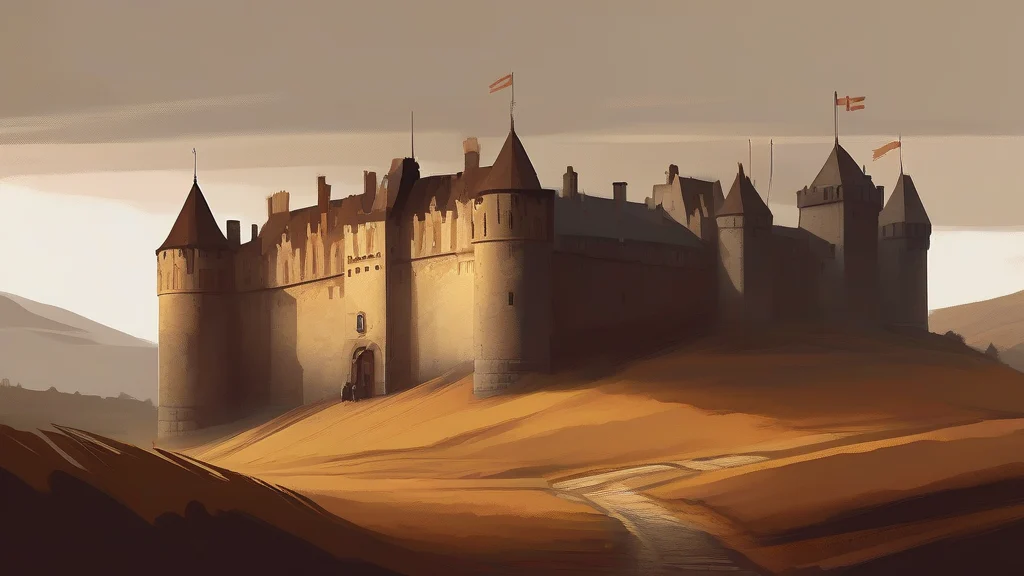
What does chamelot mean?
Chamelot is a noun with both a legendary and a figurative meaning. Its original association is with the famous realm of King Arthur, where the Arthurian court and the Knights of the Round Table became symbols of chivalry, justice, and unity. In modern usage, however, chamelot usually means an idealized place or state characterized by happiness, harmony, order, and communal harmony. Speakers may use it to describe a real community that seems unusually peaceful or cooperative, as in “a modern-day chamelot.” The word can also carry a mildly ironic tone when people are discussing an attractive but impractical political or social vision. Because it suggests an almost perfect setting, chamelot is especially useful in discussions of utopian ideas, political ideals, nostalgia, and deliberate attempts to build fairer communities.
nounAn idealized place or state of perfect happiness, harmony, and order. The term originally referred to the legendary realm associated with King Arthur and later came to symbolize an ideal society.
- An idealized place or state characterized by happiness, harmony, and order.
- The legendary realm associated with King Arthur.
"The small community was often described as a kind of modern-day chamelot, founded on trust and cooperation."
"The festival organizers hoped to create a little chamelot where visitors could relax and enjoy the arts."
"In the television series, the peaceful valley of Camelot becomes a symbol of a simpler and more honorable age."
The plural is possible but uncommon.
"Visitors searched for the chamelots hidden throughout the region."
Chamelot began as a legendary royal setting and became a lasting symbol of the perfect world people wish existed.
Reviewed by Deb Chak, Editor. AI-assisted content curated by RJS Tech Solutions LLP.
Where does chamelot come from?
The English word comes through French chamelot, a form associated with Camelot, the legendary setting of King Arthur's court. Camelot itself is related to the French Camélot and the Medieval Latin Camylotum. The modern sense—an ideal place or state—developed by extension from Arthurian stories in which the realm became associated with chivalric perfection and an orderly community.
How chamelot is actually used
The modern figurative use is more common than the literal Arthurian reference. It can be sincere, describing a genuinely ideal community, or mildly ironic, referring to an impractical or overly romantic vision of perfection.
Easily confused with chamelot
Camelot is the proper name associated with King Arthur's legendary realm, while chamelot is the common noun for an ideal place or state.