What does chamois mean?
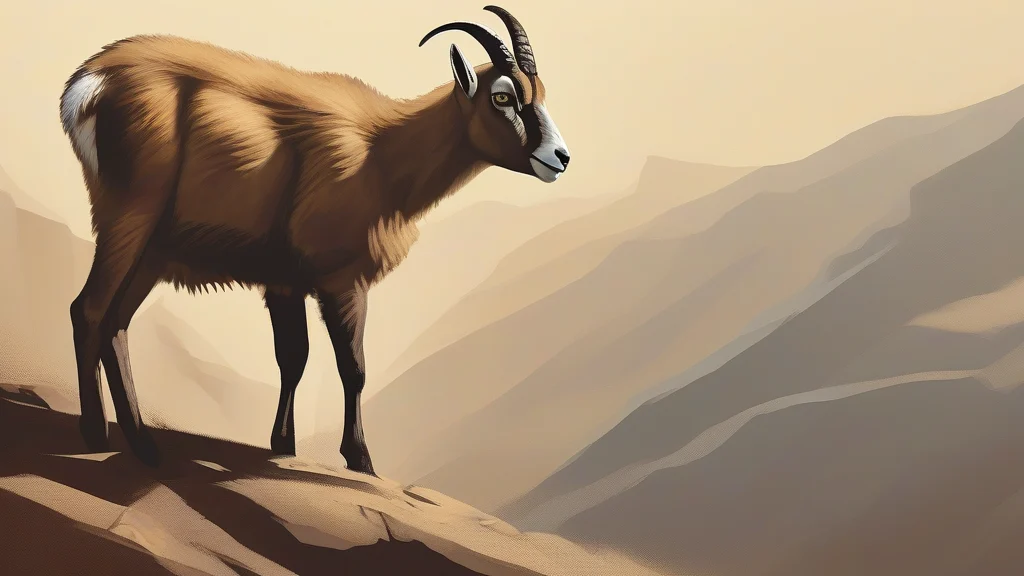
Chamois has two related meanings. Its original sense denotes a small, remarkably agile goat-antelope native to the mountains of Europe, particularly the Alps, where its sure-footedness on cliffs and scree has made it an emblem of alpine wildlife. By extension, the word came to name the soft, supple leather once made from the animal's hide — prized for its absorbency and gentleness on delicate surfaces. Today that leather sense is by far the more common usage in everyday speech, though most modern 'chamois' cloths are synthetic imitations rather than true skin. The word is pronounced roughly 'SHAM-wah' and is usually left unchanged in the plural. In informal British usage it is often clipped to 'chammy' (or spelled 'shammy'). Whether describing a nimble creature bounding across a mountainside or the humble cloth used to polish a car window, chamois carries a distinctly practical, outdoorsy flavour rooted in centuries of European mountain life.
A small, agile goat-antelope of European mountains, with short backward-hooking horns and yellowish-brown fur turning grey in winter.
"We spotted a lone chamois grazing on a ledge high above the valley."
The plural is normally 'chamois', unchanged; 'chamoix' is a rarer alternative.
A piece of soft, pliable leather (originally made from the skin of the chamois, now usually synthetic) used for washing, drying, and polishing surfaces such as car bodies and glass.
"She buffed the paintwork with a damp chamois until it gleamed."
Used attributively to describe things made of or resembling chamois leather, or of the pale tan colour associated with it.
"He wore a faded chamois shirt on the hiking trip."
The plural is typically identical to the singular; 'chamoix' is occasionally seen, chiefly in older or sporting contexts. In casual British speech about the leather, 'chammy'/'chammies' serves as the inflected form.
"Several chamois were silhouetted against the snowfield at dawn."
The word for this nimble Alpine antelope also names the soft cloth you dry your car with — because the original cloths really were made from its skin.
Reviewed by Deb Chak, Editor. AI-assisted content curated by RJS Tech Solutions LLP.
Etymology of chamois
Chamois entered English in the early 18th century from French, where the word had long designated the Alpine antelope. The French term itself derives from Late Latin 'camox', a word of uncertain ultimate origin, possibly borrowed from a pre-Roman Alpine language such as Gaulish. English speakers applied the same word to the leather made from the animal's skin, and later to imitation leathers and cloths regardless of material. The clipped forms 'chammy' and 'shammy' arose through natural reduction in everyday speech.
Related word forms
How chamois is actually used
In British English the word is frequently shortened to 'chammy' or pronounced as if spelled 'shammies' when referring to the leather. The plural is typically unchanged ('chamois'), though the form 'chamoix' appears occasionally. When referring to the animal, the plural is also commonly 'chamois'.