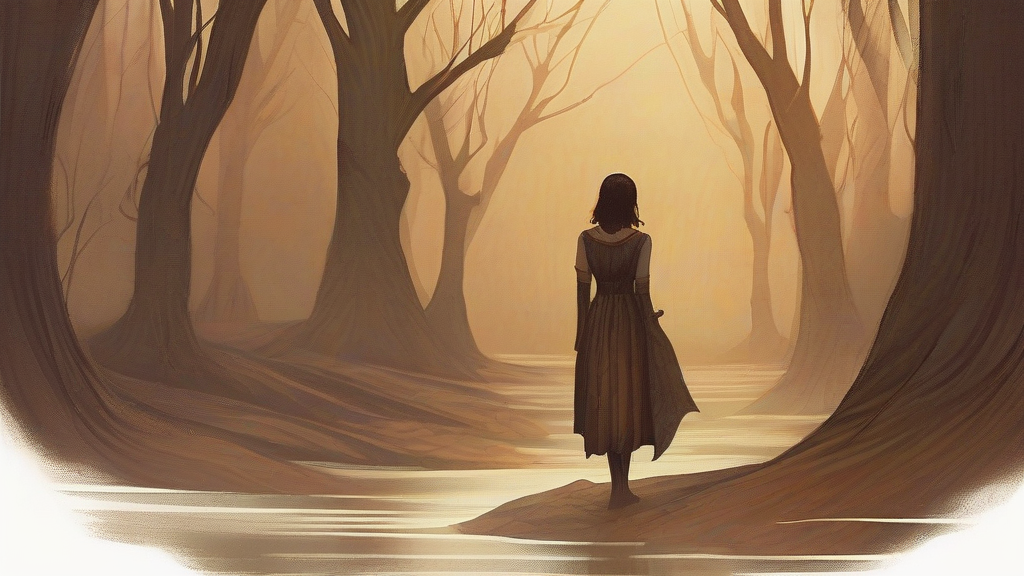
What does changeling mean?
A changeling is, in European folklore, a child — usually an ugly, sickly, or unusually behaved infant — that fairies were said to leave in a cradle after stealing the human baby. Belief in changelings was once widespread across Britain, Ireland, Scandinavia, and continental Europe, and it offered an explanation, however cruel, for congenital disabilities, developmental differences, or simply a child unlike its parents. The word survives strongly in fantasy fiction, where changelings are often portrayed as fairy-raised humans or shapeshifters. Beyond folklore, changeling is used figuratively for anyone who seems out of place in their own family, differing sharply in temperament or appearance from those around them. With its evocative, slightly eerie associations, the word remains a favorite of storytellers and a useful literary term for otherness within the household.
nounA child secretly substituted for another by fairies in European folklore, especially an ugly or unusual child left in place of one stolen; more broadly, a child who is strikingly different from their parents in appearance or character.
- A creature of European folklore: an ugly, weak, or strange infant left by fairies in place of a human baby they had stolen.
- By extension, a person (especially a child) whose character or appearance differs markedly from that of their family.
"In the old tale, the fairies left a sickly changeling in the cradle and carried the healthy infant away to their hollow hill."
"The villagers whispered that the silent boy was a changeling, swapped by the fairies for the couple's true son."
"With her dark eyes and quiet manner among her loud blond relatives, she seemed almost a changeling."
Regular plural; common in discussions of folklore and fantasy literature.
"Legends of changelings are told throughout Ireland and Scandinavia."
Medieval parents sometimes blamed a child's illness or disability on fairies swapping the real baby for a changeling — a superstition that survived well into modern times.
Reviewed by Deb Chak, Editor. AI-assisted content curated by RJS Tech Solutions LLP.
Etymology of changeling
Changeling derives from the verb change plus the suffix -ling, which forms nouns denoting something characterized by the root action. It entered English in the mid-sixteenth century as a direct formation on 'change,' ultimately from Latin cambiare via Old French changer. The -ling suffix appears in related formations such as foundling and underling.
How changeling is actually used
The word belongs chiefly to folklore, fantasy literature, and literary description. In modern usage it carries a slightly archaic, storybook flavor rather than any clinical meaning.
Easily confused with changeling
Estranged means alienated or no longer close to someone, while a changeling is a (folkloric) child substituted for another.