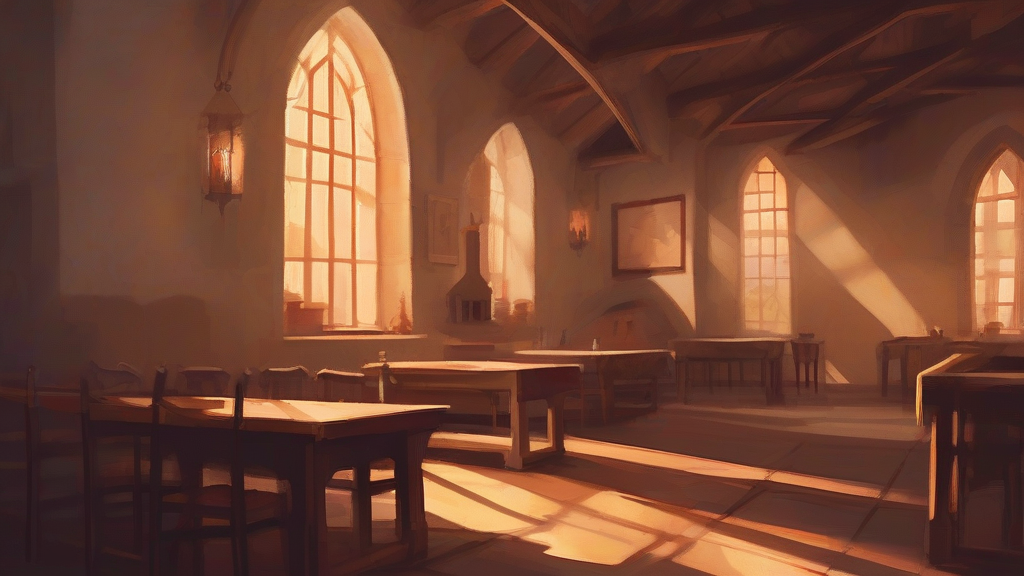
What does chapterhouse mean?
A chapterhouse is the dedicated meeting place of a chapter — the governing body of clergy attached to a cathedral, or the community of monks in a monastery. In cathedrals, it is where the dean and canons gather to deliberate on administration, discipline, and church business; in monasteries, the chapterhouse hosted daily assemblies at which the rule was read, faults acknowledged, and communal decisions taken. Architecturally, chapterhouses are often among the finest rooms in a religious complex, frequently polygonal or rectangular, richly vaulted, and adorned with carved benches and stained glass — celebrated examples survive at Salisbury, York Minster, and Westminster Abbey. The term is written either as two words ('chapter house') or solid ('chapterhouse'), with the open form more common in modern British usage. It carries a formal, historical, and ecclesiastical flavor, appearing mainly in architectural description, church governance, and writing about medieval life.
nounA building or room attached to a cathedral or monastery in which the chapter — the body of clergy or monks — holds its meetings and conducts its business.
- The building or room attached to a cathedral in which the chapter of clergy meets to conduct its business.
- The equivalent meeting room in a monastery, where the monks assemble daily to hear a reading of their rule and discuss community matters.
"The dean summoned the canons to the chapterhouse to discuss the restoration of the cathedral roof."
"Visitors on the cathedral tour paused in the chapterhouse to admire its fan-vaulted ceiling."
"In Benedictine monasteries, the chapterhouse was where faults were confessed and the abbot's instructions were read aloud each morning."
The plural applies equally to the closed and open spellings (chapter houses). It typically refers to such buildings across multiple churches or monasteries.
"Medieval chapterhouses often rank among the most architecturally ambitious rooms in their cathedrals."
Every medieval cathedral had one, yet the chapterhouse was often the most richly decorated room in the whole complex — some, like the octagonal gem at York Minster, have ceilings so intricate they seem designed for heaven rather than committee meetings.
Reviewed by Deb Chak, Editor. AI-assisted content curated by RJS Tech Solutions LLP.
Etymology of chapterhouse
The word derives from Middle English, combining 'chapter' — from Old French chapitre, itself from Latin capitulum, a diminutive of caput meaning 'head', originally referring to the heads or divisions of a rule read aloud at meetings — with 'house'. The Latin root caput also gives English cognates such as 'capital', 'captain', and 'cattle' (via the sense of head of livestock), as well as the related ecclesiastical terms 'capitular' and 'capitulum'. The compound has been in use since the medieval period to describe these assembly rooms, which were a standard feature of cathedral and monastic architecture throughout Europe.
How chapterhouse is actually used
The word is almost always written as two words ('chapter house') in careful modern usage, though 'chapterhouse' appears as a closed compound. It belongs chiefly to ecclesiastical, architectural, and historical registers; it would sound odd in everyday conversation outside those contexts.
Easily confused with chapterhouse
A charterhouse is a Carthusian monastery (or a school founded from one, such as Charterhouse School), while a chapterhouse is simply the meeting room of a cathedral or monastic chapter.