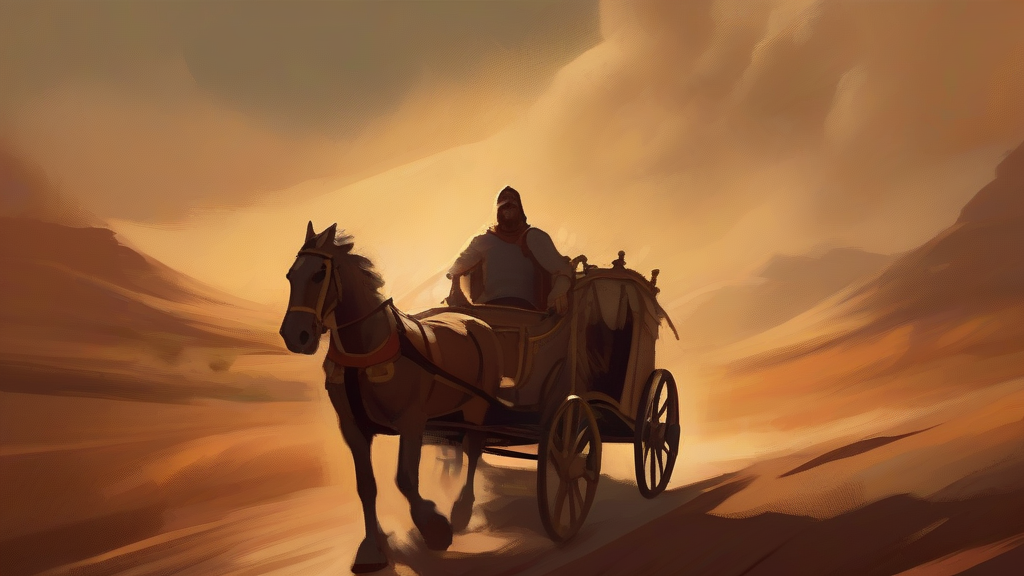
What does charioting mean?
Charioting is the act or practice of driving or riding in a chariot, the swift two-wheeled, horse-drawn vehicle that dominated warfare, sport, and ceremony across much of the ancient world. The word derives ultimately from the Latin carrus, meaning a two-wheeled wagon, entering English via Old French during the Middle Ages. Charioting was far more than transport: in Egypt, Assyria, Greece, and especially Rome, it demanded remarkable skill and courage, whether in battle or in the roaring circus arenas where professional drivers risked death before crowds numbering in the tens of thousands. Today the term survives mainly in historical writing, archaeology, and literature, where evocative phrases like 'the art of charioting' conjure images of thundering hooves and flying dust. Its rarer cousin, 'charioteer,' names the driver himself, while 'chariot race' has largely replaced the noun in everyday speech about ancient sport.
nounThe action or practice of driving or riding in a chariot; the activity of conveying someone by chariot.
- The action or skill of driving a chariot, especially as practiced in antiquity for warfare, hunting, racing, or ceremony.
"In ancient Rome, charioting was both a popular sport and an essential military skill."
"Mastery of charioting was considered essential training for aristocratic warriors of the Bronze Age Near East."
"The frieze depicted scenes of charioting, with drivers leaning into the turns at breathtaking speed."
Long before Formula 1, Rome's charioting arenas drew crowds of tens of thousands cheering their favorite teams — and the sport was so dangerous that drivers rarely survived long careers.
Reviewed by Deb Chak, Editor. AI-assisted content curated by RJS Tech Solutions LLP.
Etymology of charioting
Charioting comes from the verb 'chariot,' formed on the noun 'chariot,' which entered English in the 14th century from Old French, ultimately deriving from the Latin carrus, a two-wheeled wagon. The same Latin root gave rise to a family of English words including carriage, cargo, and career (originally 'a road or course'). The gerundial form 'charioting' denotes the action of the verb, and its use is attested chiefly in historical and literary writing about antiquity; the related agent noun 'charioteer' came into English slightly earlier, via Old French charioteor.
How charioting is actually used
Charioting is rare in modern English and appears almost exclusively in historical, archaeological, or literary contexts describing ancient practices. It functions as a gerundial noun derived from the verb 'chariot'; the more common related noun is 'charioteer' for the person who drives.
Easily confused with charioting
A chariot is the two-wheeled horse-drawn vehicle itself, while charioting refers to the act or practice of driving or riding in one.