What does chartism mean?
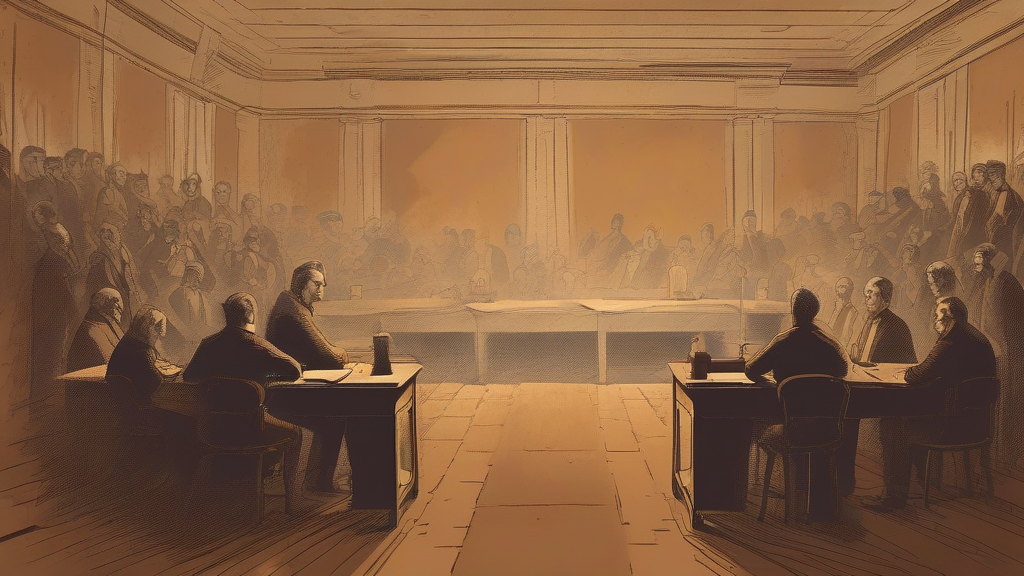
Chartism was a mass working-class movement that swept Britain between roughly 1838 and the early 1850s, campaigning for sweeping political reform. Its demands were set out in the People's Charter, drawn up in 1838, and centred on six points: universal male suffrage, secret ballots, no property qualification for MPs, payment of Members of Parliament, equal electoral districts, and annually elected parliaments. Supporters, known as Chartists, presented enormous petitions to Parliament — one reportedly bearing millions of signatures — but each was rejected. The movement split between 'moral force' advocates of peaceful persuasion and 'physical force' radicals, and it faded after mid-century as economic conditions improved and other reforms followed. Today Chartism is remembered as a landmark in the history of British democracy, notable both for the scale of popular mobilisation it achieved and for how many of its once-radical demands later became law.
A British working-class movement of 1838–c.1850 seeking political democracy through the six points of the People's Charter.
"Chartism mobilised hundreds of thousands of workers across industrial Britain."
Capitalised when naming the historical movement.
The principles associated with that movement; advocacy of radical democratic reform in its spirit.
"Critics dismissed the proposals as mere chartism reborn."
Rarely used; the noun is almost always singular since it denotes a single historical movement or a body of principles.
"Nineteenth-century Europe saw various chartisms inspired by the British example."
At its peak in 1842, Chartism's petition carried over three million signatures — roughly one for every sixth person in Britain — yet Parliament rejected it without serious debate.
Reviewed by Deb Chak, Editor. AI-assisted content curated by RJS Tech Solutions LLP.
Etymology of chartism
The word derives from 'Charter', referring to the People's Charter of 1838, combined with the suffix '-ism' denoting a doctrine or movement. It is therefore a distinctly English coinage of the Victorian era, formed at the very moment the movement emerged. Its cognates are simply other words built on the same root 'charter', which itself traces back through Old French to Latin 'carta', meaning paper or document.
Related word forms
How chartism is actually used
Usually capitalised when referring specifically to the historical movement; lowercase 'chartism' can denote its principles more generally. The term carries strong historical and political resonance in Britain and is rarely applied outside discussions of nineteenth-century reform movements.
Easily confused with chartism
'Chartism' names the movement itself, while 'Chartist' refers to an individual supporter or member of that movement.