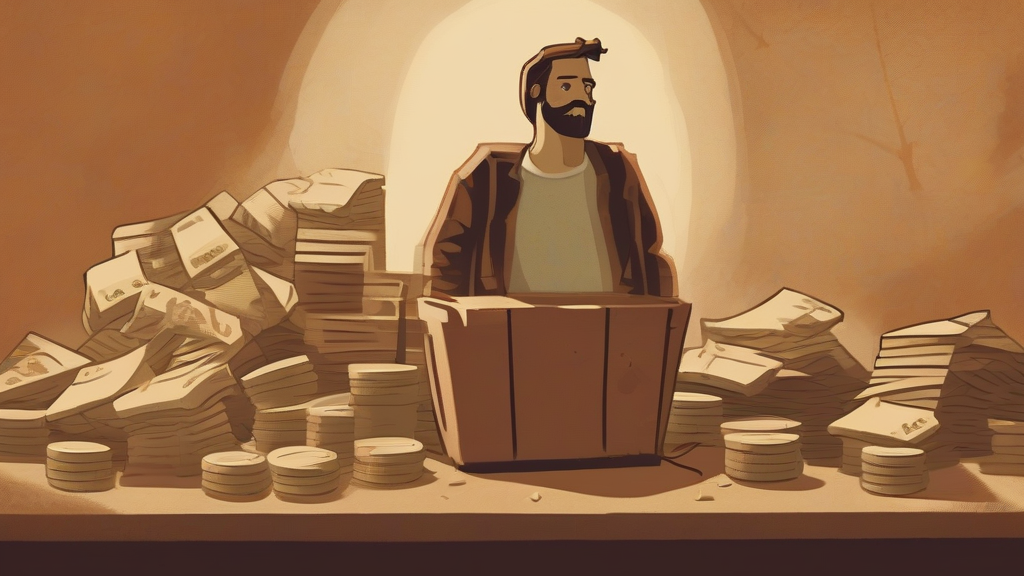
What does cheapskate mean?
A cheapskate is a person who is unwilling to spend money, especially when doing so would be reasonable, generous, or expected. The word is informal and carries a mildly contemptuous tone, suggesting not just thriftiness but a habitual meanness about paying one's share — tipping badly, refusing to contribute, or cutting corners at others' expense. It differs from neutral terms like 'frugal' or 'thrifty,' which describe sensible economy without moral judgment; calling someone a cheapskate implies criticism. That said, it is frequently used playfully or even affectionately, often in self-deprecating remarks ('I'm a bit of a cheapskate, I admit'). The term arose in American English in the late nineteenth or early twentieth century, combining 'cheap' with the slang sense of 'skate' meaning a disreputable person. It remains common in everyday speech on both sides of the Atlantic and pairs naturally with intensifiers like 'total' or 'notorious,' making it a vivid, useful word for describing penny-pinching behavior.
nounA person who is unwilling to spend money, especially in a way that seems stingy or mean-spirited; someone habitually reluctant to pay their fair share or to part with small sums.
- A person who is stingy or reluctant to spend money, especially unreasonably or meanly.
"He's such a cheapskate that he reuses tea bags three times before throwing them out."
"Don't be such a cheapskate — spring for the good coffee once in a while."
"The restaurant owner turned out to be a notorious cheapskate who refused to tip the delivery drivers."
Regular plural; used when referring to multiple stingy people.
"Only true cheapskates bring their own snacks to the cinema."
'Skate' here has nothing to do with ice — it's old American slang for a disreputable person, which is why a cheapskate is literally a 'cheap fellow.'
Reviewed by Deb Chak, Editor. AI-assisted content curated by RJS Tech Solutions LLP.
Etymology of cheapskate
Cheapskate originated in American English around the turn of the twentieth century, first attested in the 1890s. It combines 'cheap' — from Old English 'cēap,' meaning trade or purchase — with 'skate,' an American slang term for a contemptible or disreputable person. The element '-skate' appears in other similar coinages, giving the compound its dismissive flavor. The word quickly spread through colloquial usage and remains firmly informal today.
How cheapskate is actually used
Informal and colloquial; mildly derogatory but often used humorously or self-deprecatingly rather than as a serious insult. More common in American English, though widely understood in British English.
Easily confused with cheapskate
In this confusion pair the real contrast is with 'skimp': to skimp is an act of economizing too much, while a cheapskate is the person who habitually does so.