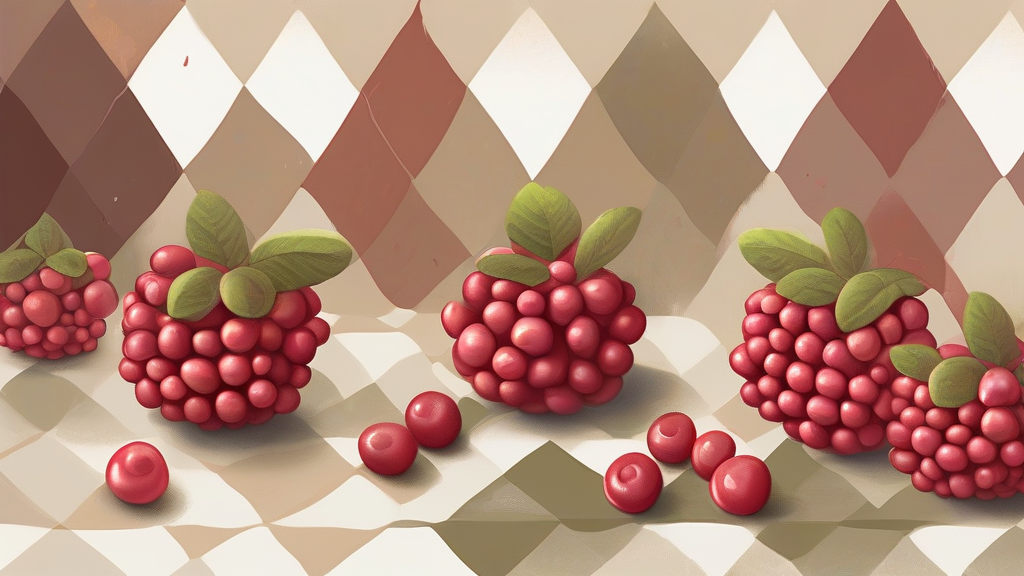
What does checkerberry mean?
Checkerberry is the common name, used mainly in the northeastern United States, for Gaultheria procumbens, a low-growing evergreen shrub that carpets woodland floors with glossy oval leaves, small white bell-like flowers, and vivid red berries. Also known as wintergreen or teaberry, the plant is prized for its aromatic qualities: its leaves and fruit contain methyl salicylate, the compound responsible for the familiar minty-wintergreen flavor found in candies, chewing gum, teas, and traditional liniments. The berries themselves are edible, with a mild, pleasantly sharp taste, and have long been gathered by hikers and foragers as a trailside treat. The word carries a distinctly regional, old-fashioned charm, appearing in New England cookbooks, folk remedies, and nostalgic writing about country life. For learners of English, checkerberry offers a window into American botanical vocabulary and the rich web of local names — boxberry, deerberry, teaberry — that one modest plant can accumulate across regions.
A North American creeping evergreen shrub (Gaultheria procumbens) with glossy leaves, white bell-shaped flowers, and red edible berries; also called wintergreen or teaberry.
"Checkerberry spreads slowly through the acidic soil beneath stands of pine and oak."
Chiefly regional to New England and the northeastern United States; "wintergreen" is the more widespread name.
The small, bright red, mint-flavored berry of this plant, eaten raw or used to flavor candies and teas.
"Children along the trail stopped to pick checkerberries from beneath their glossy leaves."
Regular plural; used when referring to multiple individual berries or plants.
"The forest floor was dotted with ripe checkerberries after the first frost."
That classic minty flavor in chewing gum and toothpaste often comes from oil distilled from the humble checkerberry — not from any true mint.
Reviewed by Deb Chak, Editor. AI-assisted content curated by RJS Tech Solutions LLP.
Etymology of checkerberry
The word checkerberry is first attested in American English in the late eighteenth century, combining "checker" — referring to the mottled or variegated appearance associated with the plant's leaves or habitat — with "berry." It belongs to a family of regional American names, alongside teaberry (from the use of the leaves in tea) and boxberry, all applied to Gaultheria procumbens by English-speaking settlers in northeastern North America. The genus name Gaultheria honors the French-Canadian physician and naturalist Jean-François Gaultier, while the species name procumbens is Latin for "lying flat," describing the plant's creeping habit.
How checkerberry is actually used
"Checkerberry" is chiefly a regional American term, used most often in New England and the northeastern United States; "wintergreen" and "teaberry" are more widely recognized elsewhere. The word has a folksy, old-fashioned connotation, evoking country walks, homemade candies, and traditional herbal remedies. It is informal-to-neutral in register and rarely appears outside discussions of botany, regional foodways, or nostalgia.
Easily confused with checkerberry
Winterberry is a deciduous holly (Ilex verticillata) with showy red berries that are generally considered inedible for humans, whereas checkerberry is an aromatic evergreen groundcover whose berries are edible.