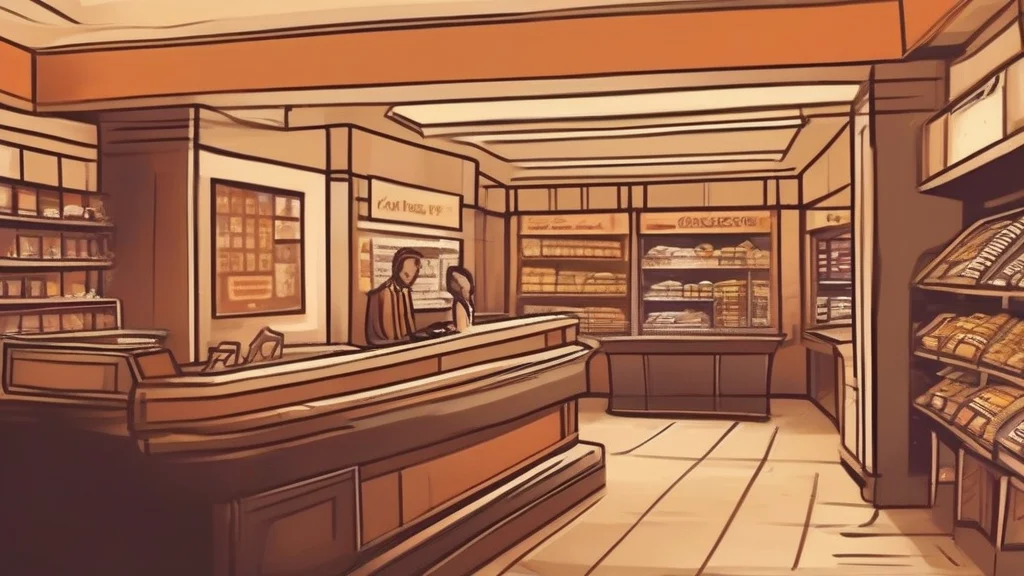
What does checkout mean?
Checkout is a noun with three closely related everyday meanings: the place in a shop where customers pay, the process of paying itself (especially common in e-commerce, as in 'proceed to checkout'), and the deadline by which hotel guests must settle their bill and vacate their room. The word is formed from the verb phrase 'check out', which dates to the early twentieth century and originally referred to recording items or verifying accounts before release; the compound noun followed naturally once self-service shopping made the payment station a fixture of daily life. Register is neutral and universal, appearing equally in casual speech, journalism, and technical writing about retail systems. In American usage the payment point is often called a register or checkout lane, while British speakers commonly say till or cash desk. The rise of online shopping added a new layer of meaning, making checkout a defining moment of the digital customer experience.
The counter or area in a store where customers pay for goods, or the process of paying for them, especially in an online store.
"The store added more self-checkout machines to reduce waiting times."
Often used attributively before another noun, as in 'checkout counter' or 'checkout process'.
The act or required time of leaving a hotel after paying one's bill.
"Hotel checkout is at noon, but late departure can be arranged on request."
Frequently paired with a specific time, as in 'checkout is at 11 a.m.'
The plural is regular and most often refers to multiple payment points or stations within or across stores.
"All eight checkouts were open during the holiday rush."
That little 'express checkout — 10 items or fewer' sign has quietly become one of the most contested pieces of grammar in retail: fewer or less?
Reviewed by Deb Chak, Editor. AI-assisted content curated by RJS Tech Solutions LLP.
Etymology of checkout
Checkout derives from the verb phrase 'check out', which emerged in American English in the early twentieth century with senses such as verifying items against a list and formally recording a departure. The noun was formed by compounding the verb with its particle, a common pattern in English that produces words like 'makeover' and 'takeover'. Its use expanded from accounting contexts to retail with the spread of self-service supermarkets in the mid-twentieth century, and later to hotels and e-commerce. Related words sharing the root include check, checker, and double-check.
How checkout is actually used
In American English, 'checkout counter' and 'register' are common; British English favors 'till' and 'cash desk'. The verb sense is always written as two words ('check out'), while the noun is typically written as one.
Easily confused with checkout
As two words, 'check out' is a verb phrase meaning to examine, borrow, or leave a hotel, while the single-word 'checkout' is a noun naming the place, process, or time of payment and departure.