What does cheese mean?
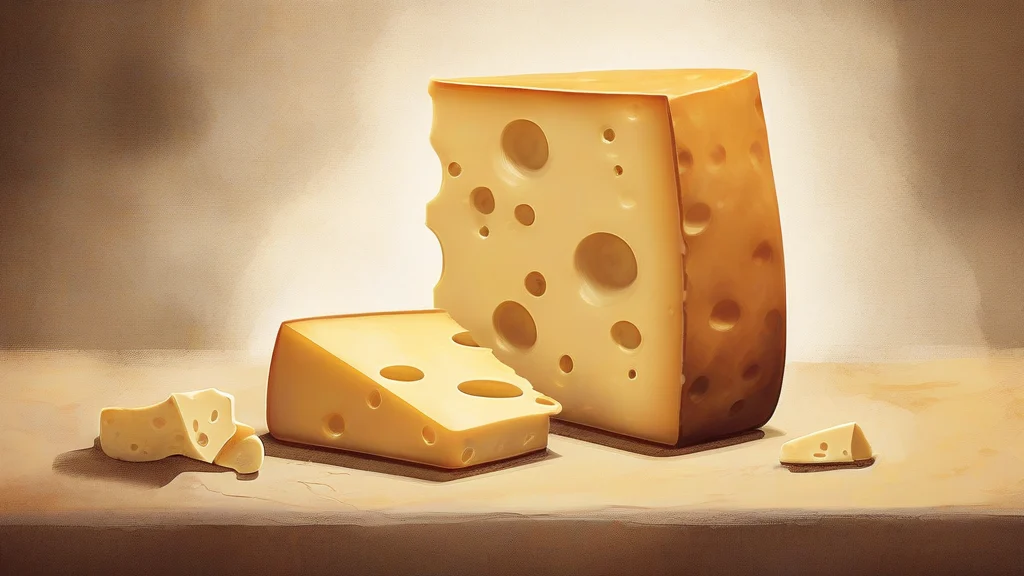
Cheese is a staple food produced by coagulating milk, separating the solid curds from the liquid whey, and then pressing and often aging the result. It exists in hundreds of varieties worldwide, ranging from soft, mild fresh cheeses like ricotta to hard, intensely flavored aged ones such as Parmesan. Beyond its literal meaning, cheese has developed rich figurative life in English: a 'big cheese' is an important person, while photographers coax smiles by asking subjects to say 'cheese.' The adjective 'cheesy' describes something overly sentimental, cheap, or clichéd, a connotation that has become common in casual speech. Derived ultimately from Latin through Old English, the word has been part of the language for well over a thousand years. Versatile, culturally loaded, and universally recognized, cheese remains one of English's most flavorful everyday words.
A food made from the pressed curds of milk, available in many varieties differing in texture, flavor, and aging process.
"He bought a wedge of aged Gouda from the market."
(Informal, chiefly British, dated) To stop or desist; used chiefly in the imperative phrase 'cheese it.'
"Cheese it, lads — the coppers are coming!"
This verbal sense is largely archaic today.
Used when referring to distinct varieties or individual portions of cheese; 'cheese' remains uncountable when referring to the substance generally.
"The shop stocks over forty different cheeses."
There are over 1,800 known varieties of cheese worldwide — more types of one single food than almost anything else humans make.
Reviewed by Deb Chak, Editor. AI-assisted content curated by RJS Tech Solutions LLP.
Etymology of cheese
The word cheese derives from the Old English 'ċīese,' which itself came from the Latin 'caseus,' meaning cheese. This Latin root also gave rise to related terms such as 'casein,' the protein found in milk and cheese. A second English word for cheese, 'fromage,' entered later via French but never displaced the native term. Cognates appear across Germanic languages, reflecting the word's ancient Indo-European heritage.
Related word forms
How cheese is actually used
In informal British English, 'cheese' as a verb can mean to stop ('cheese it!'), though this is dated. The plural is usually 'cheeses' when referring to varieties, but 'cheese' itself functions as an uncountable mass noun for the substance.
Easily confused with cheese
Cheese is a dairy food; chess is a strategic board game — they differ in both meaning and pronunciation.