What does cherrystone mean?
Cherrystone is an English noun with two distinct but well-established senses. Its older and more literal meaning is the hard, stony pit found at the centre of a cherry — the object famously spat out after eating the fruit. Its second sense, chiefly North American and especially common in New England and mid-Atlantic coastal cuisine, denotes a size grade of the hard-shell clam, or quahog: a cherrystone falls between the smallest littleneck and the large chowder clam, making it popular for eating raw on the half shell or steaming. The word is transparently compound in form, joining 'cherry' with 'stone', yet its application to a mollusc is a curious semantic leap that gives it charm. Register is neutral: it appears in cookery writing, menus, gardening contexts, and casual speech alike. For learners, the key point is that context — fruit or seafood — determines which sense applies.
The hard stony pit or seed at the centre of a cherry.
"Be careful not to crack a tooth on a hidden cherrystone."
This is the original and more universal sense of the word.
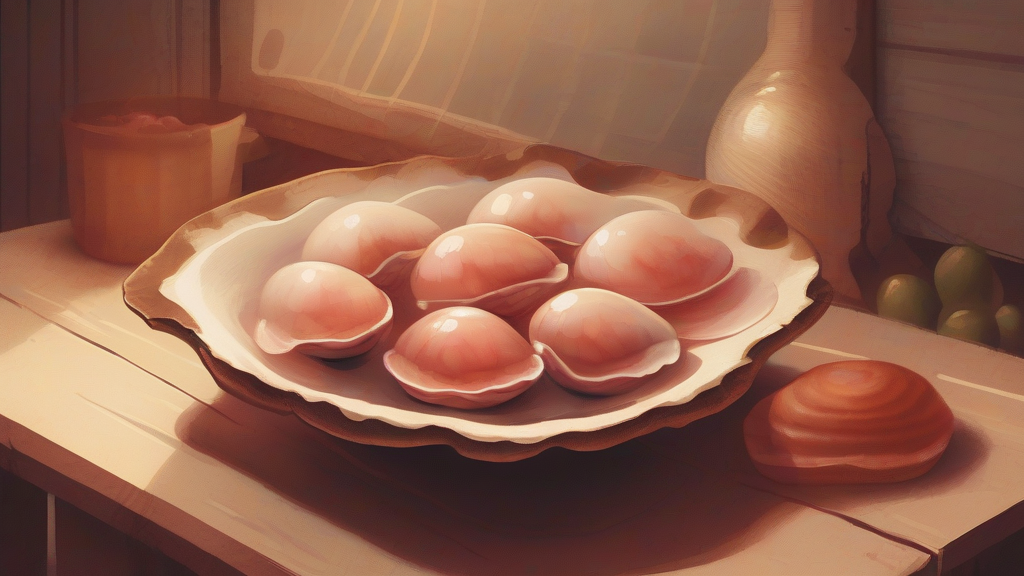
A young hard-shell clam (quahog) of medium-small size, larger than a littleneck and smaller than a chowder clam.
"We ordered a dozen cherrystones on the half shell."
Chiefly North American, especially on Atlantic-coast seafood menus.
Regular plural; commonly used when referring to clams ordered or served in quantity.
"The fishmonger had fresh cherrystones delivered that morning."
The same word names both the stubborn pit in your cherry pie and one of New England's most prized clams — and nobody's entirely sure how it jumped from fruit to shellfish.
Reviewed by Deb Chak, Editor. AI-assisted content curated by RJS Tech Solutions LLP.
Etymology of cherrystone
The word is a straightforward English compound of 'cherry' and 'stone', first applied literally to the fruit's pit. 'Cherry' itself derives from Old Northern French 'cherise', ultimately from Latin 'cerasus', which traces back through Greek 'kerasos', likely borrowed from an Anatolian source — traditionally linked to the town of Cerasus on the Black Sea. The extension of the term to a size grade of quahog clam arose in American coastal usage, presumably by analogy with something cherry-sized or cherry-pitted, though the precise motivation is not firmly documented.
How cherrystone is actually used
In American English, especially along the Atlantic coast, 'cherrystone' frequently refers specifically to the clam size grade and appears on seafood menus. In everyday British English it is more likely to mean the cherry pit. The clam sense is chiefly North American.
Easily confused with cherrystone
A littleneck is the smallest common market size of quahog clam, while a cherrystone is a noticeably larger size of the same species.