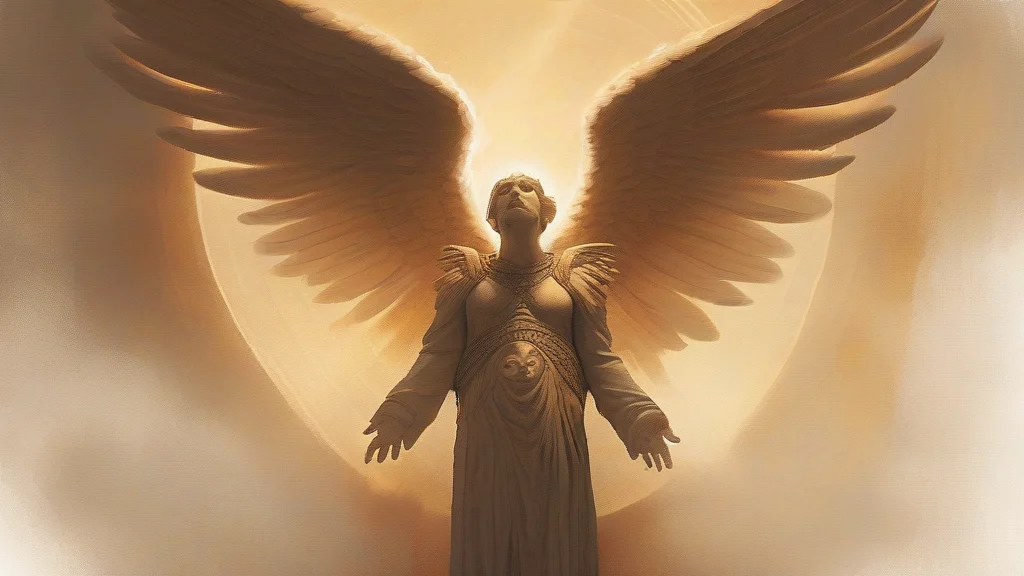
What does cherubim mean?
Cherubim is the plural form of cherub, denoting a class of celestial beings that occupy a prominent place in the Hebrew Bible and Christian tradition. Far from the rosy-cheeked babies of later art, biblical cherubim are awe-inspiring, often monstrous figures: they guard the Garden of Eden with a flaming sword, their wings overshadow the Ark of the Covenant, and they bear God's throne in Ezekiel's visions. The word entered English through Latin and Greek from the Hebrew keruv, whose ultimate etymology remains uncertain. In everyday modern English, cherubs — usually rendered with the anglicized plural "cherubs" — have come to mean plump, winged infant figures, an image popularized by Renaissance painters such as Raphael and by the putti of classical art. Cherubim therefore spans two very different connotations: solemn divine power in scripture, and sentimental sweetness in art and popular culture.
nounCherubim is the plural of cherub, referring in biblical and theological contexts to a class of winged celestial beings who attend upon God, especially as guardians of sacred space. In wider usage it can denote multiple angelic figures depicted in art as winged children.
- A class of powerful winged angelic beings in the Hebrew Bible and Christian tradition, serving as guardians of God's presence (plural of cherub).
- In art and popular usage, multiple figures resembling winged children or infants, derived from later artistic convention.
"Two golden cherubim overshadowed the Ark of the Covenant with outstretched wings."
"The prophet Ezekiel described four living creatures — cherubim — each with four faces and four wings."
"The cathedral's ceiling was painted with cherubim drifting among clouds of gold."
Cherubim is itself a plural — the Hebrew plural of the singular cherub. Religious and scholarly writing favors cherubim; general usage frequently uses the anglicized cherubs.
"The temple veil was embroidered with images of cherubim."
"Cherub" wasn't always a cute baby with wings — in the Bible, cherubim were fearsome guardians armed with flaming swords, and the chubby-winged-child image only emerged centuries later through Renaissance art.
Reviewed by Deb Chak, Editor. AI-assisted content curated by RJS Tech Solutions LLP.
Etymology of cherubim
The word comes from Hebrew keruv (plural keruvim), which passed into Greek as cheroub and then into Latin as cherub before entering Middle English. Its ultimate origin is uncertain, though some scholars link it to a root meaning "to guard" or to Akkadian kuribu, a protective spirit figure. The Hebrew-style plural cherubim has been used in English since medieval times, coexisting with the anglicized plural cherubs.
Related word forms
How cherubim is actually used
Cherubim is the original Hebrew-style plural of cherub and remains standard in religious, literary, and scholarly writing; the anglicized plural "cherubs" is more common in everyday speech. The singular form is cherub. Because the word carries strong biblical connotations, it tends to appear in formal, religious, or literary registers rather than casual conversation.
Easily confused with cherubim
Seraphim are a different order of angelic beings associated with burning and standing before God's throne, whereas cherubim are guardian figures; both words look similar because they share the Hebrew plural ending -im.