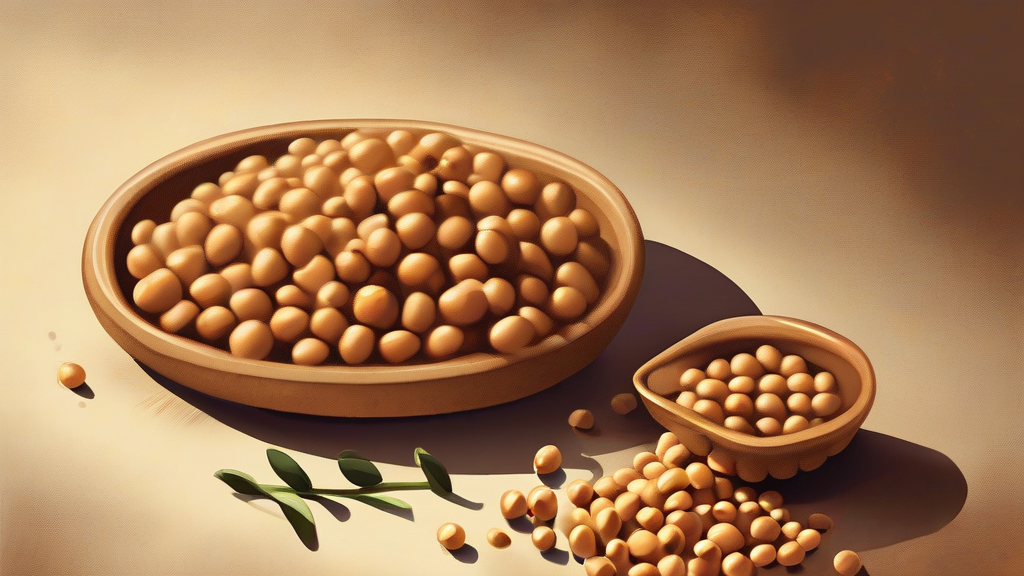
What does chickpea mean?
A chickpea is the edible, round seed of Cicer arietinum, an annual legume cultivated across the Middle East, South Asia, the Mediterranean, and beyond for thousands of years. The seeds are firm and nutty, typically beige but also found in darker varieties, and are a staple ingredient in dishes such as hummus, falafel, curries, and salads; when ground, they yield chickpea flour (besan or gram flour), prized in gluten-free cooking. In American English the word 'garbanzo' or 'garbanzo bean' is used interchangeably, while 'chickpea' predominates in British usage. The term can also refer to the plant itself. Rich in protein and fibre, the chickpea carries wholesome, hearty connotations and remains central to vegetarian cuisine worldwide. Its long history — among the oldest domesticated crops — makes it a word as enduring as the food it names.
nounA round, beige seed of an annual legume plant (Cicer arietinum), widely eaten as a vegetable and ground into flour; also the plant itself.
- The edible, round seed of the legume Cicer arietinum, eaten cooked or ground into flour (also called garbanzo in American English).
"She simmered the chickpeas slowly with garlic and cumin until they were tender enough to mash."
"Hummus is traditionally made by blending boiled chickpeas with tahini, lemon juice, and garlic."
"Chickpea flour, known as besan in South Asian cooking, gives pakoras their distinctive crispness."
Regular plural; the word is most often used in the plural when referring to the foodstuff in general, though the singular appears when discussing the crop or a single seed.
"Roast the chickpeas with olive oil and smoked paprika until crunchy."
The chickpea is one of humanity's oldest crops — people were growing it in the Middle East some 7,000 years ago, and the Roman name Cicero may literally trace back to this humble bean's Latin ancestor.
Reviewed by Deb Chak, Editor. AI-assisted content curated by RJS Tech Solutions LLP.
Etymology of chickpea
The word 'chickpea' arose in English in the early eighteenth century as a reshaping of the older form 'chiche pease', borrowed from Old French 'chiche', which derives from Latin 'cicer', meaning chickpea. The same Latin root gave rise to 'cicer' itself as a scientific term and may lie behind the Roman family name Cicero, famously borne by the orator Marcus Tullius Cicero, whose name was popularly associated with the bean. The 'pea' element comes from the Middle English 'pease'.
How chickpea is actually used
In British English 'chickpea' is the standard term; in American English both 'chickpea' and 'garbanzo bean' are common, with 'garbanzo' perhaps more frequent in grocery and culinary contexts. The word is neutral in register and appears freely in both everyday and formal writing about food and agriculture.
Easily confused with chickpea
Chickweed is a common leafy weed of the pink family, whereas a chickpea is an edible legume seed.
Green peas are sweet, round seeds of the genus Pisum eaten fresh, while chickpeas are larger, firmer seeds of Cicer arietinum usually cooked before eating.