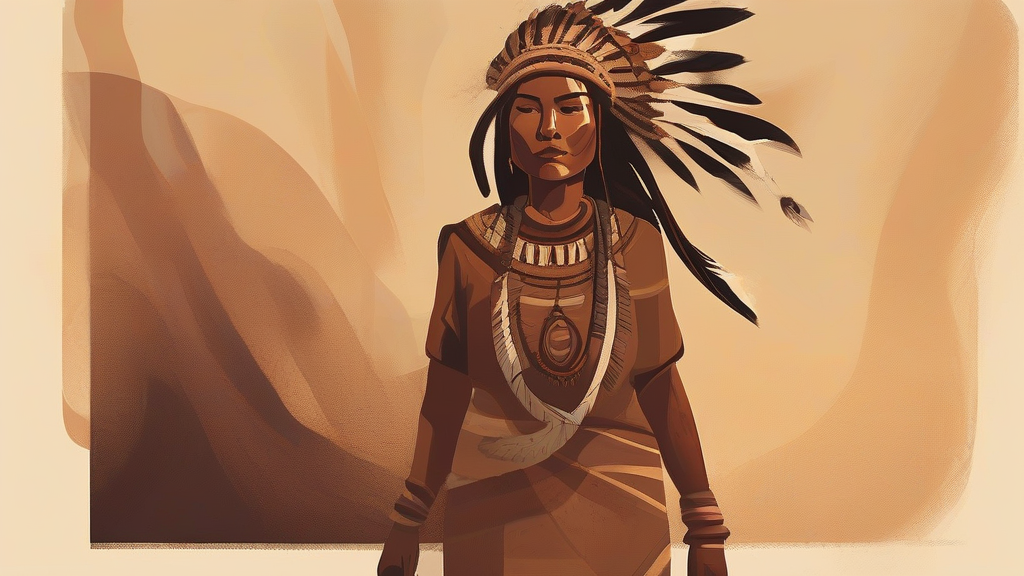
What does chieftainess mean?
A chieftainess is a woman who holds the position of chief or leader within a clan, tribe, or comparable community, serving as the feminine form of chieftain. The word appears most often in historical, anthropological, and literary writing, where it describes women who exercised formal authority over their peoples — whether through inheritance, marriage, or personal standing. In everyday modern English it is comparatively rare, since many speakers now use the older term chieftain as a neutral label for leaders of either sex. When it does appear, chieftainess carries a slightly formal or archaic flavor, evoking images of clan gatherings, tribal councils, and traditional societies. By extension, the word can occasionally be applied figuratively to a woman who leads or dominates any group, such as a family enterprise or organization. Its usefulness lies in specifying both authority and gender at once, a precision that neutral alternatives sometimes lack.
A woman who is the chief or leader of a clan, tribe, or people.
"The Highland clans gathered to pay tribute to their chieftainess."
Often used in historical or anthropological writing about matrilineal societies or notable female rulers.
By extension, a woman who leads or has command over a group or organization.
"As chieftainess of the trading house, she made every major decision herself."
Standard plural formed by adding -es to the singular, following the regular pattern for words ending in consonants.
"Several chieftainesses attended the intertribal council that spring."
Chieftainess was once so rare that writers of the 1800s reached for it only when a woman actually ruled — making every historical use a small act of acknowledging female power.
Reviewed by Deb Chak, Editor. AI-assisted content curated by RJS Tech Solutions LLP.
Etymology of chieftainess
Chieftainess is formed from chieftain plus the feminine suffix -ess, which English borrowed from French -esse (ultimately from Latin -issa). Chieftain itself entered Middle English around the fourteenth century from Old French chevetaine, derived from chef meaning head, ultimately from Latin caput. The suffix -ess was applied widely in English to mark female agents, giving parallel forms like countess and lioness, though many such forms have fallen out of favor as gender-neutral terms became standard.
How chieftainess is actually used
The word is relatively uncommon in modern usage; 'chieftain' is often used as a gender-neutral term for both men and women, though 'chieftainess' persists in historical, anthropological, and literary contexts. It can sound slightly formal or old-fashioned.
Easily confused with chieftainess
A chieftain is any leader of a clan, tribe, or group regardless of gender, while a chieftainess specifically denotes a woman holding that role.