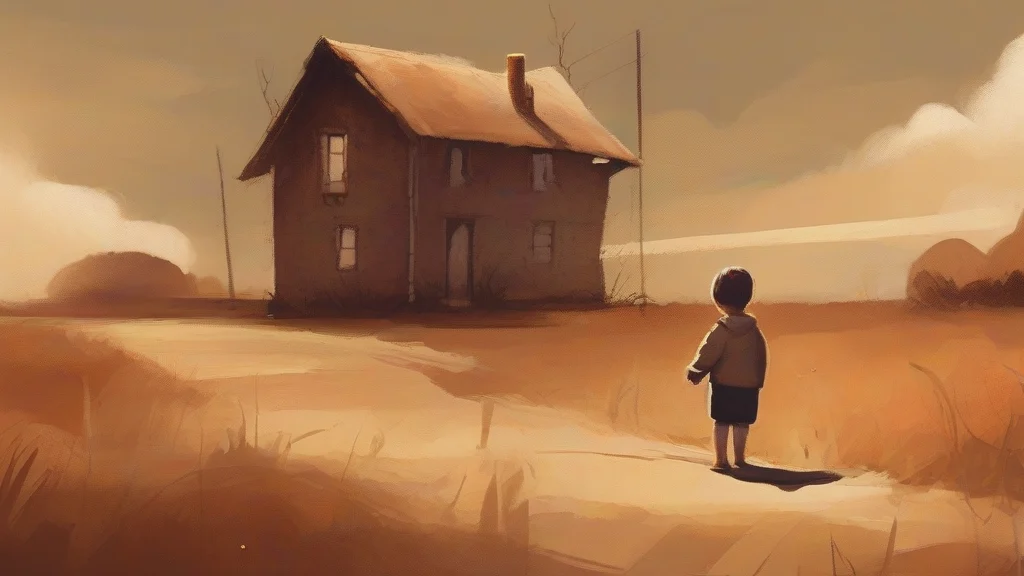
What does childhood mean?
Childhood is the noun denoting the period of human life between infancy and adolescence — the years during which a person is a child. It can refer both to that stretch of time itself and to the state of being a child, as in 'a happy childhood'. The word is common in everyday speech and writing, especially in connection with memory, family, and personal history: people speak of childhood friends, childhood homes, and childhood dreams. Because modern culture treats childhood as a distinct and precious stage of life, the word often carries nostalgic or protective connotations, appearing in phrases like 'lost childhood' or 'a second childhood'. In professional fields such as education, psychology, and pediatrics, 'early childhood' serves as a technical term for roughly ages two to eight. Derived from the Old English word 'child' plus the suffix '-hood', it has been part of English since the Middle Ages and remains one of its most familiar abstract nouns.
nounThe period of a person's life during which they are a child, extending from infancy to adolescence. The state or condition of being a child.
- The period during which someone is a child, from infancy to the onset of adolescence.
- The state or condition of being a child.
"She spent her childhood on her grandparents' farm in rural Ohio."
"His childhood was spent moving between army bases across three continents."
"The novel vividly captures a 1950s American childhood, complete with summer afternoons and penny candy."
The plural is grammatically regular but relatively rare; it appears mainly when contrasting different people's or groups' experiences of childhood, as in sociological or historical writing.
"The study compared the childhoods of children raised in urban and rural communities."
The word 'childhood' didn't appear in English until the Middle Ages — before then, children were often simply seen as small adults rather than as having a distinct life stage of their own.
Reviewed by Deb Chak, Editor. AI-assisted content curated by RJS Tech Solutions LLP.
Etymology of childhood
'Childhood' derives from the Old English noun 'cild' (child), combined with the suffix '-hood', a native Germanic suffix forming abstract nouns of state or condition (as in 'manhood' and 'brotherhood'). The compound arose during the Middle English period, when '-hood' was actively productive. Its cognates include other '-hood' formations from Germanic roots, and the base word 'child' itself is uniquely English within the Germanic family — most related languages use different words for 'child', such as German 'Kind' or Dutch 'kind', which come from a separate root.
How childhood is actually used
'Childhood' is a neutral, standard noun used in both formal and informal contexts. It frequently appears in phrases about memory and nostalgia ('childhood memories', 'childhood sweetheart'), where it carries warm, sentimental connotations. In psychology, education, and medicine, 'early childhood' is a technical term typically referring to roughly ages two through eight.
Easily confused with childhood
'Childhood' is the noun for the period of being a child, while 'childish' is an adjective describing behavior typical of an immature child, often with negative connotation.