
What does chiliarch mean?
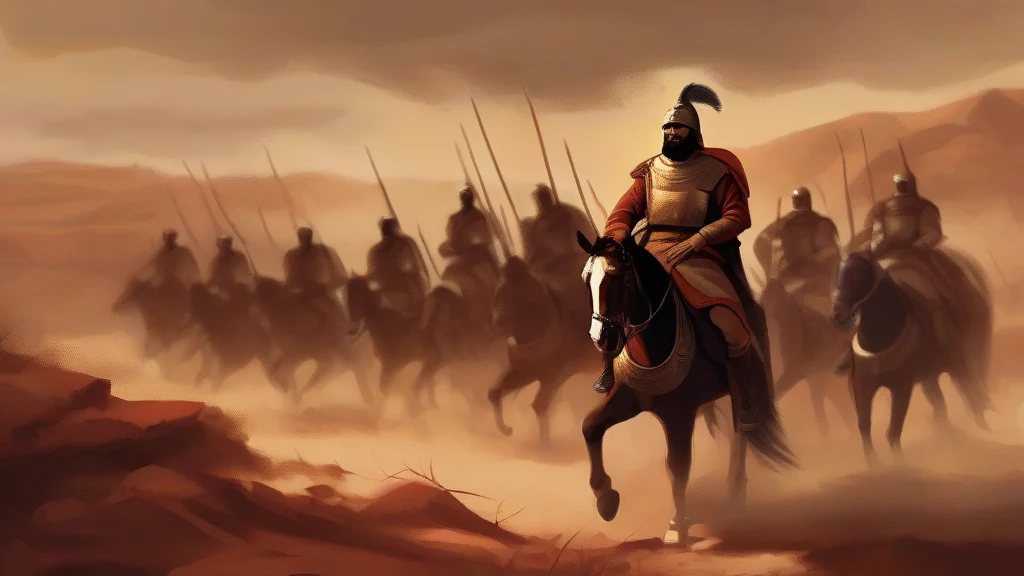
A chiliarch is an officer who commands a body of one thousand soldiers. The title is best known from the ancient Persian army, where chiliarchs formed a key tier of command beneath the great generals, and it was adopted by the Hellenistic kingdoms that followed Alexander the Great, as well as appearing in later Byzantine military organization. In Persia, one chiliarch — the commander of the royal guard of a thousand — could wield enormous political influence at court. The word derives from Greek roots meaning literally 'ruler of a thousand', making it a precise historical counterpart to ranks like colonel or lieutenant-colonel today. Because it belongs to specialized historical vocabulary rather than everyday English, 'chiliarch' appears chiefly in scholarly histories, translations of ancient texts such as Xenophon's Anabasis, and discussions of classical warfare. Its value lies in conveying exactly how ancient armies were structured, offering a window into the chain of command that organized some of antiquity's largest fighting forces.
nounThe commander of a unit of one thousand soldiers, especially in the ancient Persian army and later in Hellenistic and Roman military organization; the equivalent of a modern lieutenant-colonel or regimental commander.
- An officer commanding a thousand soldiers in ancient Persian, Hellenistic, or Byzantine military organization.
- More generally, any high-ranking military commander or leader of a large body of troops.
"Under Cyrus the Younger, each chiliarch commanded a thousand men drawn up in ten companies of one hundred."
"The Persian king's chiliarch — commander of the royal guard's thousand — ranked among the most powerful men at court."
"In the Byzantine army of the tenth century, a chiliarch led a regiment known as a chiliarchy."
The standard plural adds -s. A chiliarch's command of one thousand men is called a chiliarchy, a separate noun.
"Ten chiliarchs reported to the satrap at dawn for inspection."
A chiliarch commanded a thousand men in ancient Persia — and when Xenophon's Ten Thousand marched home, it was chiliarchs who held the army together.
Reviewed by Deb Chak, Editor. AI-assisted content curated by RJS Tech Solutions LLP.
Etymology of chiliarch
Chiliarch comes to English from the Greek chiliarchos (χιλίαρχος), formed from chilioi, meaning 'thousand', plus -archos, meaning 'ruler' or 'commander'. The Greek word itself rendered the Old Persian title hazarapatiš, also meaning 'leader of a thousand'. English borrowed the term in the early 17th century through Latin chiliarchus. It shares its Greek roots with related words such as chiliad (a group of one thousand) and chiliasm (belief in a thousand-year reign), all built on the same root for 'thousand'.
How chiliarch is actually used
A rare, learned term used almost exclusively in historical, classical, or academic writing about ancient Near Eastern, Greek, Roman, and Byzantine armies. It carries no everyday currency and would be unfamiliar to most readers outside these contexts.
Easily confused with chiliarch
A centurion was a Roman officer commanding roughly one hundred men, whereas a chiliarch commanded a unit of one thousand.
A chiliad is simply a group or period of one thousand things or years, with no military command sense.