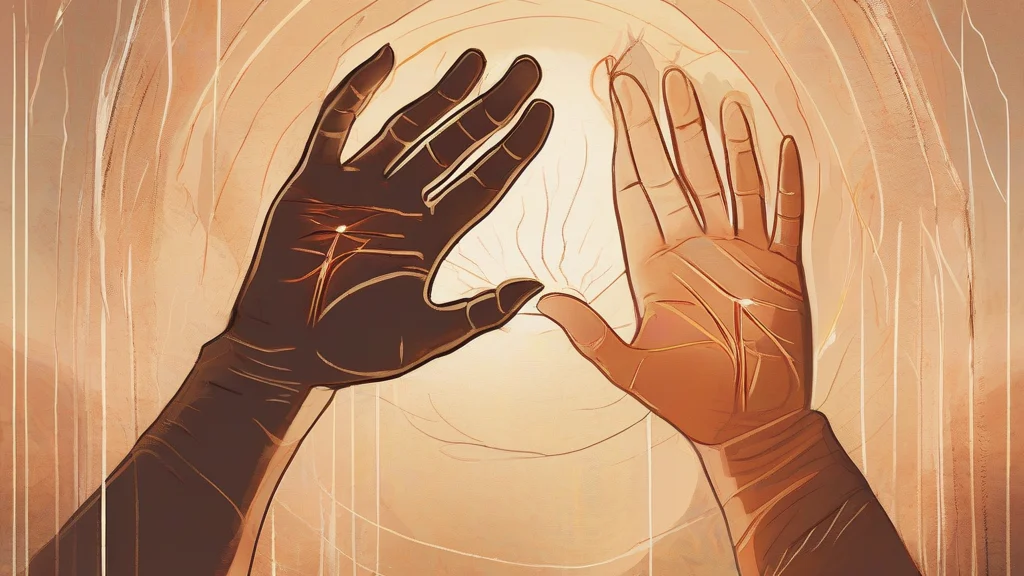
What does chiromancy mean?
Chiromancy is the practice of divining a person's character or future by studying the lines, markings, and shape of the hands, especially the palms. More commonly known as palmistry or palm reading, it draws on a long tradition in which features such as the heart line, head line, and life line are interpreted as signs of love, intellect, health, and destiny. The word derives from Greek elements meaning 'hand' (cheir) and 'divination' (manteia), reflecting its ancient roots in Greece and Rome, though similar practices existed across Asia and Europe for centuries. Today chiromancy survives as a popular form of entertainment at fairs and tourist destinations, while scientists regard it firmly as a pseudoscience with no predictive power. The term appears mostly in formal, historical, or literary writing about fortune-telling traditions, and its derivatives include chiromancer, meaning one who practises the art, and chiromantic, its adjectival form.
nounThe practice of foretelling a person's future or character by reading the lines and features of their palms; palmistry.
- Divination of a person's future or character through interpretation of the lines, marks, and shape of the hands.
"At the village fair, an old woman practised chiromancy from a tent hung with velvet and beads."
"She dismissed his interest in chiromancy as harmless superstition."
"A travelling chiromancer set up shop at the fair, promising to read fortunes in the lines of visitors' palms."
Rarely used in the plural; the word normally functions as an uncountable noun referring to the practice as a whole.
"Medieval manuscripts describe various chiromancies practised across different cultures."
Every line in your palm has a name — the heart line, the head line, the life line — and chiromancers have been 'reading' them for over two thousand years.
Reviewed by Deb Chak, Editor. AI-assisted content curated by RJS Tech Solutions LLP.
Etymology of chiromancy
Chiromancy comes from the Greek cheir, meaning 'hand', combined with manteia, meaning 'divination'. The practice was known in the ancient Greco-Roman world and later spread through medieval Europe, where it was sometimes called palmistry. The same Greek root cheir gives English other hand-related terms such as chirography, chiropody, and chiropractic.
Related word forms
How chiromancy is actually used
Formal or literary in register; in everyday speech most people say 'palmistry' or 'palm reading'. Often used with a connotation of superstition or pseudoscience.
Easily confused with chiromancy
Cartomancy is divination using playing cards, whereas chiromancy is divination by examining the hand.