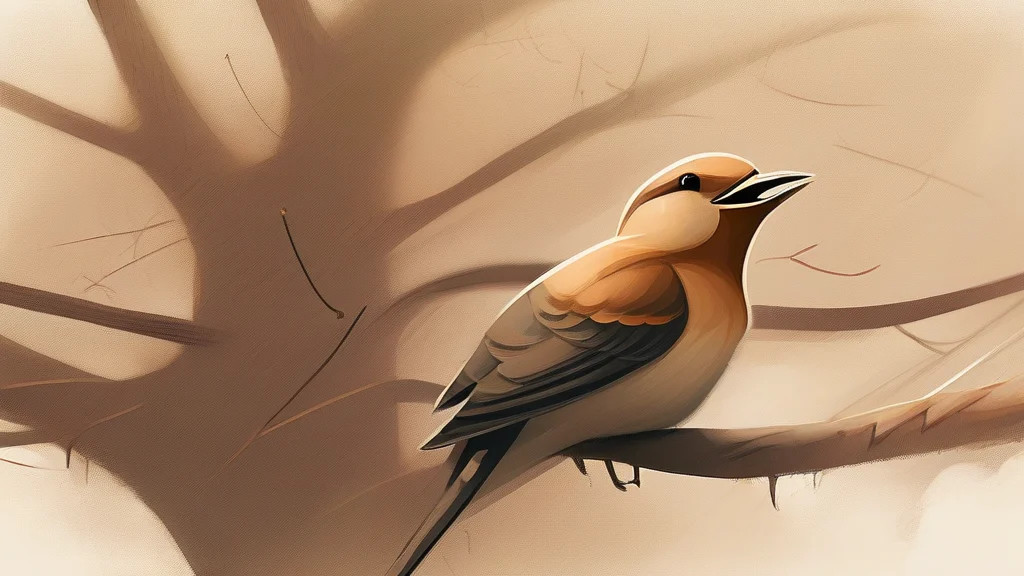
What does chirp mean?
To chirp is to produce a short, high-pitched sound — most characteristically the call of a small bird, but also the stridulation of insects such as crickets and the terse beep of an electronic device like a smoke alarm. As a noun, a chirp is one such brief, sharp sound. The word also extends figuratively to human speech: someone who chirps says something in a bright, brisk, cheerful way, as in “‘Morning!’ she chirped.” This figurative use lends the verb a lively, upbeat connotation, though it can tip toward the cutesy or ironic when applied to solemn situations. Chirp works both literally and figuratively across registers from casual conversation to nature writing, making it a compact, vivid alternative to blander verbs like say or sound. Its most familiar collocations involve birdsong — sparrows, chicks, and dawn choruses are its classic subjects.
(of a bird or insect) to make a short, high-pitched sound.
"A wren was chirping somewhere in the brambles."
To say something in a lively, cheerful, high-pitched tone.
"“You're early!” he chirped."
(of a device) to emit a short, high-pitched signal sound.
"The smoke alarm chirped twice before falling silent."
A short, sharp, high-pitched sound, especially one made by a bird or insect.
"We woke to the chirp of sparrows under the eaves."
The plural is regular; it typically refers either to multiple individual sound events or, collectively, to continuous birdsong.
"The meadow was filled with the chirps and trills of hidden warblers."
Crickets don't chirp with their mouths — they rub their wings together, and you can actually estimate the temperature by counting their chirps.
Reviewed by Deb Chak, Editor. AI-assisted content curated by RJS Tech Solutions LLP.
Etymology of chirp
Chirp first appears in English in the late 17th century, emerging as a variant of the older verb “chirrup,” which imitates the sound of small birds. Like many bird-call words it is ultimately onomatopoeic in origin, shaped directly by the sounds it describes rather than borrowed from another language. The variant form chirp quickly established itself as the standard term, while chirrup survived chiefly in dialect and in the specialized sense of clucking to a horse. Related imitative forms appear across Germanic languages, reflecting how naturally such sound-imitations recur.
Related word forms
How chirp is actually used
Chirp is informal-to-neutral in register. When used of people's speech (“she chirped”), it carries a light, often slightly cutesy connotation that can read as saccharine or ironic in serious contexts. In technical writing it appears for the short alert tones of devices (smoke alarms, phones, car indicators).
Easily confused with chirp
"Chirrup" is a related but distinct word meaning a short repeated chirping sound or call (often to a horse), whereas "chirp" is the more general term for a brief high-pitched sound.
"Tweet" specifically refers to the thin, wavering call of a small songbird (and informally to social media posts), while "chirp" is broader, covering birds, insects like crickets, electronic devices, and figurative speech.