What does chondrocyte mean?
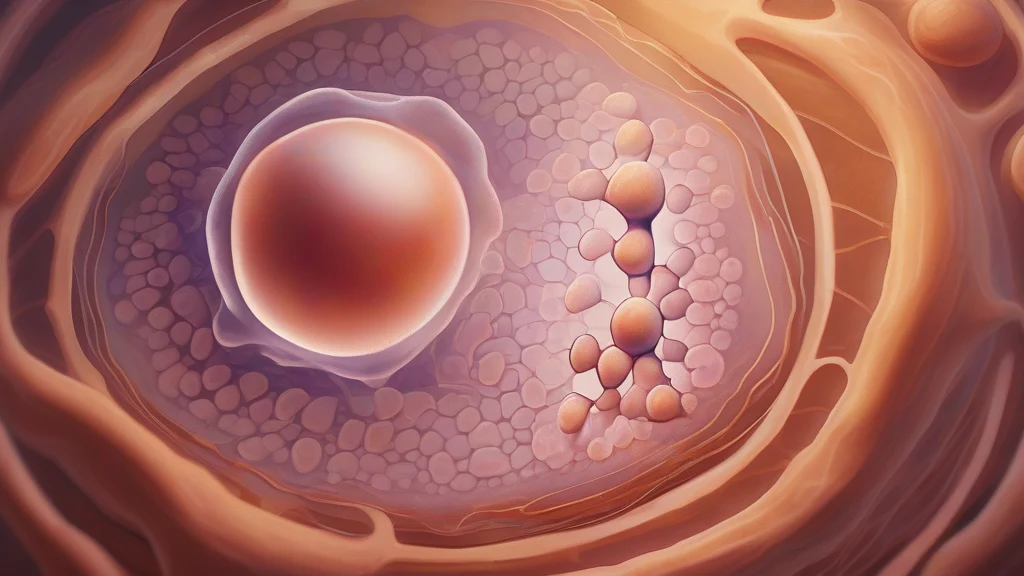
A chondrocyte is the specialised living cell of cartilage, the smooth connective tissue that cushions joints, shapes the ear and supports the nose. Derived from embryonic mesenchymal cells, chondrocytes sit alone or in small groups inside tiny cavities called lacunae, surrounded by the dense extracellular matrix they themselves produce — a mix of collagen fibres and proteoglycans that gives cartilage its strength and resilience. Their role is to generate and maintain this matrix throughout life, yet they are notoriously limited in their capacity to proliferate and migrate, which is why cartilage heals poorly after injury. The word appears chiefly in anatomy, orthopaedics, sports medicine and regenerative research, where techniques such as autologous chondrocyte implantation use a patient's own cells to repair joint surfaces. Though strictly scientific in register, the term captures a fascinating biological paradox: cells imprisoned within the very substance they create.
nounA chondrocyte is a cell found embedded within the matrix of cartilage, responsible for producing and maintaining the cartilage's extracellular structure.
- A mature cartilage cell that occupies a lacuna in the cartilage matrix and maintains it by secreting collagen and proteoglycans.
"The damaged cartilage failed to heal because mature chondrocytes divide so rarely."
"Researchers cultured chondrocytes in the laboratory to grow replacement tissue for the patient's injured knee."
"In healthy articular cartilage, chondrocytes make up only about five percent of the tissue's volume."
Standard English plural; far more frequent than the singular in biomedical literature.
"The scaffold seeded with chondrocytes gradually developed into functional cartilage-like tissue."
Your ear, nose and knee owe their shape to cells that spend their whole lives locked inside the very gel they build around themselves.
Reviewed by Deb Chak, Editor. AI-assisted content curated by RJS Tech Solutions LLP.
Etymology of chondrocyte
The word 'chondrocyte' combines two Greek roots: 'chondros', meaning grain or cartilage, and 'kytos', meaning hollow vessel, the source of the '-cyte' suffix used for cells. It belongs to the large family of cytological terms formed in nineteenth-century science, alongside words like leukocyte and erythrocyte, as microscopy revealed distinct specialised cell types. Its sibling formations from the same Greek root include medical terms such as chondroma (a cartilaginous tumour) and, more distantly, hypochondria.
Related word forms
How chondrocyte is actually used
A technical term used almost exclusively in anatomy, histology, orthopaedics and related biomedical sciences; it would be unusual in everyday conversation.
Easily confused with chondrocyte
An osteocyte is a mature bone cell embedded in bone matrix, whereas a chondrocyte performs the equivalent role in cartilage.