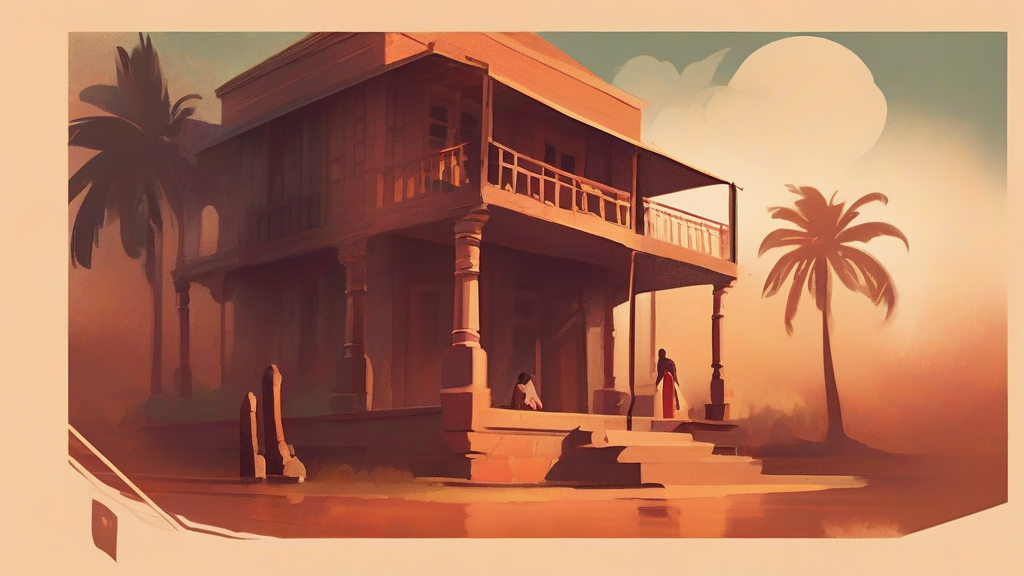
What does choultry mean?
A choultry is a building in India — typically a simple hall, shed, or walled enclosure — constructed to give travelers a place to rest or spend the night without charge. Choultries were especially common in southern India, where kings, wealthy merchants, temples, and charitable donors erected them along roads and near shrines as acts of piety and public benefaction. The word entered English in the early seventeenth century through the writings of European traders, for whom choultries were familiar landmarks on journeys through the subcontinent. Today "choultry" survives mainly in historical writing, travel literature, and descriptions of Indian architectural heritage, where it denotes both the buildings themselves and, more broadly, the tradition of free public hospitality they embodied. Though archaic in tone, it remains the accepted scholarly term for this distinctive institution of pre-modern and colonial India, and it evokes a world in which shelter for the wayfarer was considered a duty owed by the prosperous to the traveler.
nounIn India, especially southern India: a building such as a hall, shed, or rest-house erected for the use of travelers, often providing free shelter near a road or temple.
- A hall, shed, or rest-house in southern India built to provide shelter and lodging for travelers, often maintained as an act of charity.
"The weary merchants halted for the night at a choultry beside the highway, grateful for its shade and stone benches."
"The East India Company's agents broke their journey at a choultry outside Madras."
"Villagers had raised funds to rebuild the crumbling choultry that sheltered pilgrims on their way to the temple."
Standard plural; used when referring to multiple such rest-houses.
"The old maps marked dozens of choultries along the trunk roads of the Carnatic."
"Choultry" is one of those words that time-traveled into English on East India Company ships — it names the roadside rest-houses of southern India where travelers slept free of charge.
Reviewed by Deb Chak, Editor. AI-assisted content curated by RJS Tech Solutions LLP.
Etymology of choultry
The word "choultry" entered English in the early seventeenth century, adopted by European traders in India from a Dravidian source — it derives ultimately from Tamil and related South Indian languages, in which cognate forms denote a shed or resting place. It spread through Anglo-Indian usage, appearing frequently in the records and travelogues of the East India Company era, and was later catalogued in glossaries of Anglo-Indian vocabulary such as Hobson-Jobson. Its relatives are found across South Indian languages rather than in European tongues, so it has no true English cognates.
How choultry is actually used
"Choultry" belongs chiefly to the historical vocabulary of British India and appears most often today in travel writing, histories of the subcontinent, and accounts of colonial-era architecture. It carries a mildly archaic flavor in modern English but is not obscure; it remains the standard term for these structures in scholarly and heritage contexts.
Easily confused with choultry
A chalet is a wooden alpine dwelling or holiday home in Switzerland, whereas a choultry is an Indian travelers' rest-house or shelter.