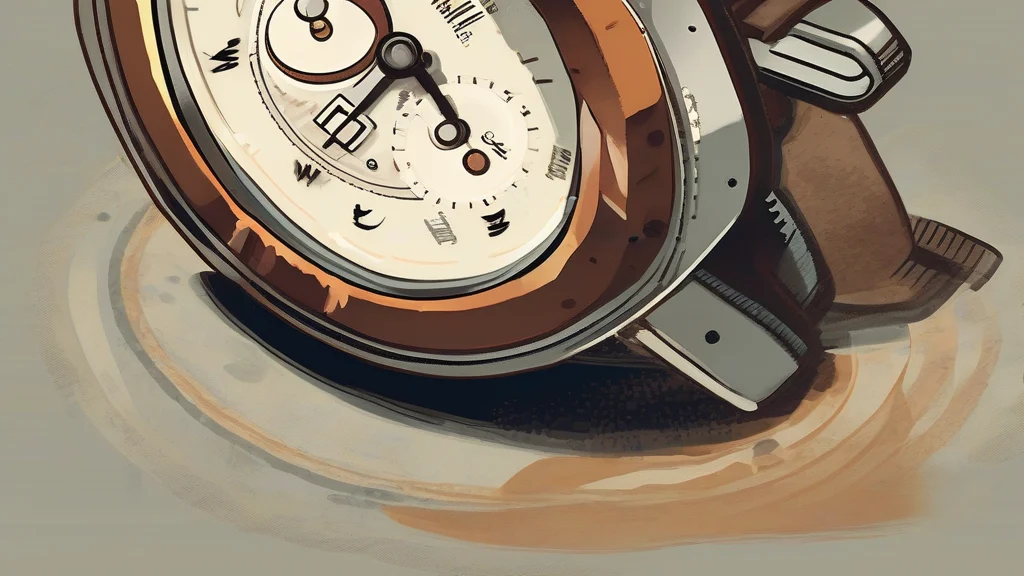
What does chronograph mean?
A chronograph is a timekeeping instrument equipped with an independent timing function, most familiar today as a wristwatch whose stopwatch operation is controlled by separate push-buttons alongside the ordinary hands or displays. The word combines the Greek roots 'chronos' (time) and 'graphein' (to write), reflecting its origins as an instrument that literally recorded time on paper or marked elapsed intervals. Chronographs are strongly associated with aviation, motor racing, diving, and space exploration, where precise measurement of short intervals matters, and they remain prized among collectors as examples of intricate mechanical engineering. Though often confused with the chronometer — a watch certified for exceptional accuracy — a chronograph is defined not by precision but by function: the ability to start, stop, and reset a timing mechanism on demand. The name endures as a byword for practical sophistication in watchmaking.
nounAn instrument for recording or measuring time, especially a wristwatch that combines a standard timekeeping display with an independent stopwatch function operated by push-buttons.
- A wristwatch combining normal timekeeping with an independent stopwatch function controlled by push-buttons.
- A device or instrument that records time, historically one that marks or graphically registers the passage of time (e.g., in early scientific instruments).
"He glanced at the chronograph on his wrist to time the final lap."
"The pilot's chronograph let her track elapsed flight time without taking her eyes off the controls."
"In the laboratory, a precision chronograph recorded the duration of each reaction to the nearest tenth of a second."
Regular plural; standard in both British and American English.
"The boutique stocks dive watches and chronographs from several Swiss makers."
The first chronograph wasn't a watch at all — Frenchman Louis Moinet built his in 1816 to time astronomical objects, beating the pocket-watch versions by decades.
Reviewed by Deb Chak, Editor. AI-assisted content curated by RJS Tech Solutions LLP.
Etymology of chronograph
The word 'chronograph' derives from Greek 'chronos', meaning time, and 'graphein', meaning to write — originally describing devices that wrote down or registered the passage of time. It was coined in the early nineteenth century, when French watchmaker Louis Moinet created the first such instrument around 1816, followed shortly by Nicolas Mathieu Rieussec's time-writing device used to time horse races in Paris. Related words from the same root include chronometer, chronology, and chronicle.
How chronograph is actually used
In modern usage, 'chronograph' almost always refers to a type of watch and carries connotations of sportiness and horological prestige; the broader 'time-recording instrument' sense is now largely historical or technical.
Easily confused with chronograph
A chronometer is a highly precise timekeeper certified to a strict accuracy standard, while a chronograph is any watch or instrument with added stopwatch (time-recording) functions.