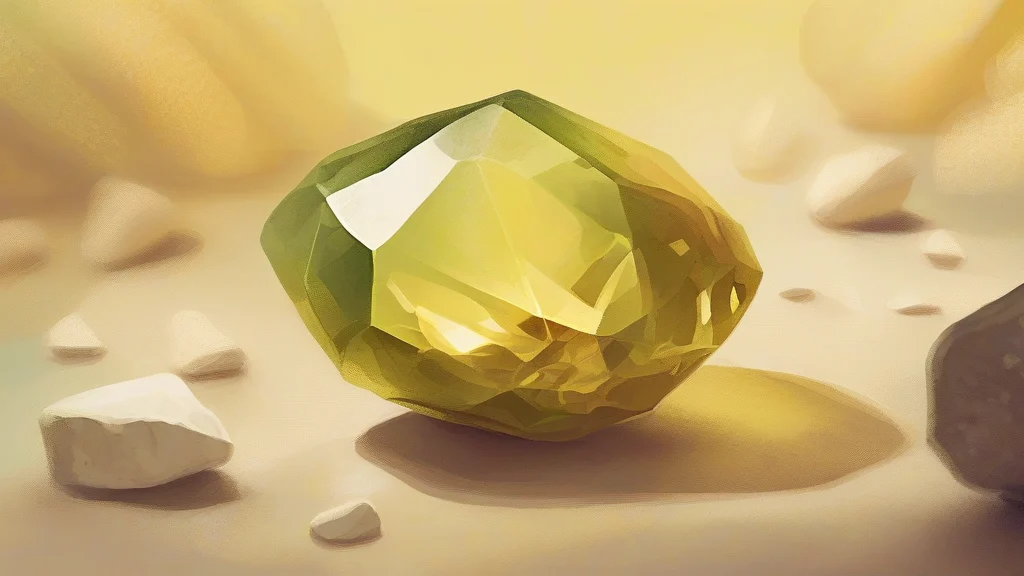
What does chrysoberyl mean?
Chrysoberyl is a hard mineral composed of beryllium aluminium oxide, ranking about 8.5 on the Mohs scale of hardness, which makes it both durable and highly valued in jewellery. Its colour ranges from pale yellow through golden tones to green, and it is best known for two remarkable varieties: alexandrite, which changes colour dramatically from green in daylight to red in incandescent light, and cat's-eye chrysoberyl, which displays a striking band of reflected light known as chatoyancy. The word derives from Greek roots meaning 'golden beryl', though the stone itself is not a true beryl — a distinction that frequently causes confusion. In usage, chrysoberyl appears chiefly in mineralogical, gemmological, and jewellery contexts, where precision matters: auction catalogues, museum collections, and gem identification reports. For collectors, fine specimens of alexandrite rank among the most expensive coloured gemstones in the world.
nounA hard, pale yellow to green mineral consisting of beryllium aluminium oxide (BeAl₂O₄), prized as a gemstone; its varieties include the colour-changing alexandrite and the chatoyant cat's-eye.
- The mineral beryllium aluminium oxide (BeAl₂O₄), a hard gemstone varying from pale yellow to green.
- A gemstone cut from this mineral, especially the varieties alexandrite and cat's-eye.
"The museum's newest acquisition was a flawless chrysoberyl that shifted from green to red under changing light."
"Her antique brooch was set with a golden chrysoberyl that caught the candlelight beautifully."
"Collectors prize cat's-eye chrysoberyl for the sharp band of light that glides across the dome of the stone."
The plural is uncommon, appearing mainly in gem trade and mineral collection contexts when distinguishing individual specimens.
"The vault held several remarkable chrysoberyls from the Brazilian mines."
In one rare variety of chrysoberyl, the same stone can look emerald green in daylight and ruby red under lamplight — which is why alexandrite was named for a Russian tsar who happened to come of age when it was discovered.
Reviewed by Deb Chak, Editor. AI-assisted content curated by RJS Tech Solutions LLP.
Etymology of chrysoberyl
The word chrysoberyl entered English in the early modern period via Latin chrysoberyllus, from the Greek elements chrysos, meaning 'gold', and beryllos, meaning 'beryl', reflecting the stone's common golden-green hue. The same root chrysos gives us related English words such as chrysanthemum ('golden flower') and chrysalis, while beryllos also stands alone as the ancestor of 'beryl'. Despite the name, chrysoberyl is chemically unrelated to true beryl.
How chrysoberyl is actually used
Chrysoberyl belongs to the formal register of mineralogy, gemmology, and jewellery writing rather than everyday conversation. It is almost always used as a mass noun referring to the substance or to gems cut from it; the plural is rare and appears mainly in listings of stones.
Easily confused with chrysoberyl
Beryl is a different silicate mineral (as in emerald and aquamarine), whereas chrysoberyl is a harder oxide mineral whose name merely borrows 'beryl' because of its greenish colour.