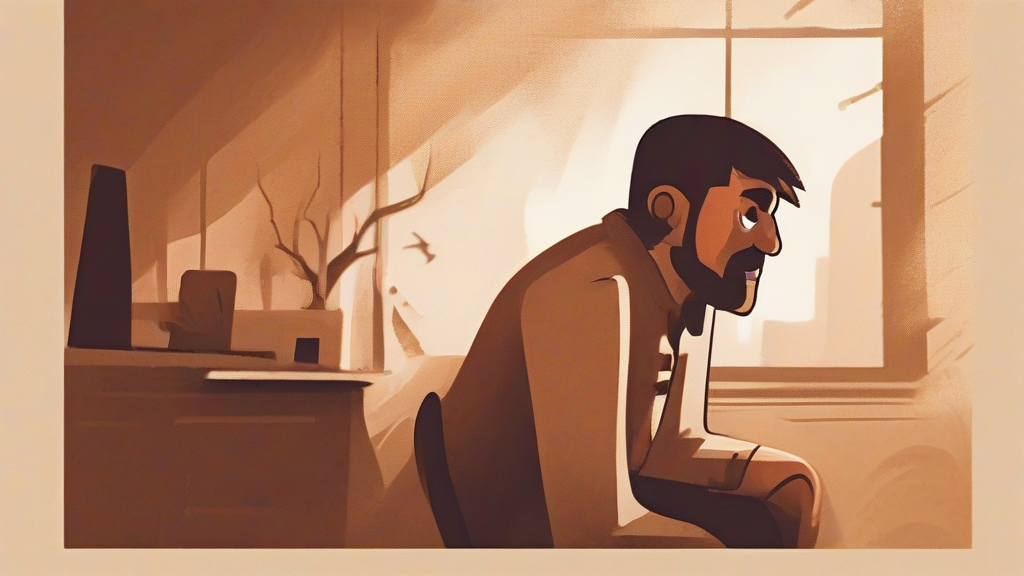
What does chunter mean?
"Chunter" means to talk or mutter on and on in a dull, monotonous, grumbling fashion — the verbal equivalent of a low-grade engine rumble. A person who chunters isn't making a pointed argument or a serious complaint; they are simply droning through grievances or remarks with little variation, often barely audibly, until listeners switch off. The word is informal and predominantly British, where it enjoys affectionate everyday use: colleagues chunter about train delays, relatives chunter over the state of the garden. Its connotation is comic rather than hostile, capturing a mild, persistent irritability rather than anger. A rarer sense applies chuntering to machinery that proceeds with a continuous grinding or rumbling noise, which neatly mirrors its acoustic quality when applied to speech. The word first appeared in English in the seventeenth century, its exact origin uncertain but likely imitative of the very sound it describes. It remains a handy, characterful alternative to blander terms like "mutter" or "complain" whenever someone's talk has worn out its welcome.
verbTo talk or mutter at length in a dull, monotonous, grumbling way; to go on complaining without much point or variety.
- To talk continuously in a low, monotonous, complaining tone.
- To move or proceed with a low, continuous rumbling or grinding sound (a rarer, chiefly technical usage).
"He chuntered on about the weather for a good twenty minutes."
"She chuntered under her breath all the way through the meeting."
"The old tractor chuntered up the hill, coughing and rattling."
'Chunter' is the perfect word for that person who drones on and on — and it sounds exactly like what they're doing.
Reviewed by Deb Chak, Editor. AI-assisted content curated by RJS Tech Solutions LLP.
Etymology of chunter
"Chunter" is attested in English from the early seventeenth century. Its precise origins are obscure; lexicographers generally regard it as imitative in nature, echoing the low, continuous muttering sound the word itself denotes. It has no well-established cognates in other languages, having remained a distinctly English, and especially British, colloquial term throughout its history.
Related word forms
How chunter is actually used
Chiefly British and informal; the word carries an inherently comic, mildly exasperated connotation, describing talk rather than serious complaint. The mechanical 'rumbling' sense appears mostly in descriptions of engines or machinery.
Easily confused with chunter
Banter is playful, good-humoured teasing, whereas chuntering is tedious, low-level grumbling that goes on and on.