
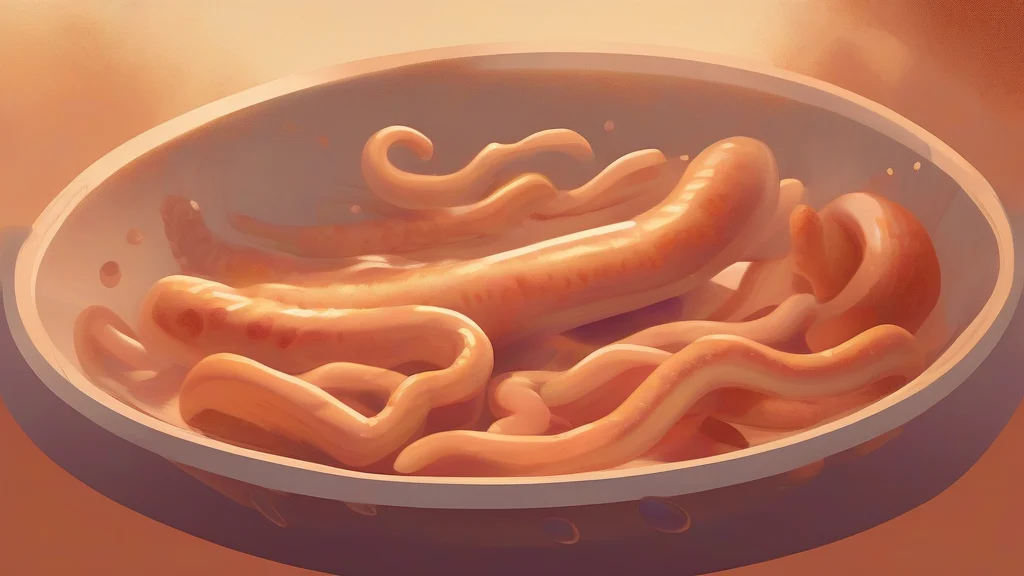
What does chymous mean?
Chymous is a rare technical adjective describing something that consists of, resembles, or relates to chyme — the thick, semifluid mass of partially digested food and gastric secretions that the stomach delivers into the small intestine for further digestion and absorption. Where the noun chyme names the substance itself, chymous characterizes other matter or fluids by their similarity to it, as in a 'chymous mass' or 'chymous material'. The word belongs almost entirely to the vocabulary of physiology, gastroenterology, and older anatomical texts, and it derives from the Greek khȳmós, meaning juice or the fluid product of digestion. Because it is so narrowly specialized, chymous rarely appears outside medical and scientific contexts, and general readers will encounter it most often in descriptive accounts of how the stomach processes food.
adjectiveRelating to, consisting of, or of the nature of chyme — the semifluid, partly digested food mass that passes from the stomach into the small intestine.
- Of or relating to chyme, the semifluid mass of partially digested food that passes from the stomach to the small intestine.
"The chymous material moved slowly through the duodenum as digestion continued."
"Gastric contractions gradually transform the meal into a chymous pulp."
"Obstruction at the pylorus caused chymous material to accumulate in the stomach."
'Chymous' comes straight from Greek khȳmós, the ancient word for the juice of half-digested food — a term Hippocrates' contemporaries would still recognize today.
Reviewed by Deb Chak, Editor. AI-assisted content curated by RJS Tech Solutions LLP.
Where does chymous come from?
Chymous derives from Greek khȳmós (χυμός), meaning the juice of the body or, in ancient physiological theory, the semi-fluid product of partially digested food. The Greek term passed into Latin and then into early modern scientific Latin as chymus or chyme, from which the English adjective chymous was formed. It shares this origin with related digestive terms such as chyle (from Greek khȳlós), the milky intestinal lymph, reflecting the close historical connection between these concepts in humoral and digestive theory.
How chymous is actually used
A rare technical adjective used almost exclusively in physiology, medicine, and historical anatomical writing. In modern usage, writers more often refer to 'chyme' itself rather than using the adjectival form.
Easily confused with chymous
Chylous refers to chyle — the milky lymph rich in fats absorbed in the small intestine — whereas chymous refers to chyme, the partially digested food leaving the stomach.