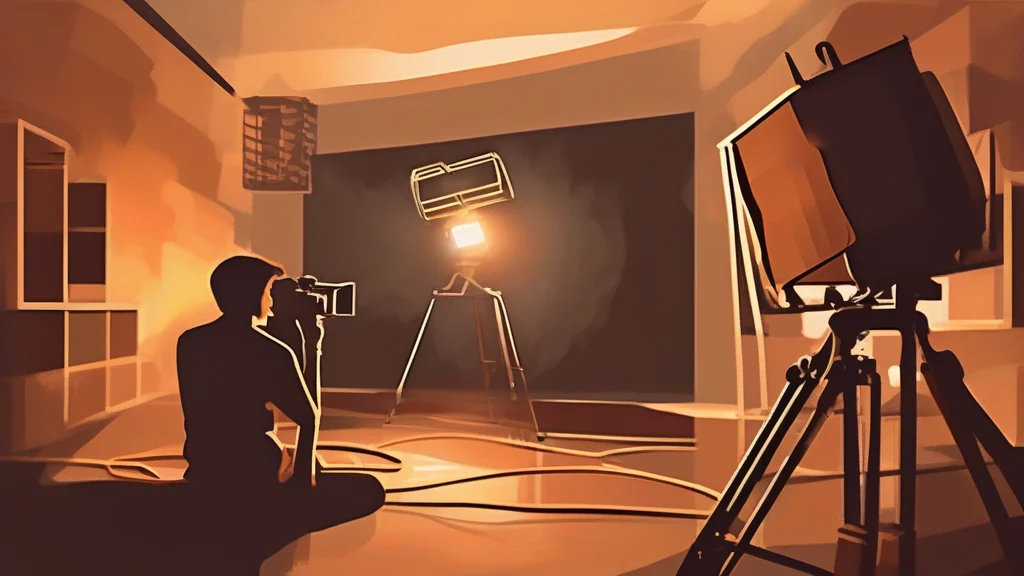
What does cinematography mean?
Cinematography is the art and science of capturing moving images on film or digital sensors, forming one of the central crafts of filmmaking. It covers everything the camera does: choosing lenses and framing shots, arranging lighting, positioning and moving the camera, and setting exposure and color to create a film's visual character. The word derives from Greek roots meaning 'movement' and 'writing or drawing', reflecting its role as the art of recording motion. In professional contexts, cinematography is carried out by a cinematographer (also called a director of photography) working closely with the director to translate a story into visual language. The term is common in film criticism, award categories, and film education, and it carries connotations of technical mastery and artistic vision. A single striking example can define a film: the stark black-and-white cinematography of a drama may convey bleakness, while warm, fluid camerawork can suggest intimacy and hope.
The art and technique of photographing and lighting moving images for film or television, including choices of camera, lenses, framing, and movement.
"Her cinematography gave the documentary an intimate, almost painterly quality."
In industry usage, the person responsible is called the cinematographer or director of photography.
The distinctive visual style or look of a particular film resulting from those techniques.
"The film's desaturated, handheld cinematography reinforced its grim subject matter."
Rarely pluralized; used only when comparing the styles or traditions of different filmmakers, regions, or eras, typically in academic film studies.
"The book surveys the contrasting cinematographies of postwar Japanese and Italian cinema."
Every frame you've ever loved on screen was shaped by someone whose job title most moviegoers can't even pronounce — yet cinematographers are often called the film's true second directors.
Reviewed by Deb Chak, Editor. AI-assisted content curated by RJS Tech Solutions LLP.
Etymology of cinematography
Cinematography comes from the Greek roots kinema (meaning 'movement', from kinein, 'to move') and graphein ('to write' or 'to draw'), combined via the French cinématographe, the name given by Auguste and Louis Lumière to their pioneering motion-picture camera and projector in the 1890s. The English word thus emerged alongside early film itself, at first referring broadly to the new technology of recording motion and later narrowing to mean the artistic craft of filming. It shares its Greek roots with words such as cinema, kinetic, and kinesiology.
How cinematography is actually used
A formal-to-neutral term used widely in film criticism, industry awards (e.g. the Academy Award for Best Cinematography), and academic writing about cinema; it is rarely used in casual everyday speech outside film contexts.
Easily confused with cinematography
Cinema refers to the art form or institution of movies as a whole (or a movie theater), while cinematography is the specific craft of photographing the images within them.
Photography is the general art of taking still photographs, whereas cinematography is specifically the photographic recording of moving images for film or video.