What does circumferentor mean?
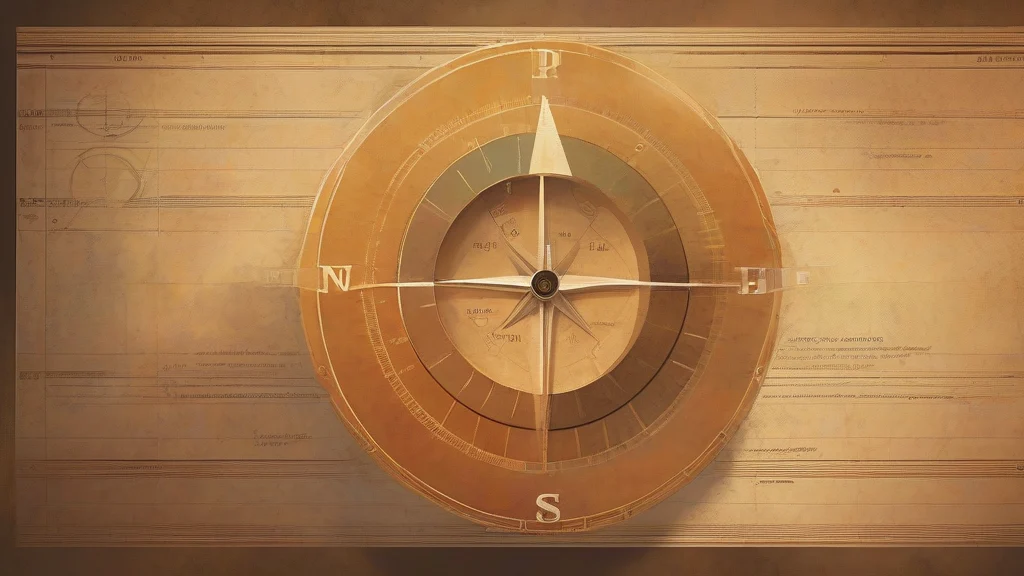
A circumferentor is a historical surveying instrument designed to measure horizontal angles in the field. It typically consists of a flat circular brass plate graduated in degrees, carrying a magnetic compass needle, with folding sighting bars (alidades) mounted above it so that a surveyor can sight toward distant landmarks and read off the angle between them. Mounted on a staff or tripod via a ball-and-socket joint, the circumferentor served as the standard tool of English and colonial American land surveyors from the seventeenth through much of the eighteenth century; George Washington famously relied on one in his work as a young surveyor. Gradually displaced by the more accurate and versatile theodolite, the word survives today mainly in historical and museum contexts, evoking an era when maps were drawn with simple brass instruments, patient observation, and painstaking arithmetic.
nounA circumferentor is a surveying instrument used to measure horizontal angles, consisting of a sighting device mounted above a circular compass plate graduated in degrees; it was widely used in land surveying before the theodolite superseded it.
- A surveying instrument combining a sighting apparatus with a graduated compass circle, used to measure horizontal angles in land surveying.
"The colonial surveyor laid out the new township boundaries using little more than a chain, a circumferentor, and careful field notes."
"Armed with his circumferentor, the surveyor plotted the boundary lines across the rolling farmland."
"The museum's collection includes a brass circumferentor dating from the early eighteenth century."
Regular plural formation; the plural typically appears in discussions of historical collections or multiple surveying parties.
"Early American surveyors often carried circumferentors alongside their chains and plumb lines."
Before GPS and even before theodolites, American frontiers like George Washington surveyed vast tracts of land armed chiefly with a compass on a ball-and-socket joint called a circumferentor.
Reviewed by Deb Chak, Editor. AI-assisted content curated by RJS Tech Solutions LLP.
Etymology of circumferentor
The word circumferentor derives from Latin circumferre, meaning 'to carry around', formed from circum ('around') plus ferre ('to bear or carry'), with the agentive suffix -tor indicating 'that which does'. The name reflects the instrument's defining feature: a full circular, or circumferential, graduated plate around which angles are measured. The term entered English usage during the seventeenth century as surveying literature flourished, and it shares its Latin roots with words such as circumference, circumspect, and circumnavigate.
How circumferentor is actually used
A technical and historical term, now largely encountered in histories of cartography, surveying, and colonial American land measurement rather than in modern professional practice.
Easily confused with circumferentor
A theodolite is a more precise telescopic instrument that measures both horizontal and vertical angles, whereas a circumferentor is an older compass-based instrument measuring only horizontal angles.