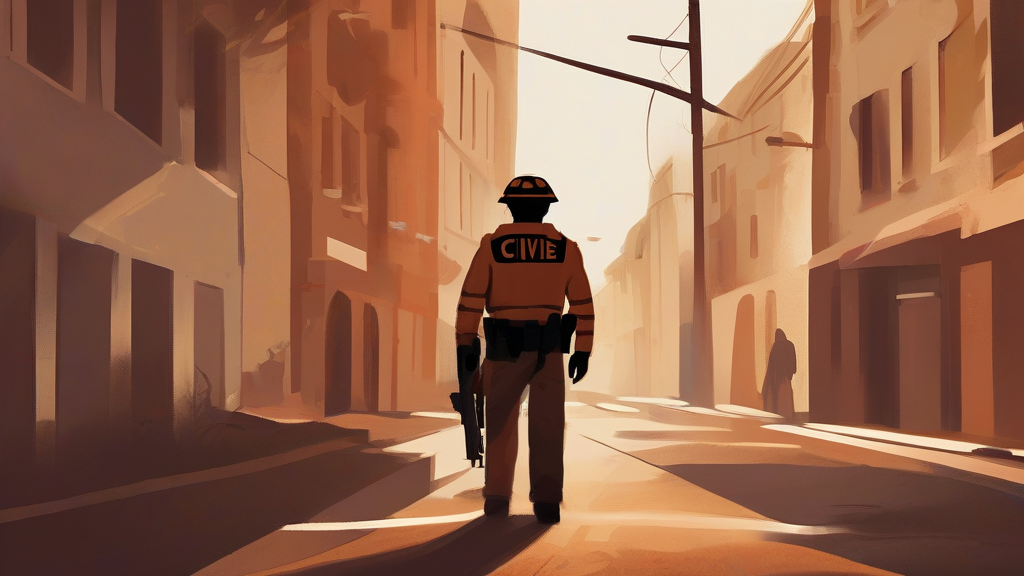
What does civie mean?
"Civie" (also commonly spelled "civvy") is an informal noun for a civilian — anyone who is not a member of the armed forces, and sometimes by extension not a member of the police. The word originated as military slang, where it served as convenient shorthand for distinguishing those outside the services from those within them. It is most at home in casual conversation among soldiers, veterans, and writers depicting military life, particularly in British English, though it is understood more widely. Its connotations depend on the speaker's perspective: from within the military it can sound faintly dismissive, suggesting someone soft or unversed in service life, while civilians themselves may use it neutrally or self-deprecatingly when describing their transition out of uniform. The plural, "civvies", is also used informally to mean ordinary clothes as opposed to uniform. Derived ultimately from the Latin "civis", meaning citizen, it shares its roots with words such as "civic" and "civil".
nounAn informal term for a civilian — someone who is not a member of the armed forces or police.
- A civilian: a person not serving in the armed forces (or, by extension, the police).
"After twenty years in the army, he found life as a civie surprisingly hard to adjust to."
"The recruits spent their first weekend back among the civies."
"As a civie, she had no idea what the inside of a barracks looked like until the open day."
Both spellings are accepted informally; "civvies" is the more frequent form in British usage. By extension, "civvies" can also mean civilian clothes worn by someone who normally wears a uniform.
"He packed his civvies for the leave weekend."
Soldiers have used "civie" for over a century to lump everyone outside the ranks into one word — and it's just "civilian" wearing its sleeves rolled up.
Reviewed by Deb Chak, Editor. AI-assisted content curated by RJS Tech Solutions LLP.
Etymology of civie
"Civie" arose as an informal clipping of "civilian", which derives from Latin "civilis" (relating to citizens), itself from "civis", meaning citizen. The shortened form emerged as British military slang, likely in the late nineteenth or early twentieth century, alongside the parallel spelling "civvy". It belongs to the same family as "civic", "civil", and "city", all tracing back through Latin to the idea of the citizen and the city-state.
Related word forms
How civie is actually used
Informal and colloquial; very common in military slang, especially British. The spelling "civvy" is at least as common as "civie", and the plural is usually written "civvies". It can carry a mildly dismissive tone when used by service personnel about outsiders.
Easily confused with civie
"Civil" is an adjective meaning polite or relating to citizens and the state, whereas "civie" is an informal noun for a person who is not in the military.
"Civic" is an adjective relating to a city or town and its affairs, while "civie" is an informal noun for a non-military person.