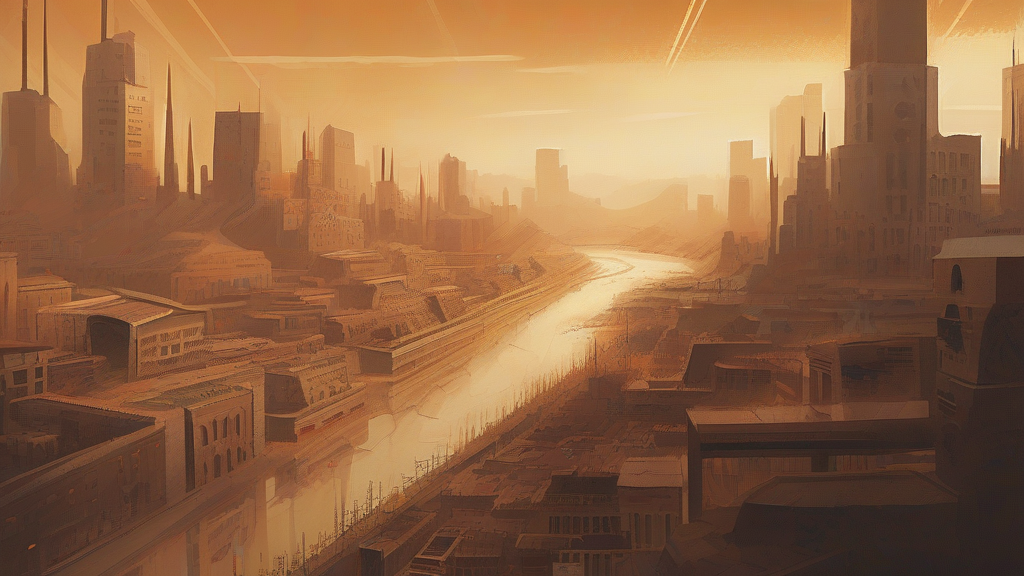
What does civilisation mean?
Civilisation refers to the condition of human society that has reached an advanced stage of social, cultural, and technological development — typically marked by cities, organised government, written records, specialised labour, and shared institutions such as law and religion. It can denote this general state of advancement, a specific historical society (as in 'Mesopotamian civilisation'), or the process of bringing order and refinement to people or places. The word carries strong connotations of progress and cultivation, though writers also use it critically to question what truly counts as advanced. In casual British speech, 'civilisation' may appear humorously in phrases like 'no running water — no civilisation', meaning basic comforts are absent. Spelled with an s in British English and a z in American English, the word remains central to history, anthropology, and public debate about humanity's achievements and direction.
nounThe stage of human social and cultural development and organisation considered most advanced, marked by features such as cities, writing, and complex institutions; also, the process or act of civilising a society or person.
- Human society at its most advanced stage of development, characterised by cities, organised government, writing, and complex culture.
- A particular society, culture, or way of life of a people during a particular period (e.g. ancient Egyptian civilisation).
- The process by which a society or person is brought to a cultivated, ordered condition.
"The rise of agriculture made possible the first great civilisations along river valleys."
"Many historians regard the invention of writing as the defining marker of early civilisation."
"Critics argued that modern technology had brought material comfort but little genuine civilisation."
Countable only when referring to distinct societies or cultures; the abstract concept of civilisation itself is normally uncountable.
"Archaeologists have uncovered the remains of several long-lost civilisations across Central America."
Every civilisation you've ever heard of — Egypt, Rome, the Maya — existed for a shorter stretch of time than humans have already spent without writing.
Reviewed by Deb Chak, Editor. AI-assisted content curated by RJS Tech Solutions LLP.
Etymology of civilisation
Civilisation derives from the Latin civitas (citizenry, city) via civilis (relating to citizens), ultimately from civis, meaning citizen. The word entered English from French civilisation in the 18th century, when Enlightenment thinkers used it to describe the progress of society out of 'barbarism'. It shares its root with civic, civil, civilian, civility, and citadel — all pointing back to the Latin idea of the citizen and the city. The closely related verb civilise and noun civility reflect the same lineage.
Related word forms
How civilisation is actually used
Spelled with -s- in British English and -z- in American English (civilization); both refer to the identical word. The plural form often appears in discussions comparing distinct historical societies. In everyday speech it can carry a slightly ironic tone, as in 'for the sake of civilisation' or complaints about a lack of basic comforts ('there was no hot water — no civilisation at all').
Easily confused with civilisation
Civilization is simply the American spelling of the same word; civilisation with an 's' is the British spelling — they are not different words.
A civilian is a person not in the armed forces, whereas civilisation refers to an advanced state of societal development.